Instructions for Side by Side Printing
- Print the notecards
- Fold each page in half along the solid vertical line
- Cut out the notecards by cutting along each horizontal dotted line
- Optional: Glue, tape or staple the ends of each notecard together
USC FNP Bridge course module 6
front 1  | back 1 Disease causing microorganisms are called pathogens. Pathogenic microorganisms have special properties that allow them to invade |
front 2 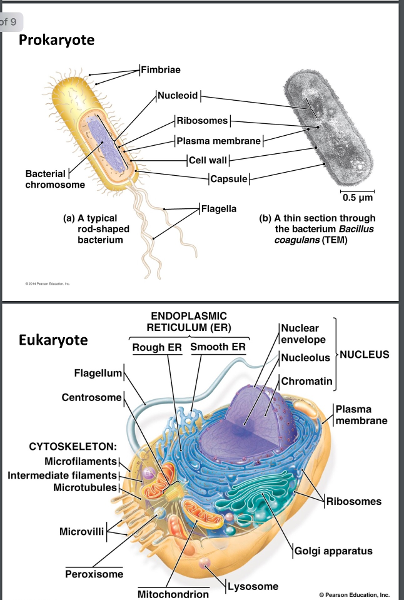 All living cells can be classified into two groups: 6.1 | back 2 prokaryotes and eukaryotic based on certain structural and functional characteristics. These cells are similar in their chemical composition and chemical reactions. Both contain nucleic acids, proteins, lipids, and carbohydrates. They have a sticky glycocalyx that surrounds them, the glue that holds the cells in place. Most bacteria are found sticking to solid surfaces, including other cells, rather than free floating. They use the same chemical reactions to metabolize food, build proteins, and store energy. pg. 72-73. |
front 3 What distinguishes prokaryotes from eukaryotes? | back 3 the structure of the cell wall, membrane and the absence of organelles. pg. 73 |
front 4 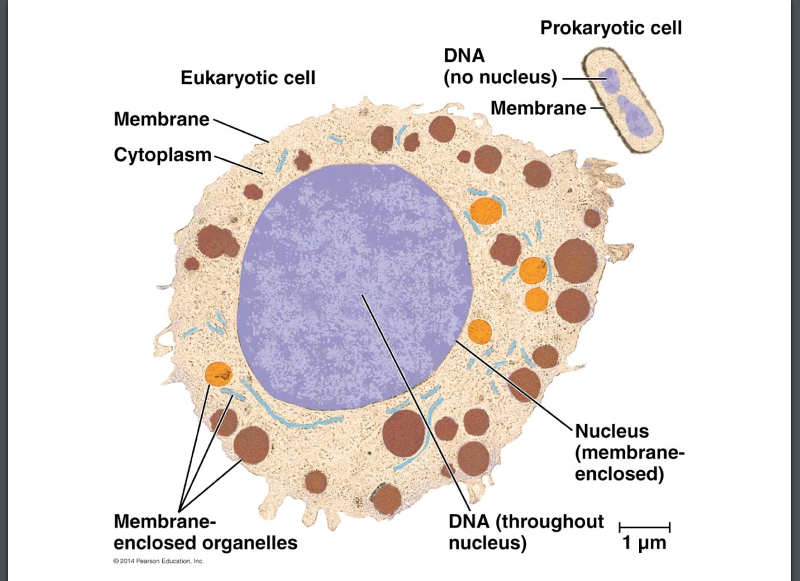 Prokaryotes 6.1 | back 4 prenucleus The DNA is usually a single circularly arranged chromosome and is not surrounded by a membrane. DNA is not associated with histones. Lack organelles- special structure that carry on various activities. Their cell walls almost always contain the complex polysaccharide peptidoglycan. They usually divide by binary fission- DNA is copied and the cell splits into 2 cells. This involves fewer structures and and processes that eukaryotic cell division. small unicellular organisms that include Bacteria and archaea (majority are bacteria) pg. 72 |
front 5 Eukaryotes 6.1 | back 5 True nucleus. The DNA is found in the cells nucleus, which is separated from the cytoplasm by a nuclear membrane, and the DNA is found in multiple chromosomes. DNA is associated with chromosomal proteins called histones and with non histones. Have a number of membrane enclosed organelles, including mitochondria, endoplasmic reticulum, golgi complex, lysosomes, and sometimes chloroplasts. Cell walls when present are chemically simple. Cell division involves mitosis, chromosomes replicate and and identical set is distributed into each of the two nuclei, cells produced are identical. plants, animals, fungi, yeast, mold, protozoa, and algae. pg 72-73 |
front 6 The two domains of prokaryotes are __________ 6.1 | back 6 bacteria and archaea |
front 7 reproduction and adaption 6.1 | back 7 bacteria reproduce quickly by binary fission and can divide every 1-3 hours |
front 8 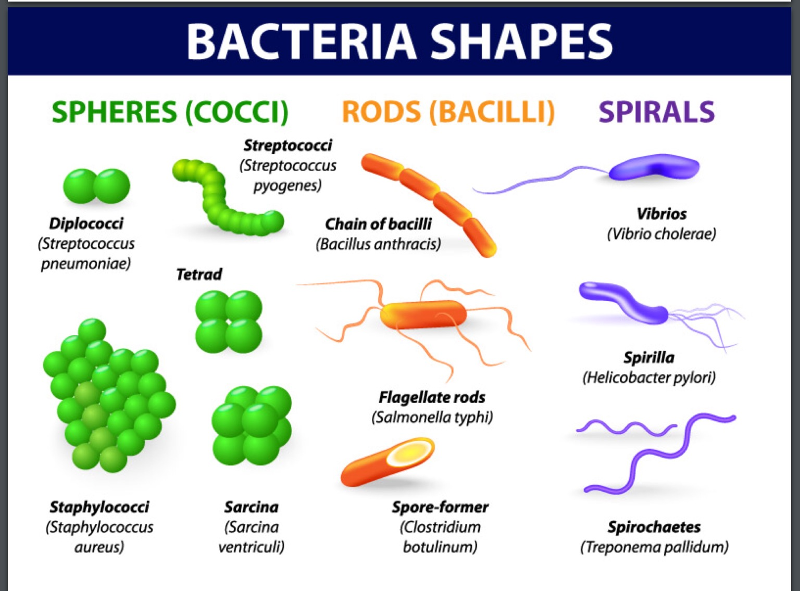 Shapes of bacteria (morphology) 6.1 | back 8 coccus/cocci- spherical. berries. usually round, but can be oval, elongated, or flattened on one side. When they divide to reproduce the cells can remain attached to one another. Cocci that remain in pairs are diplococci. Those that divide and remain attached in chainlike patterns are called streptococci. Those that divide in two planes and remain in groups of four are known as tetrads. Those that divide in 3 planes and remain attached in cubelike groups of 8 are called sarcinae. Those that divide in multiple planes and form grapelike clusters or broad sheets are called staphylococci. bacillus/bacilli- rod shaped. Little rods or walking sticks. Divide only across their short axis so there are fewer groupings of bacilli than cocci. Most bacilli appear as single rods called single bacilli. Diplobacilli appear in pairs after division. Streptobacilli occur in chains. Coccobacilli are oval and look like cocci spiral bacteria have one or more twists, they are never straight. Bacteria that look like curved rods are called vibrios. Spirilla have a helical shape, like a corkscrew, and fairly rigid bodies, flagella used to move. Spirochetes are a group of spirals that are helical and flexible and move by means of axial filaments that resemble flagella. pg. 74-75 |
front 9 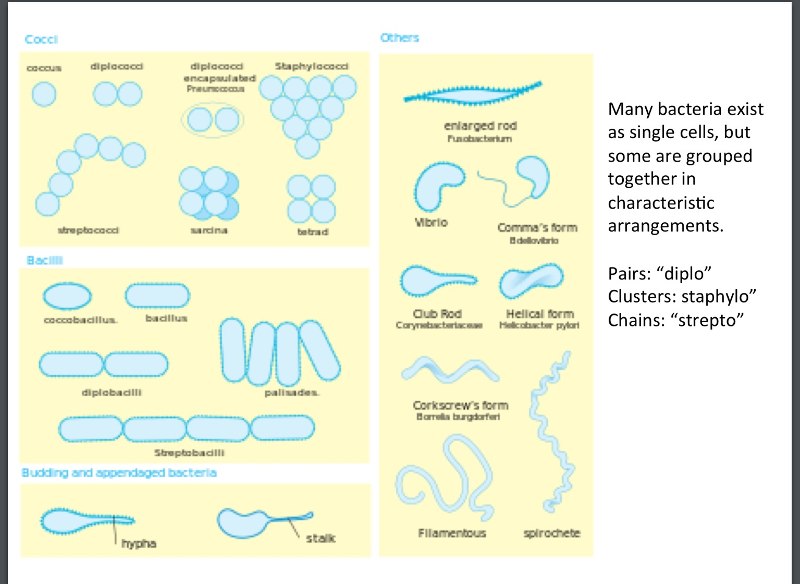 arrangement of bacterial cells: 6.1 | back 9 spherical- coccus or cocci- berries. Diplococci or streptococci-division in one plane Tetrad-division in two planes and in groups of four. rod shaped- bacillus or bacilli -little rods or walking sticks. Sarcinae- divide in three planes and attach in cubelike groups of eight. staphylococci- divide in multiple planes and form grape like clusters pg. 74 |
front 10 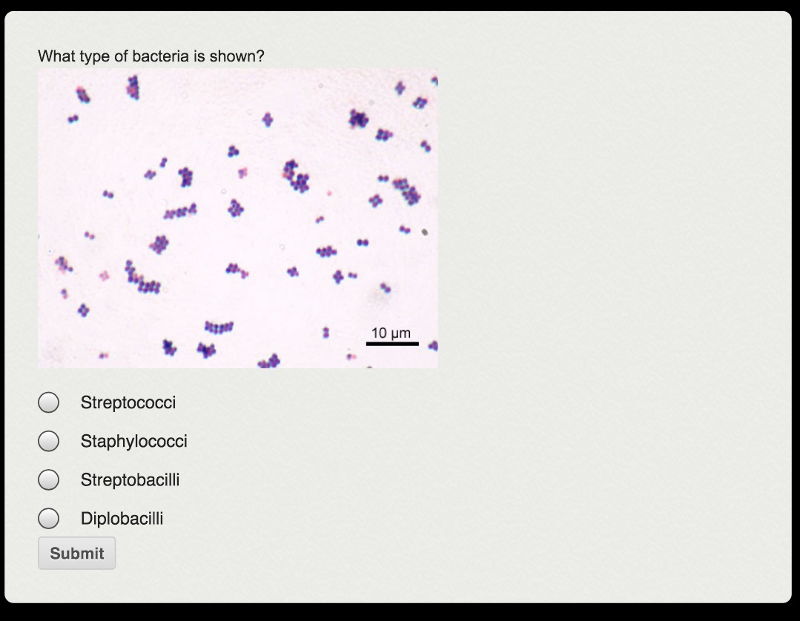 6.1 | back 10 staphylococci |
front 11 The prokaryotic cell: Bacteria 6.1 | back 11 unicellular, multiply by binary fission, differentiated by morphology, chemical composition, nutritional requirements, biochemical activities, and source of energy. pg 72-73 |
front 12 Are bacteria harmful? 6.2 | back 12 <1% of the different types of bacteria make people sick. many bacteria serve important functions in our body- bacteria in our intestines can digest fiber (plant polysaccharides) and in return produce vitamins necessary for our health. bacteria on our skin provides protection from other harmful bacteria. Bacteria can be harmful if they get into the wrong place or if they acquire the wrong genes. |
front 13 Normal Microbiota 6.2 | back 13 Microorganisms that establish more or less permanent residence (colonize) but that do not produce disease under normal conditions. Can also be referred to as normal flora. pg. 390 |
front 14 transient microbiota 6.2 | back 14 may be present for several days, weeks, or months and then disappear. Microorganisms are not found throughout the entire human body but are localized in certain regions. pg. 390 and 392. |
front 15 The human microbiome project 6.2 | back 15 began in 2007 to analyze microbial communities called microbiomes that live in and on the human body. Its goal is to determine the relationship between changes in the human microbiome and human health and disease. pg 390 Types of bacteria present differ depending on the location of the body. |
front 16 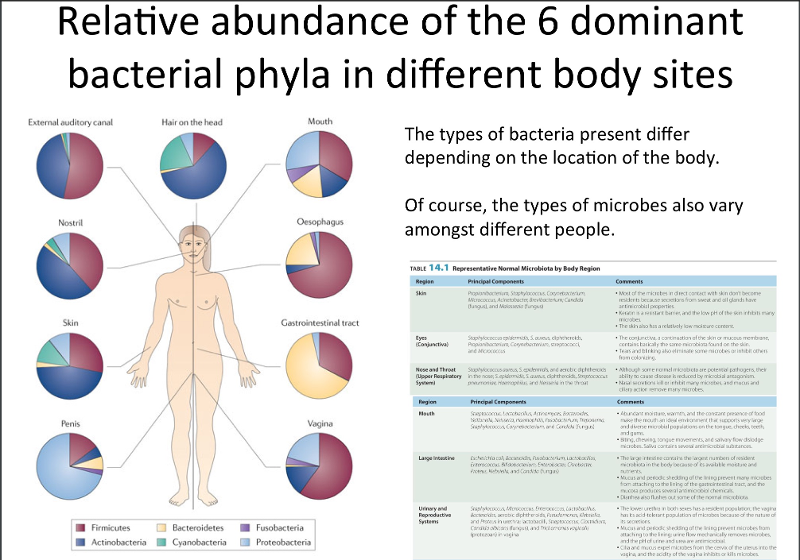 Distribution and composition of normal microbiota are determined by many factors: 6.2 | back 16
10 times more bacteria cells than human cells. pg 390 |
front 17 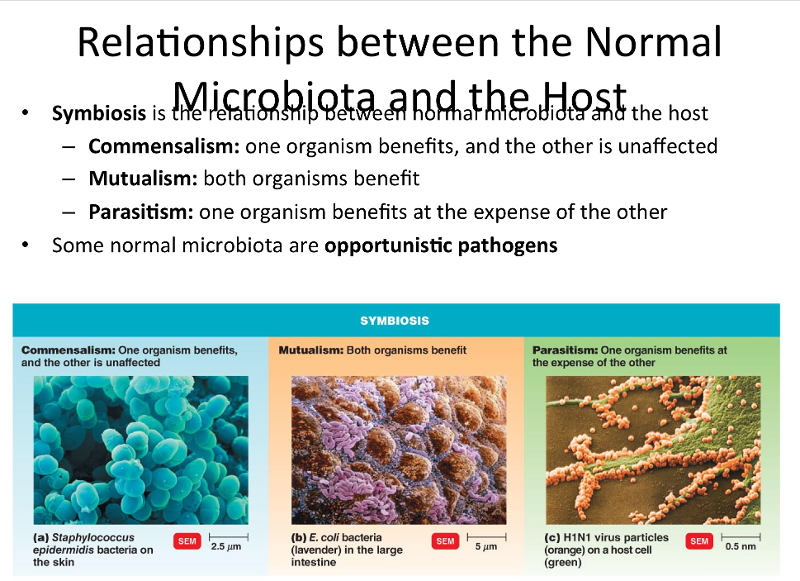 relationship between normal microbiota and the host: 6.2 | back 17 Symbiosis is the relationship between normal microbiota and the host, a relationship between 2 organisms in which at least one organism is dependent on the other. Some normal microbiota are opportunistic pathogens. pg 392 commensalism: in a symbiotic relationship one organism benefits and the other is unaffected. Many of the microorganisms that make up our normal microbiota are commensals. Ie: bacteria on our skin that eat dead skin cells. pg. 392 mutualism: is the type of symbiosis that benefits both organisms. Ie: bacteria like e. coli that inhabit our intestines and eat fiber, synthesize vitamin K and some B vitamins that are abosrbed into our bloodstream and distributed for use by our body cells.. pg 393 parasitism: symbiosis that one organism benefits by deriving nutrients at the expense of the other. Many disease causing bacteria are called parasites. pg 393 |
front 18 Opportunistic pathogens are? | back 18 normal microbiota if they stay in the correct location on our body we can have a mutualistic relationship, but if they get into another part of our body they can become an opportunistic infection. |
front 19 How does our normal microbiota help us? 6.2 | back 19 It can benefit us because it prevents the growth of organisms that might actually harm us also called Microbial antagonism or competitive exclusion, a competition between microbes. Normal microbiota protect the host by:
pg 390-391 |
front 20 probiotics | back 20 a supplement of live microbial cultures, harmless bacteria, that repopulates your body with good bacteria and crowd out detrimental bacteria. provides bacteria for commensalism, bacteria that can be benifical for us. |
front 21 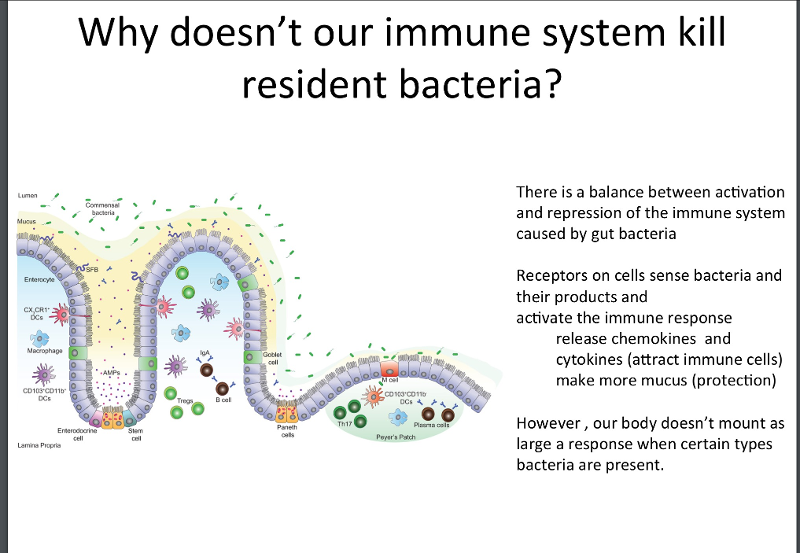 Why doesn't our immune system kill resident bacteria? 6.2 | back 21 when bacteria are present all the time it promotes a tolerance. There is a balance between activation and repression of the immune system caused by gut bacteria. Receptors on cells sense bacteria and their products and activate the immune response, release chemokines, and cytokines ( attract immune cells) make more mucous (protection) However our body doesn't mount as large a response when certain types of bacteria are present. |
front 22 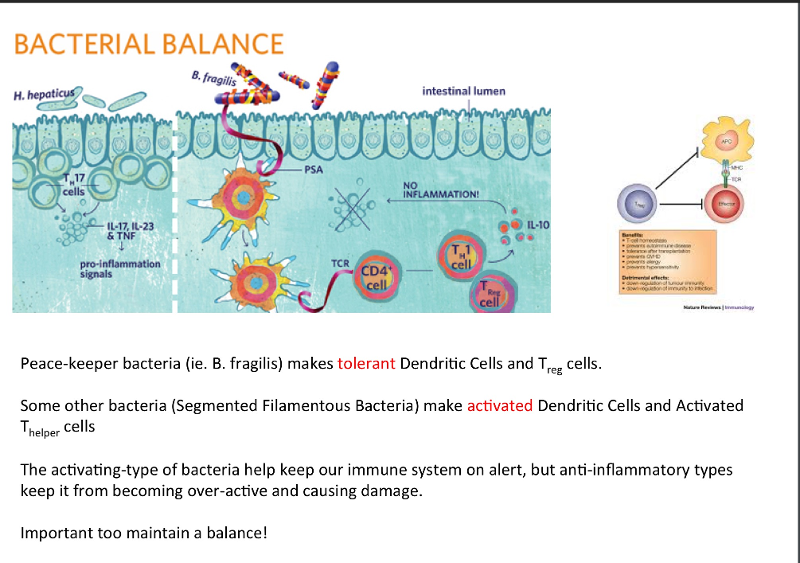 Bacterial balance 6.2 | back 22 peace-keeper bacteria (i.e.: B. Fragilis) makes tolerant dentritic cells and T reg cells. Some other bactria (segmented filamentous bacteria) make activated dendritic cells and activated T helper cells the activating type of bacteria keep our immune system on alert, but anti-inflammatory types keep it from becoming over-active and causing damage. Important to maintain a balance. |
front 23 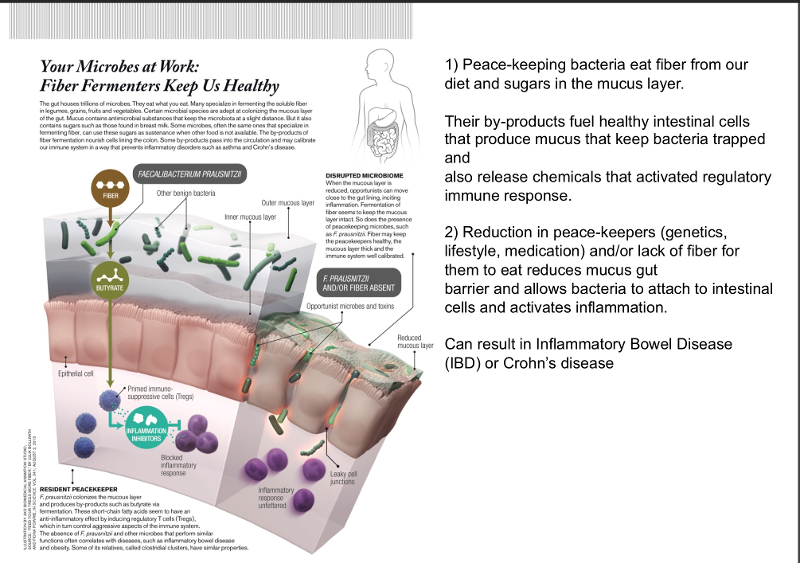 Peace keeping bacteria 6.2 | back 23 eat fiber from our diet and sugars in the mucus layer. their by-products fuel healthy intestinal cells that produce mucus that keep bacteria trapped and release chemicals that activated regulatory immune response reduction in peace-keepers (genetics, lifestyle, medications) and /or lack of fiber for them to eat reduces mucus gut barrier and allows bacteria to attach the intestinal cells activating inflammation. can result in inflammatory bowel disease (IBD) or crohns disease. |
front 24 Normal microbiota can benefit the host by preventing the overgrowth of harmful microorganisms. This is called microbial __________. 6.2 | back 24 Antagonism Microbial antagonism - the normal microbiota can benefit the host by preventng the overgrowth of harmful microorganisms, can also be called competitive exclusion. pg. 391. |
front 25 Escherichia coli synthesizing vitamins K and B in the large intestine would be an example of which type of symbiosis? 6.2 | back 25 Mutalism pg 393 |
front 26 Pathology 6.3 | back 26 Pathology is the scientific study of disease. Pathology is first concerned with:
pg 390 |
front 27 Pathogen 6.3 | back 27 Disease causing microorganisms are called pathogens. pg 390 |
front 28 Infection 6.3 | back 28 The invasion or colonization and growth of pathogens in the the body by pathogenic microorganisms. An infection may exist in the absence of detectable disease. Patient may have the infection but not show s/s of the disease. The presence of a microorganism in a part of the body where it is not normally found is also called an infection, and may lead to disease. Ie: large numbers of E. Coli are normal in a healthy intestine but would cause a infection if noted in the urinary tract. pg 390 |
front 29 disease 6.3 | back 29 occurs when an infection results in any change from a state of health. disease is an abnormal state in which part or all of the body is incapable of performing its normal functions. When a microorganism overcomes the body's defenses a states of disease results. pg 390 |
front 30 How do Microorganisms enter a host? | back 30 Portals of entry: many microorganisms can cause infections only when the gain access through their specific portal of entry
pg. 418 |
front 31 Pathogenicity 6.3 | back 31 The ability to cause disease by overcoming host defenses. pg. 418 |
front 32 virulence 6.3 | back 32 The degree of pathogenicity. pg 418 |
front 33 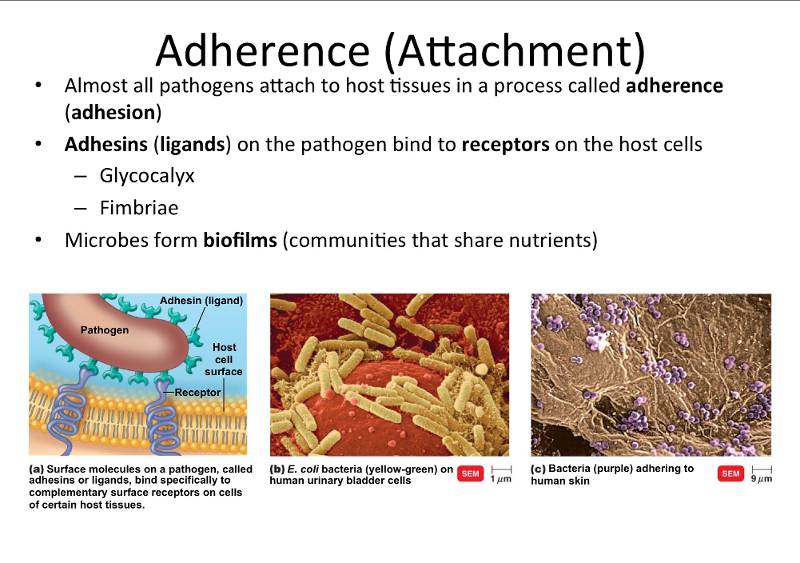 Adherance or adheasion 6.3 | back 33 All pathogens have a means of attaching themselves to host tissues at their portal of entry to cause pathogenicity. surface molecules on the pathogen called Adhesins (ligands) that bind specifically to complementary surface receptors on the cell of certain host tissues. Mannose is the most common receptor
Microbes have the ability to come together in masses cling to surfaces, and take in and share available nutrients. in communities called biofilms- ie: dental plaque. pg. 420. |
front 34 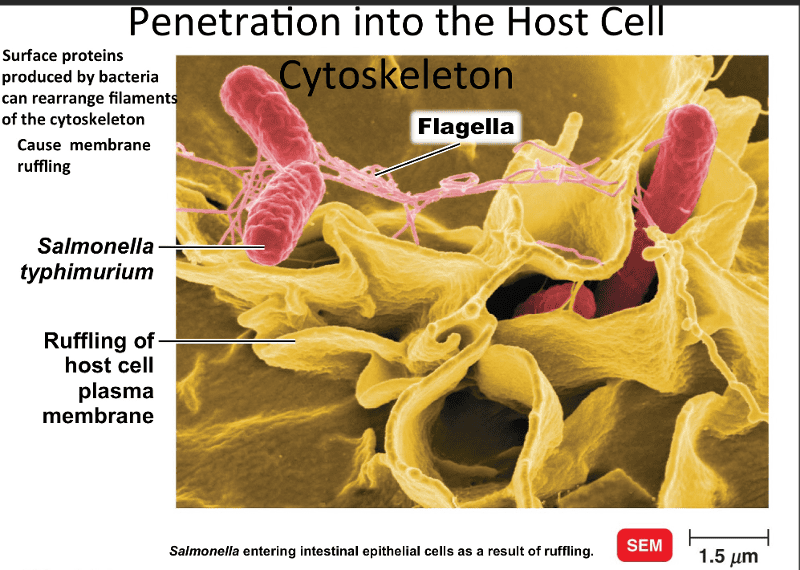 Penetration into the host cell cytoskeleton 6.3 | back 34 microbes attach to host cells by adhesions, this triggers signals in the host cell that activate factors that can result in the entrance of some bacteria. The mechanism is provided by the host cytoskeleton. A major component of the cytoskeleton is a protein called actin which is used by some microbes to penetrate host cells and by others to move through and between host cells. microbes produce surface proteins called invasins that rearrange nearby actin filaments of the cytoskeleton. membrane ruffling is the result of disruption in the cytoskeleton of the host cell. The microbe sinks into the ruffle and is engulfed by the host cell. pg. 423. |
front 35 The easiest and MOST frequently traveled portal of entry for infectious microorganisms is the __________. 6.3 | back 35 Respiratory tract |
front 36 The degree of pathogenicity of an organism is known as the _________. 6.3 | back 36 Virulence |
front 37 E. coli is an example of what type of bacteria? 6.4 | back 37 Gram-negative, bacillus |
front 38 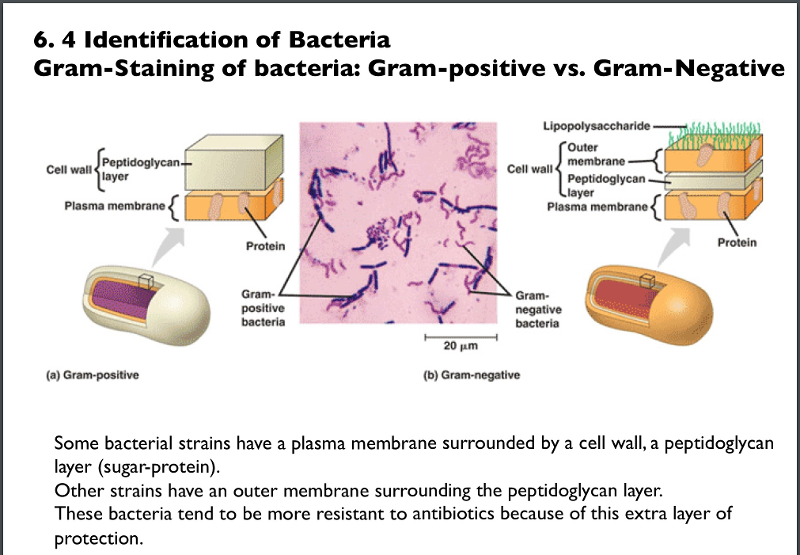 Identification of bacteria by gram stain: 6.4 | back 38 Some bacterial strains have a plasma membrane surrounded by a cell wall, a peptidoglycan layer or sugar layer. Other strains have an outer membrane surrounding the peptidoglycan layer. These bacteria tend to be more resistant to antibiotics because of this extra layer of protection. |
front 39 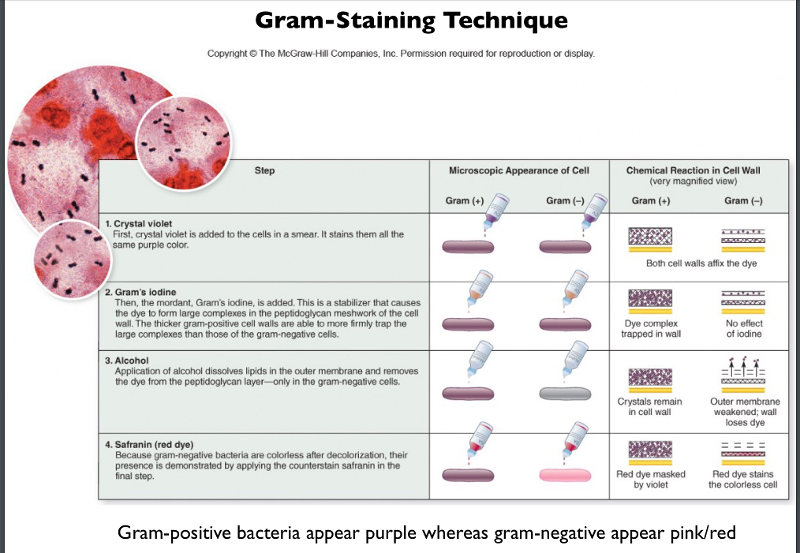 Gram staining technigue 6.4 | back 39 staining means coloring the microorganisms with dye that emphasizes certain structures. - fixed- kills the microbes and fixes them to the slide - smear- a thin film of material containing microorganisms, passed through the flame, and stain called crystal violet is applied. - alcholol to decolorize - safrinin red dye and washed again. pg. 65 |
front 40 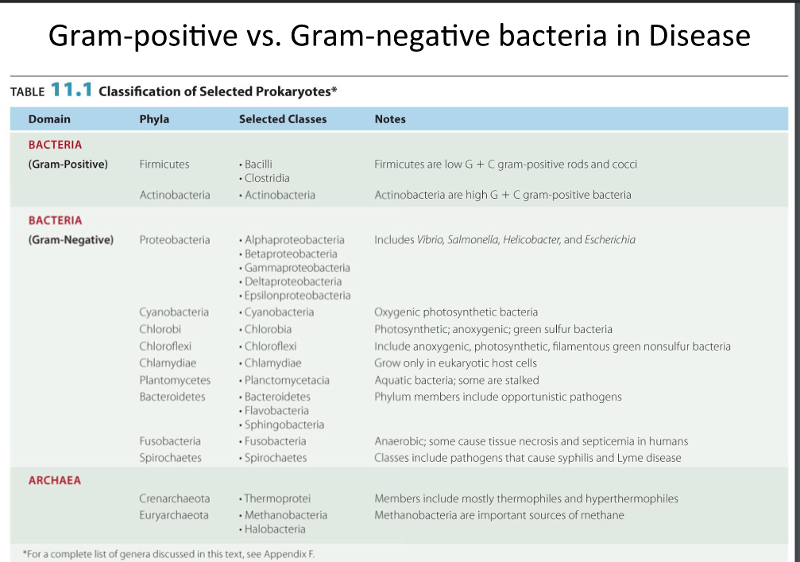 Gram positive vs gram negative bacteria: 6.4 | back 40 Gram positive bacteria- can be treated with antibiotics if pathogenic type bacteria. Gram negative bacteria- generally more resistant to antibiotics due to the extra peptidoglycan plasma membrane layer. |
front 41 Types of gram positive bacteria are: | back 41 Separate phyla: Firmicutes- Bacilli and Clostridia. gram + rods and cocci Actinobacteria pg 308 |
front 42 Types of gram negative bacteria are: | back 42 Proteobacteria- Alphaproteobacteria, betaproteobacteria, gammaproteobacteria, deltaproteobacteria, epsilonproteobacteria. This includes vibrio, salmonella, helicobacter and escherichia. Cyanobacteria- oxygenic photosynthetic bacteria chlorobi photosynthetic anoxygenic green sulfur bacteria chlamydiae- grow only in eukaryotic host cells plantomycetes- aquatic bacteria bacteroidetes, flavobacteria, sphingobacteria- phylum members include opportunisttic infections. fusobacteria- anaerobic some cause tissue necrosis and septicemia in humans. Spirochetes- pathogens that cause syphilis and lyme disease. pg. 291. |
front 43 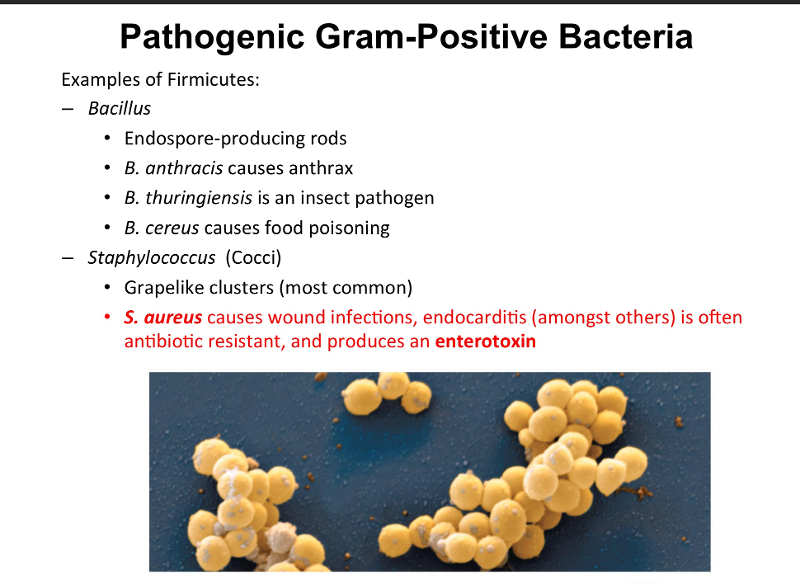 Pathogenic gram positive bacteria: Firmicutes 6.4 | back 43 Will stain purple from the crystal violet. Endospore forming bacteria -Bacillus (genus)- rod shaped bacteria and clostridium- rod shaped cells. cause Tetanus and botulism
-Staphylococcus (cocci) Photo shown is staph aureus. Has alot of antibiotic strains. produces endotoxins. |
front 44 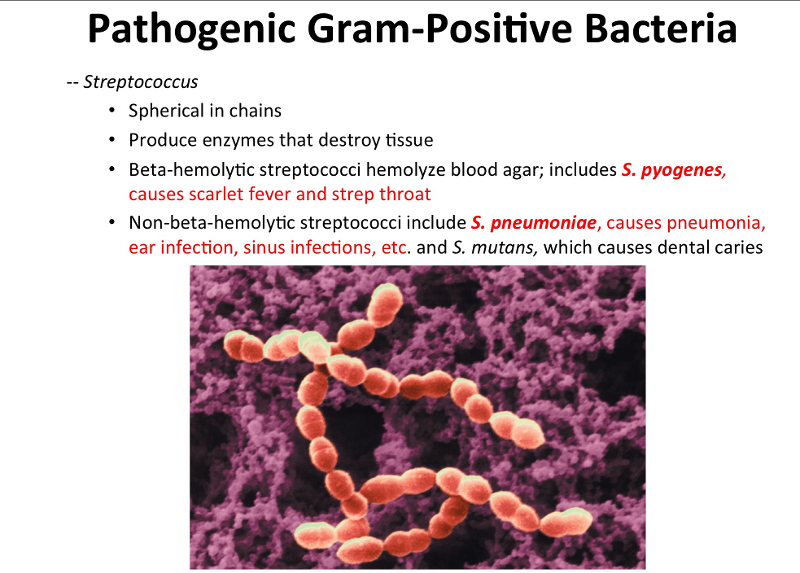 Pathogenic gram positive bacteria: Streptococcus 6.4 | back 44
pg. 309 |
front 45 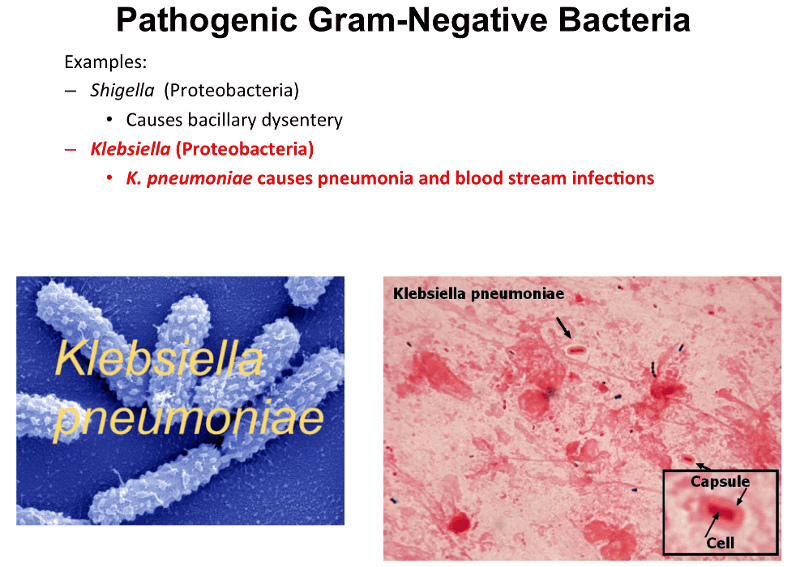 Pathogenic gram-negative bacteria: 6.4 | back 45 Gram negative bacteria that have an extra plasma membrane around the outside of their cell wall. Also have a polysaccaride cell layer capsule in addition to the extra plasma membrane makes them really resistant to antibiotic treatment and can evade host immune responses as well. proteobacteria examples:
|
front 46 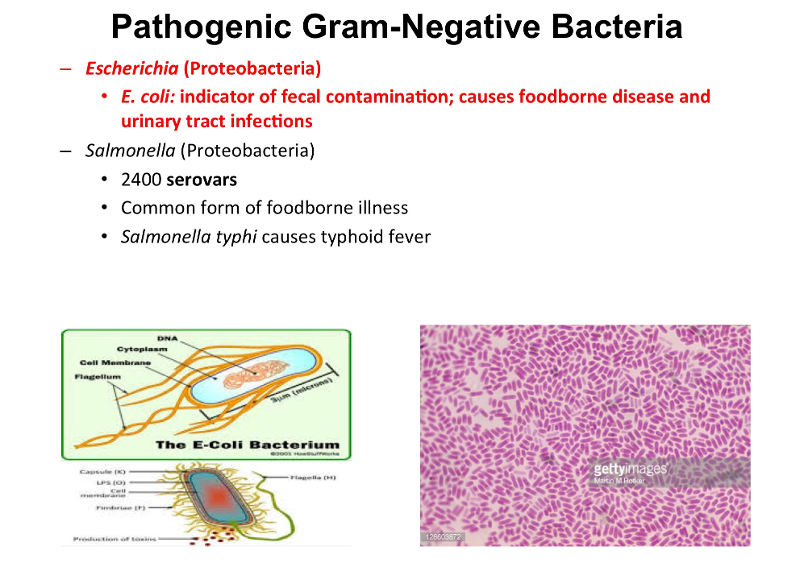 | back 46 E. coli pathogen is very resistant to abx |
front 47 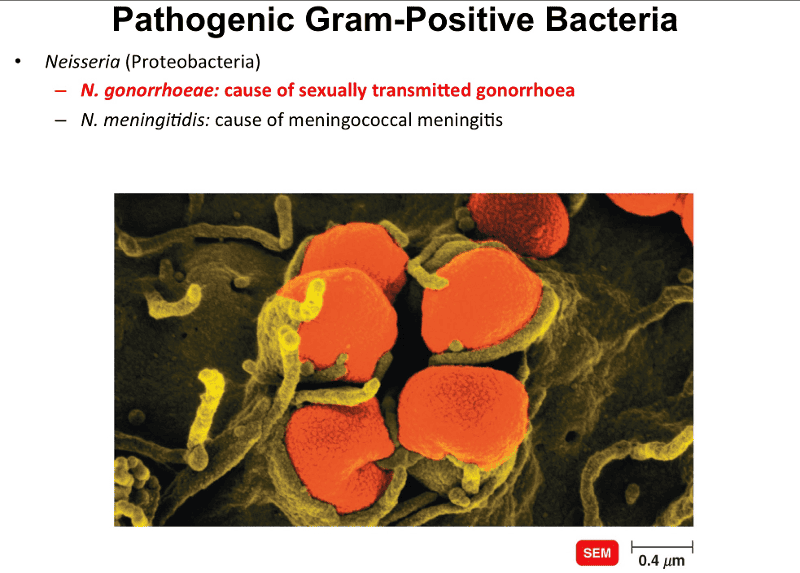 Pathogenic gram-positive bacteria proteobacteria: 6.4 | back 47
|
front 48 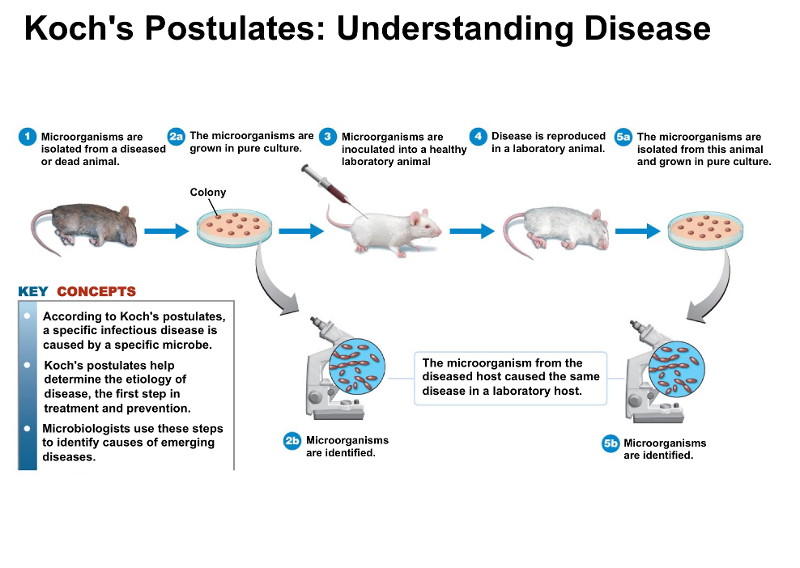 Koch's postulates: 6.4 | back 48
pg. 394. |
front 49 Exceptions to Koch's postulates: 6.4 | back 49
pg 394 |
front 50 Streptococcus pneumoniae is an example of what type of bacteria? 6.4 | back 50 Gram-positive, streptococci |
front 51 mechanisms of pathogenesis 6.5 | back 51 When a microorganism invades a body tissue how does it cause disease or pathogenesis? it initially encounters phagocytes of the host, they destroy the invader or the pathogen will overcome the host's defenses, allowing the microorganism to damage the cell in 4 ways: Direct damage:
(bacteria) Production of toxins:
pg. 424 |
front 52 How do bacterial pathogens damage host cells? 1. Using the hosts nutrients: Siderphores 6.5 | back 52 Iron is required for the growth of most pathogenic bacteria. The concentration of free iron in the human body is low because most of the iron is tightly bound to iron transport proteins and hemoglobin. For pathogens to obtain iron they secrete proteins called siderophores that take iron away from iron-transport proteins by binding the iron even more tightly, forms a complex and is taken up by the siderophore receptors on the bacterial surface and brought into the bacteria. Siderophores are proteins secreted by pathogens that bind iron more tightly than host cells. pg. 424 |
front 53 How do bacterial pathogens damage host cells? 2. Production of toxins 6.5 | back 53 toxins are the primary factor contributing to the pathogenic properties of those microbes. Two class types:
toxin genes can be spread between species via horizontal gene transfer. 424-425. |
front 54 Production of toxins: 6.5 | back 54 Toxigenicity- the capacity of microorganisms to produce toxins Toxemia- the presence of toxin's in the blood. Intoxications- caused by the presence of a toxin, not by microbial growth. pg. 424-425. |
front 55 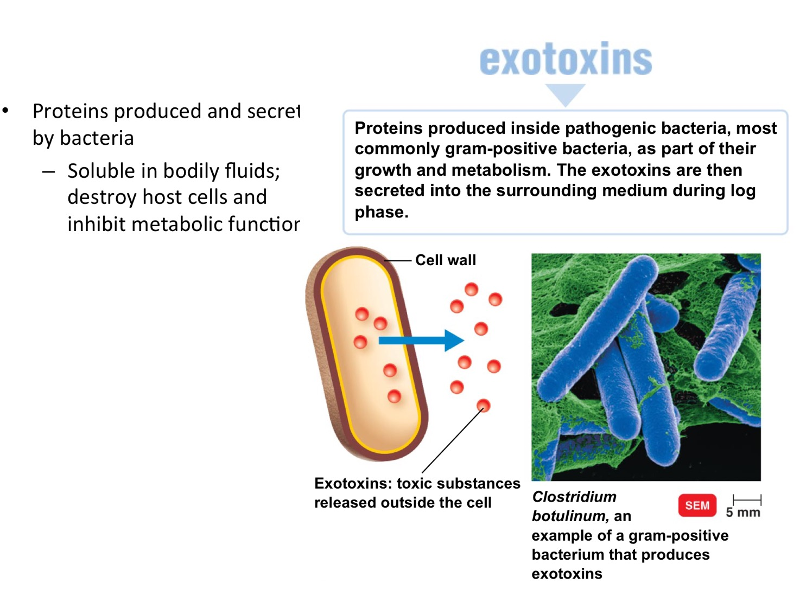 Exotoxins are proteins that are produced by bacteria and released into the extracellular environment. 6.5 | back 55
|
front 56 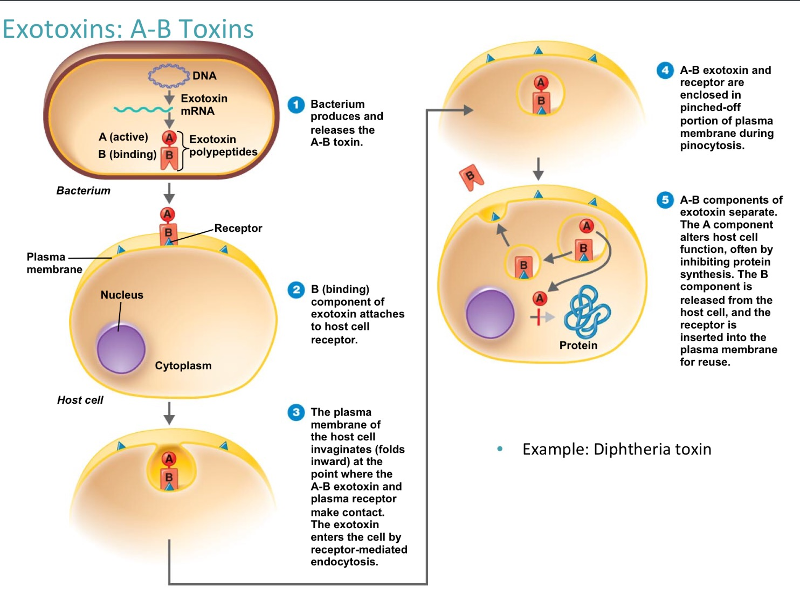 The action of an A-B Exotoxin: 6.5 | back 56 They are proteins- polypeptides. Consist of two parts: A and B, both of which are poylpeptides. Most exotoxins are A-B toxins. The part A is the active enzyme component and the part B is the binding component. releases the A-B toxin, attaches to the host cell, taken into the host cell, the A and B come apart. The receptor B is released outside of the cell. Diptheria is an example of a A-B toxin. |
front 57 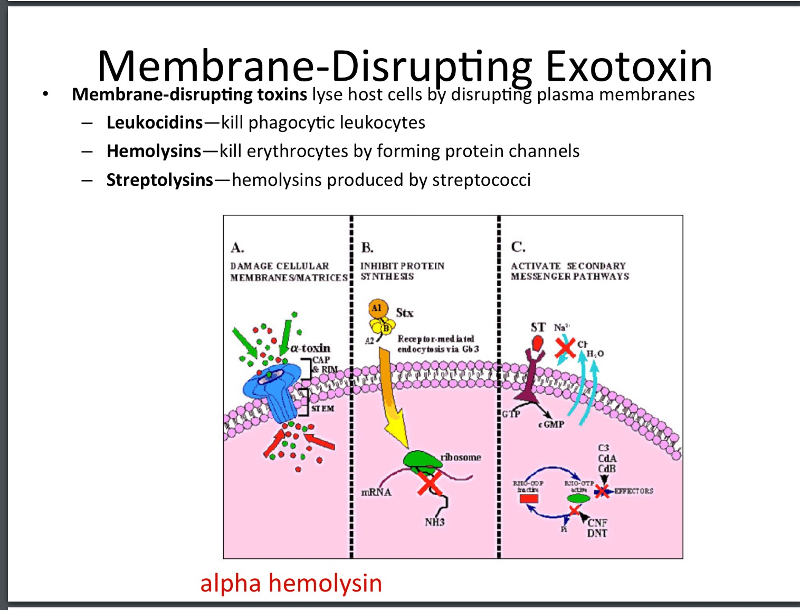 Membrane disrupting exotoxins 6.5 | back 57 Cause lysis of the host cells by disrupting their plasma membranes. Some form protein channels in the plasma membrane (The cell -lysing exotoxin of Staphylococcus aureus is an example of an exotoxin that forms protein channels) others disrupt the phospholipid membrane (Clostridium perfringens). Membrane disrupting toxins contribute to virulence by killing host cells.
pg. 426 |
front 58 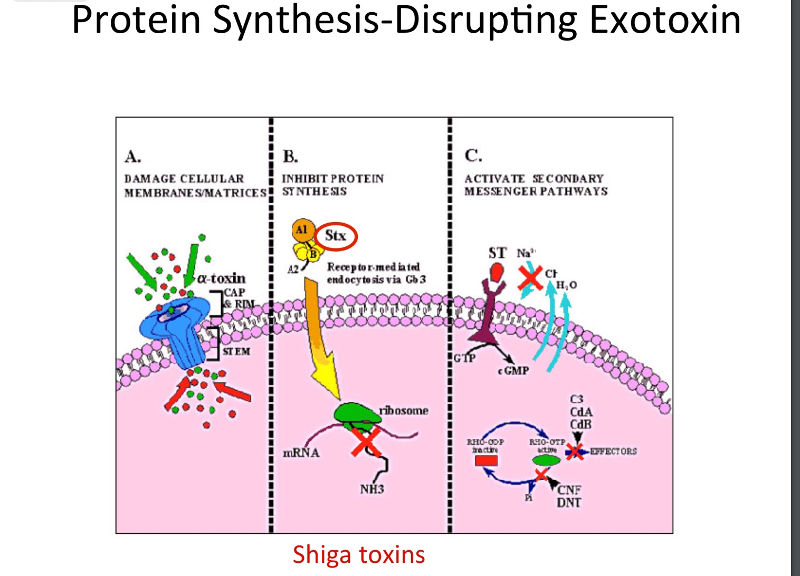 Protein synthesis disrupting exotoxin. 6.5 | back 58 This toxin disrupts protein synthesis. A-B type exotoxin, the A fragment disrupts translation. This gets into our GI tract exotoxin known as Shigella |
front 59 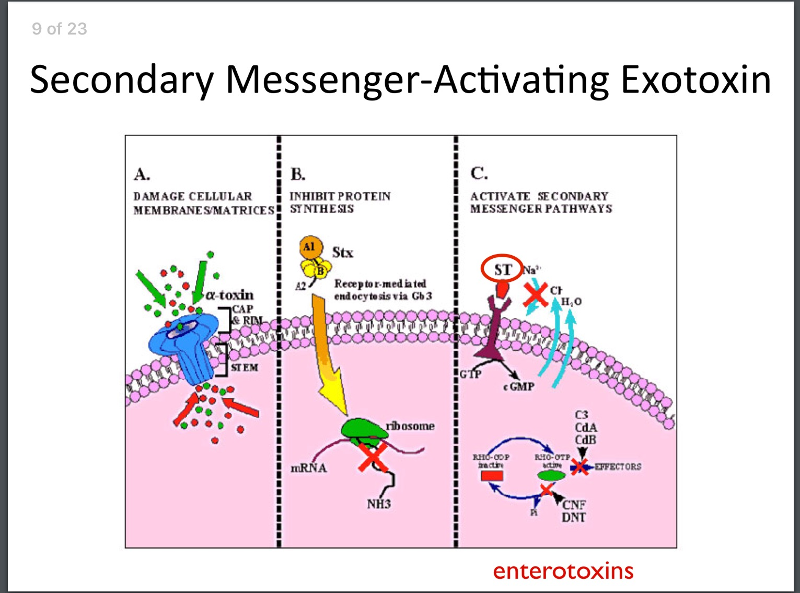 Second messenger-activating exotoxin. | back 59 last class of exotoxin: (Binds the receptor that Ligand binds activating the G protein inside the cell to activate the series of events inside the cell.) An exotoxin produced from e. coli. that exotoxin binds the receptor we get formation of GTP from cyclic GMP and the end result is that we end up secreting chloride ions outside of the cell, water follows and results in diarrhea. |
front 60 other exotoxins: Superantigens and genotoxins: 6.5 | back 60 Super antigens: cause an intense immune résponse, through a series of interaction with various immune cells. In response to superantigens enormous amounts of chemicals called cytokines are released from the host cells (T cells). Excessively high levels of cytokines causes symptoms of fever, N/V/D, shock, and death. Staphylococcus aureus- can cause food poisoning and TSS. Genotoxins: alter the hosts DNA, damage DNA directly causing mutations, disrupting cell division and leading to cancer. helicobacter- causes breaks in DNA leading to stomach CA. pg. 427. |
front 61 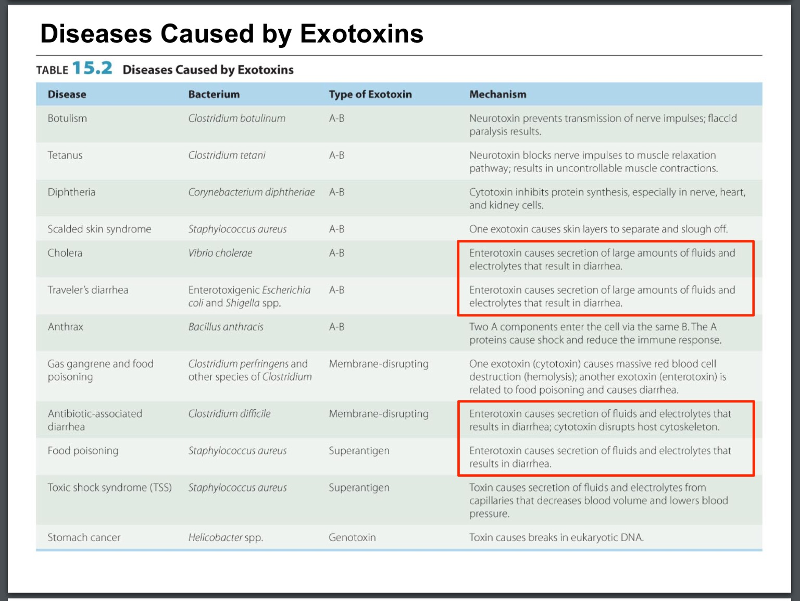 Table of diseases caused by exotoxins 6.5 | back 61 Enterotoxins- in GI tract results in diarrhea |
front 62 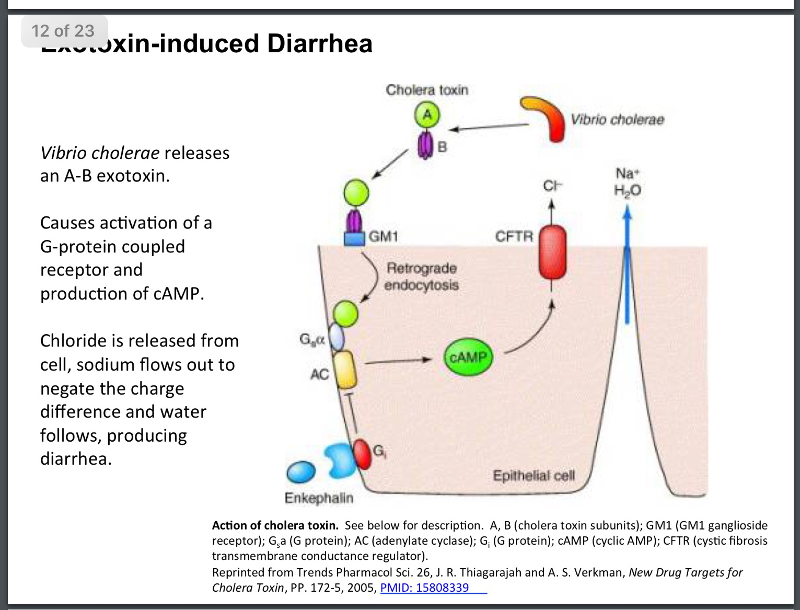 Cholera toxin- Vibrio cholera | back 62 Cholerae releases an A-B toxin. binds and taken up into the cell activates a second messenger cell Chloride and water are pumped out of the cell produces diarrhea. Can be deadly in third world countries. Drugs used to combat this problem- encephalins- active a G protein to stop the over release of chloride |
front 63 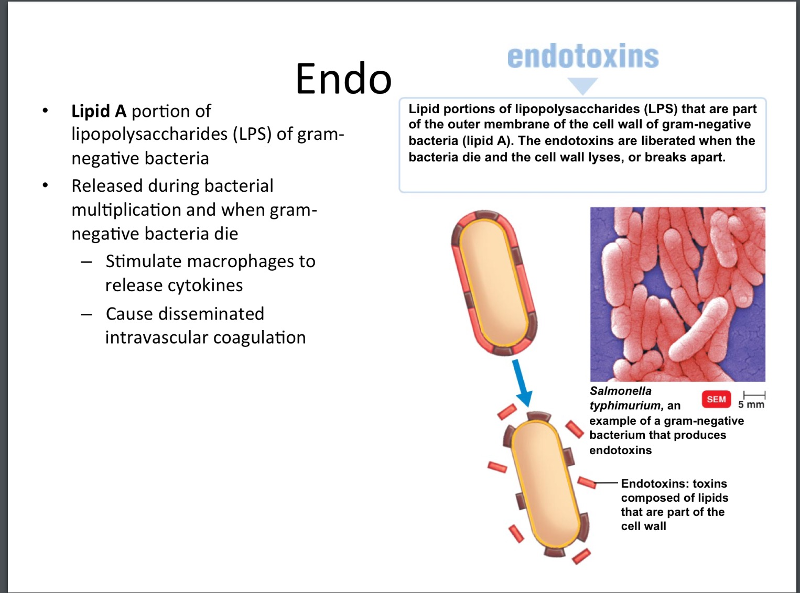 EndoToxins 6.5 | back 63 Endotoxins are part of the outer portion of the cell wall of gram negative bacteria. Released during bacterial multiplication and when gram-negative bacteria dies and their cell wall lyses. Endotoxins exert their effects by stimulating macrophages to release cytokines in very high concentrations- at these toxic levels they produce fever, chills, weakness, generalized aches, sometimes shock and death. pg. 428 |
front 64 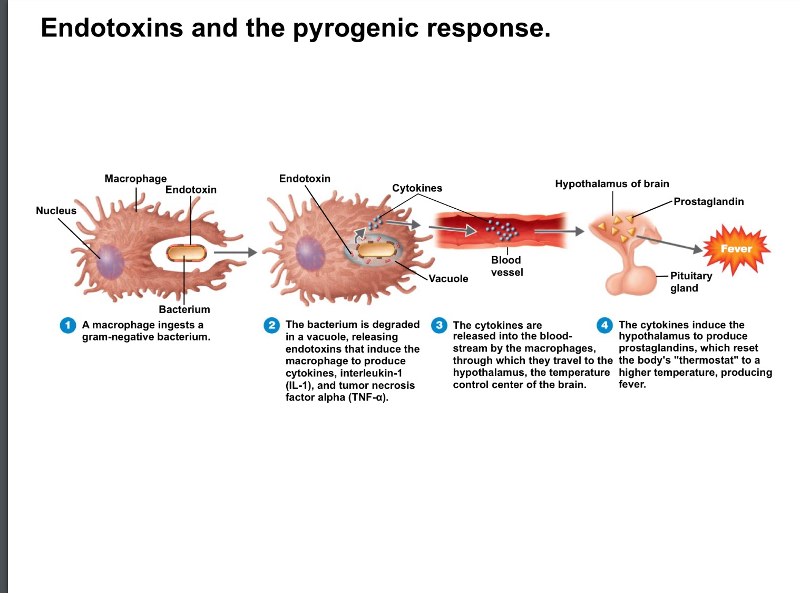 How do endotoxins produce a febrile response in a cell? 6.5 | back 64 a macrophage ingests a gram negative bacteria, releases endotoxins, induce macrophages to produce cytokines ( IL1 & TNF alpha) which are released into the bloodstream, travel to the hypothalamus, and induce the hypothalamus to produce prostaglandins which reset the body's thermostat higher producing fever. |
front 65 Testing for endotoxins- LAL assay | back 65 lab test uses to identify the presence of endotoxins in drugs, medical devices, and body fluids. Limulus amebocyte lysate assay used to test for endotoxins. Blood from horseshoe crabs contain amebocytes that lyse in the presence of endotoxin producing a clot. pg. 429 |
front 66 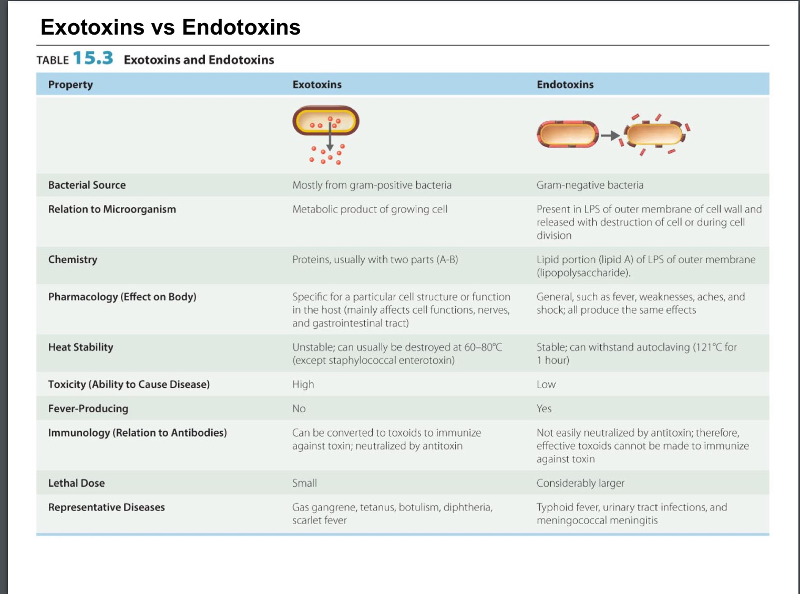 Comparison of exotoxins and endotoxins | back 66 gram negative bacteria produce endotoxins and gram positive produce exotoxins. exotoxins have a wide range of effects endotoxins tend to have similar effects in the host cell. |
front 67 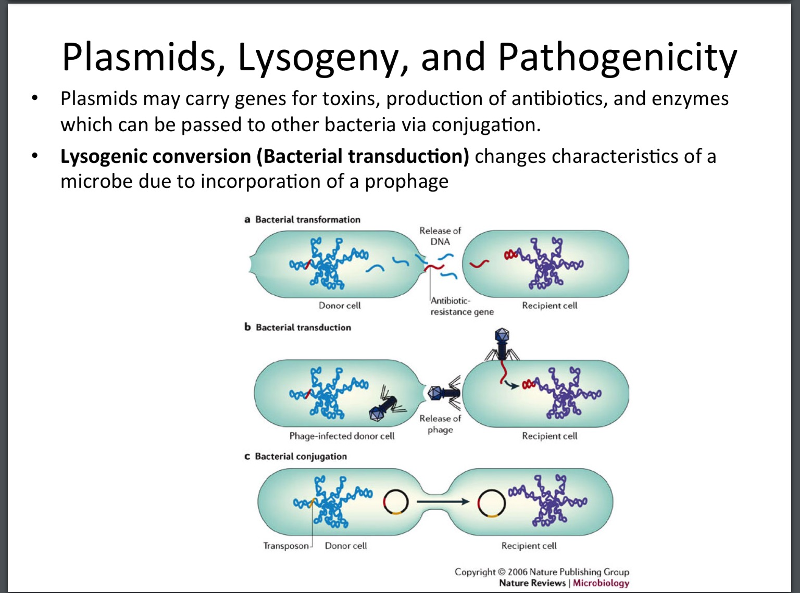 | back 67 Bacterial transformation- release of DNA from one cell makes its way into a recipeint cell. Bacterial transduction- movement of genes by viruses that infect bacteria- bacteriophage. Acquires a gene from one bacteria and when it infects another bacteria injects that genetic material Bacterial conjugation- transmit extra chromosomal plasmids and toxins along with antibiotic resistance. |
front 68 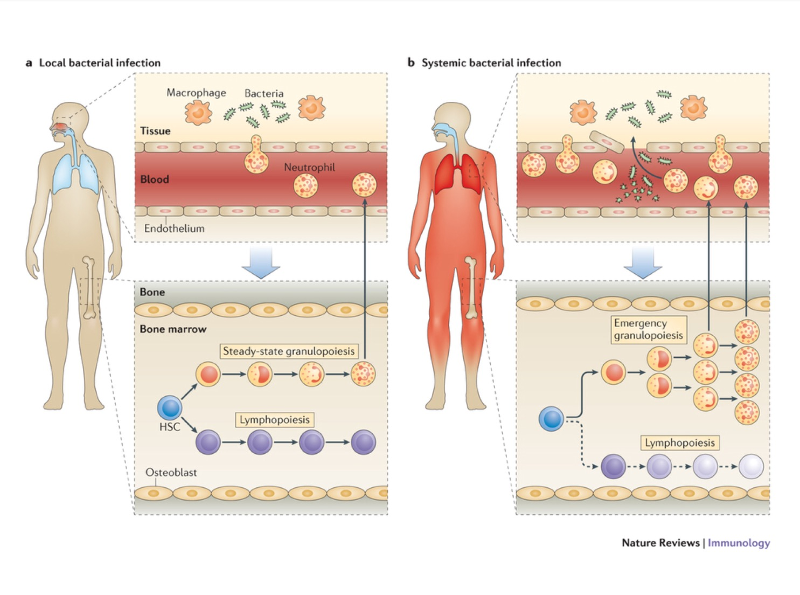 | back 68 Bacterial pathogenesis can be a local infection or can be systemic if it enters the blood stream. |
front 69 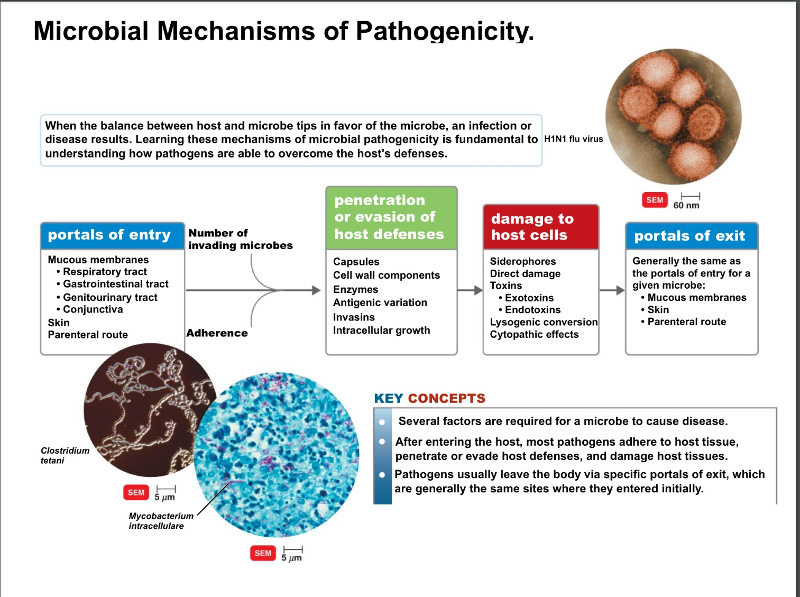 How do microbes (bacteria or viruses) evade hosts? | back 69 entry into the host cell or tissue evasion of the host defenses damage to the host cells either directly or by toxins replicate and exit the body to hopefully go on and infect a new host. |
front 70 The outer portion of Gram-negative cell walls contain __________. | back 70 endotoxins |
front 71 Proteins secreted by pathogens that bind iron are known as __________. | back 71 Sidophores |
front 72 The antibiotic revolution and antibiotic resistance. 6.6 | back 72
|
front 73 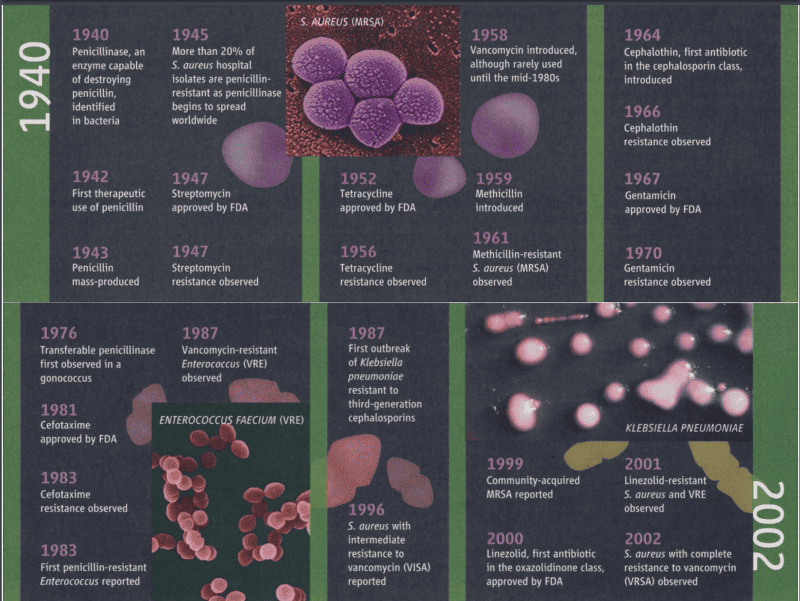 Timeline of the discovery of PCN | back 73 used in 1942, mass produced and 3 years later staph aureus shows resistance. 1947 new antibiotic is used- streptomycin. 3 years later streptomycin resistance tetracycline, vancomycin, methicillin all produced and lead to resistance. MRSA 1961 pathogenic bacteria with no abs to treat them. |
front 74 Natural selection | back 74 The process in which individuals that have certain heritable traits survive and reproduce at a higher rate than other individuals because of those traits over time, can increase the match between organisms and their environment. in response to a change in environment may result in adaptation to new conditions. |
front 75 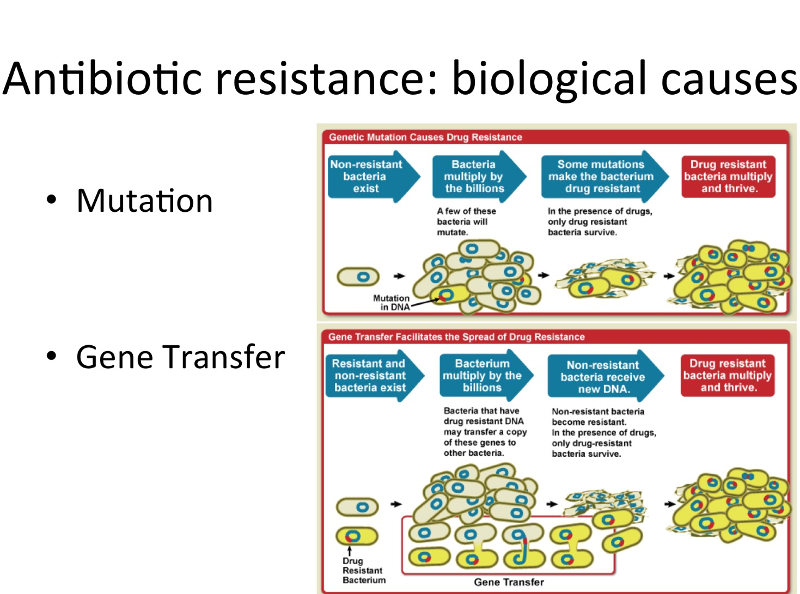 | back 75 normal genetic mutations occur that make bacteria slightly different making that bacteria now resistant to abs. gene transfer- if the bacteria has the means of transferring its genetic material it can now become resistance. |
front 76 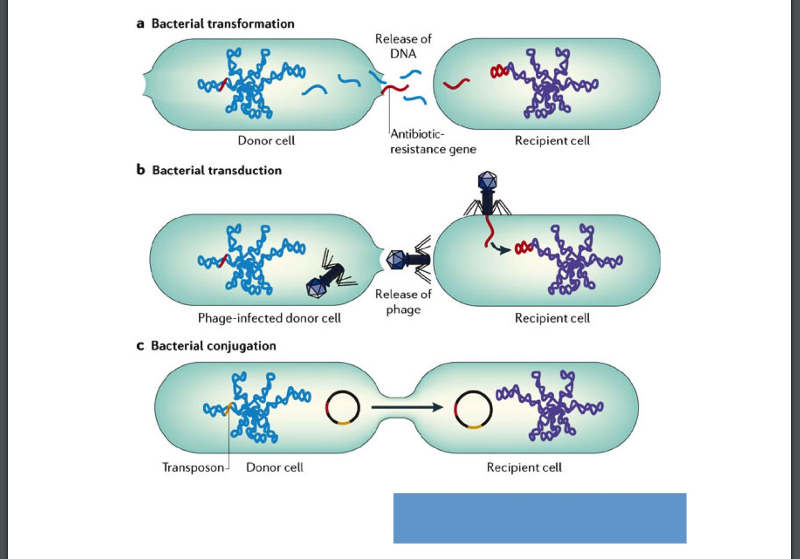 | back 76 transformation- release of DNA transduction- transfer via bacterialphage conjugation- small plasmids are transferred to produce proteins to another bacteria. |
front 77 antibiotic resistance 6.6 | back 77 overview of how antibiotic resistance develops. natural genetic variation -population of bacteria where there is few resistance to abx. abx kill most of the bacteria, but the few left form abx resistance strains this is the result of natural mutation. bacteria pass via gene transfer or other mechanisms to other bacteria providing resistance. |
front 78 How does antibiotic resitance spread in the community? | back 78 Simply using antibiotics creates resistance. These drugs should only be used to treat infection. |
front 79 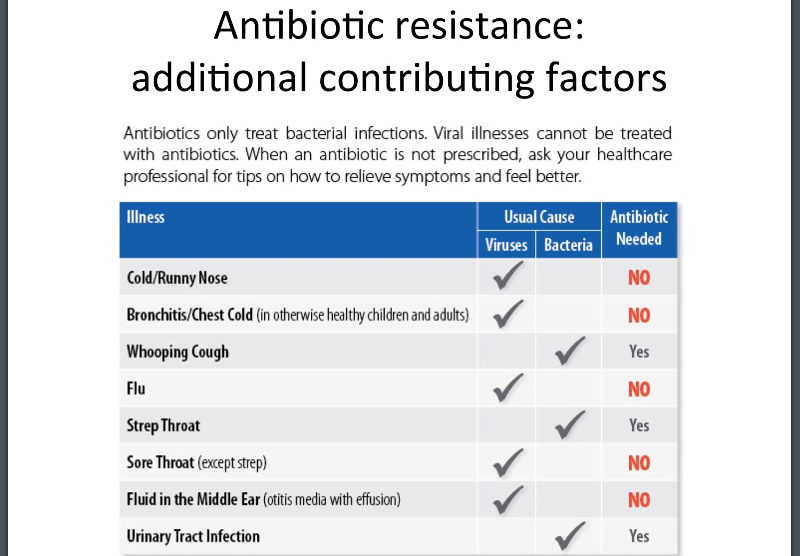 | back 79 antibiotics were being misused to for bacteria vs viral infections. abx should only be given for true bacterial infections. |
front 80 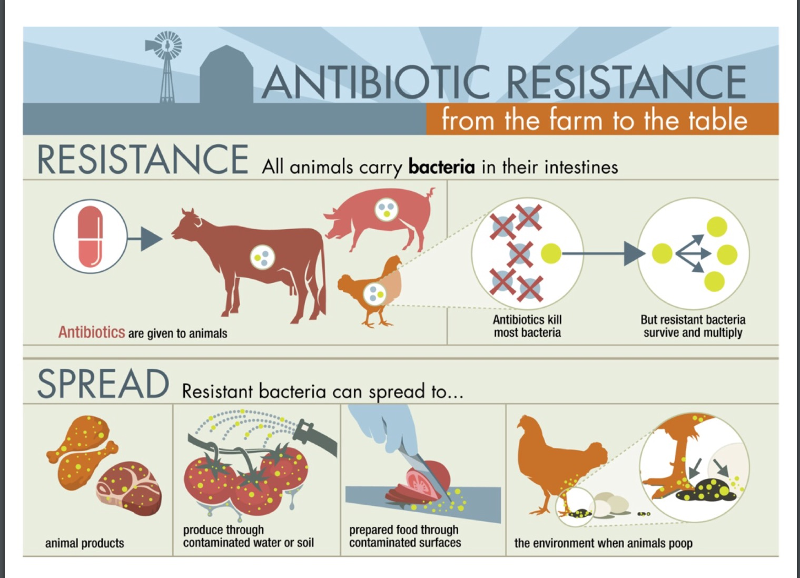 | back 80 abx given to animals on the farm that then provides resistance strains in our food. exposed to contaminated foods or from a contaminated environment. |
front 81 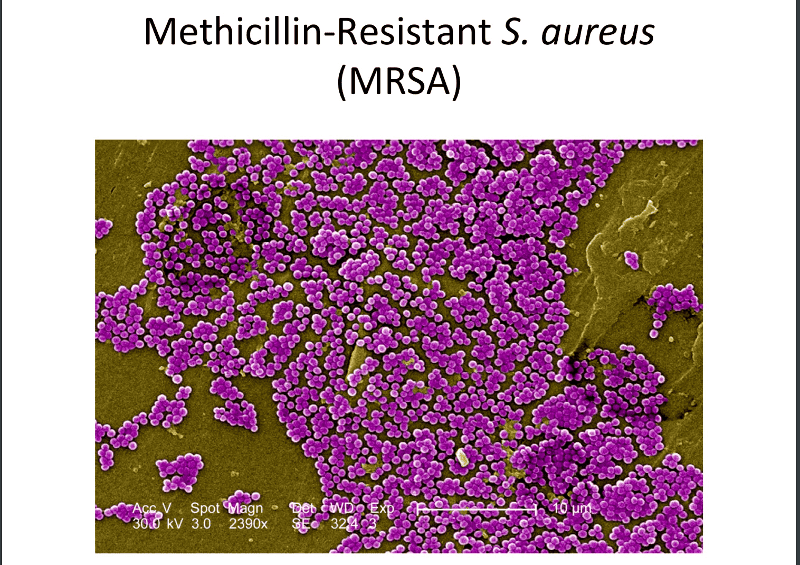 | back 81 prevalent in hospitals, resistant to most abx, tends to be untreatable. skin disease, can look like a spider bite, no obvious wound. AKA staph infections. |
front 82 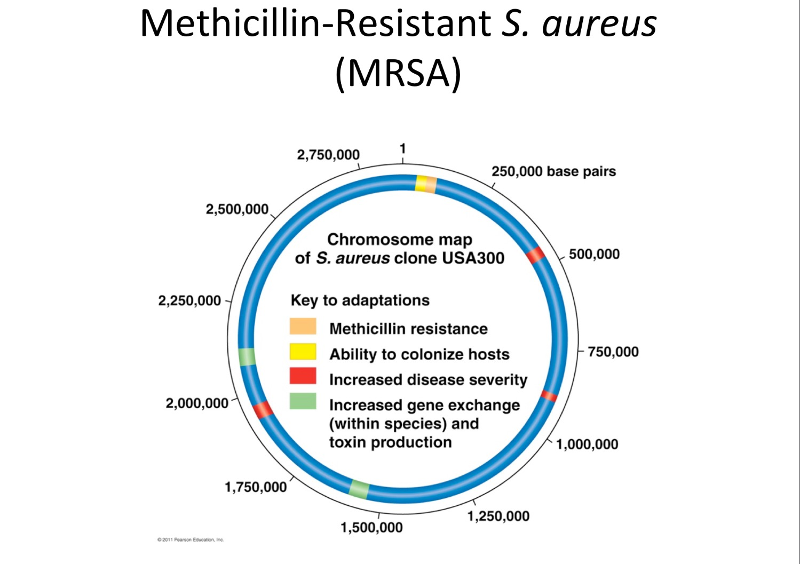 | back 82 the chromosomal map of MRSA. |
front 83 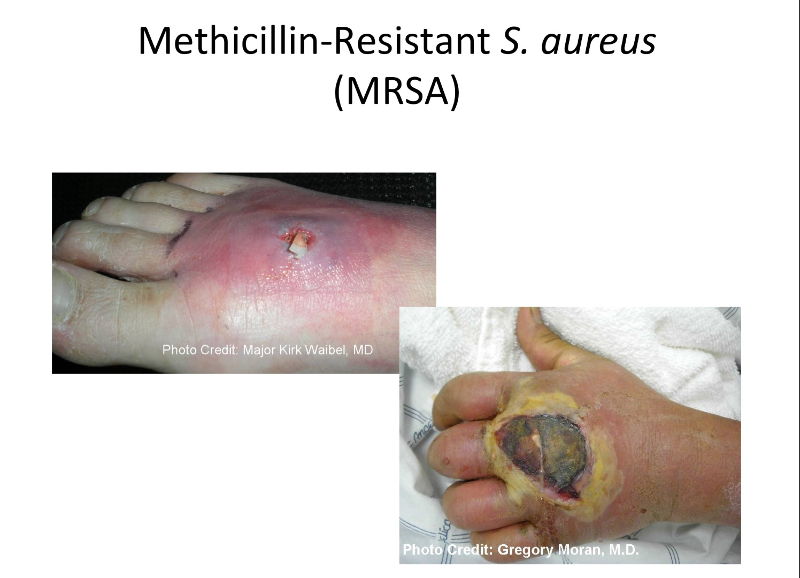 | back 83 Causes huge amounts of tissue damage that is difficult to treat due to abx drug resistance. frequent hand washing keep wounds covered clean linens develop new abx reduce the use of the ones we already have. |
front 84 The removal of plasmids reduces virulence in which of the following organisms? | back 84 Streptococcus mutans |
front 85 A encapsulated bacterium can be virulent because? | back 85 It resists phagocytosis and continues growing ie: streptococcus pneumoniae and klebsiella pneumoniae produce capsules that r/t their virulence. |
front 86 A drug that binds to mannose on human cells would? | back 86 Prevent the attachment of pathogenic e. Coli. |