Instructions for Side by Side Printing
- Print the notecards
- Fold each page in half along the solid vertical line
- Cut out the notecards by cutting along each horizontal dotted line
- Optional: Glue, tape or staple the ends of each notecard together
Chapter 23: Digestive System (Mastering)
front 1 Art-labeling Activity: Figure 23.16a Drag the appropriate labels to their respective targets. | back 1 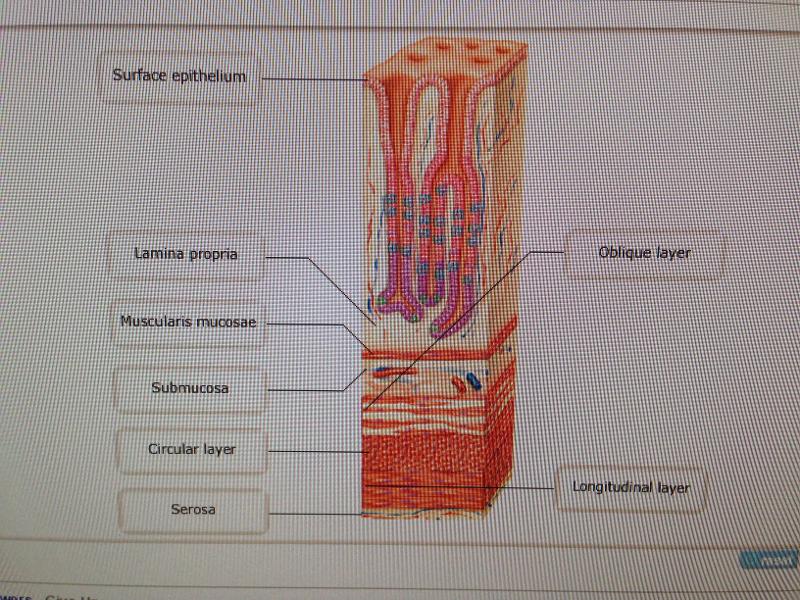 See Photo |
front 2 Art-labeling Activity: Figure 23.16b Drag the appropriate labels to their respective targets. | back 2 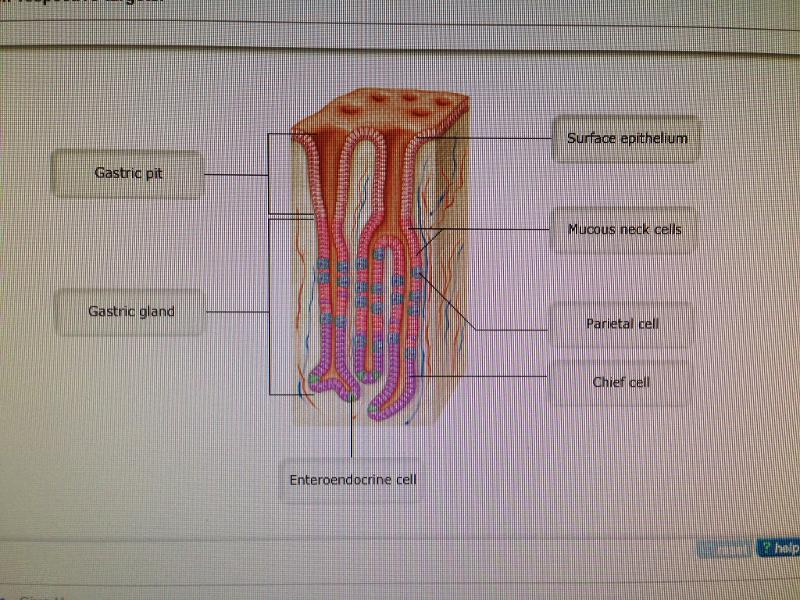 See Photo |
front 3 Art-labeling Activity: Figure 23.24c Drag the appropriate labels to their respective targets. | back 3 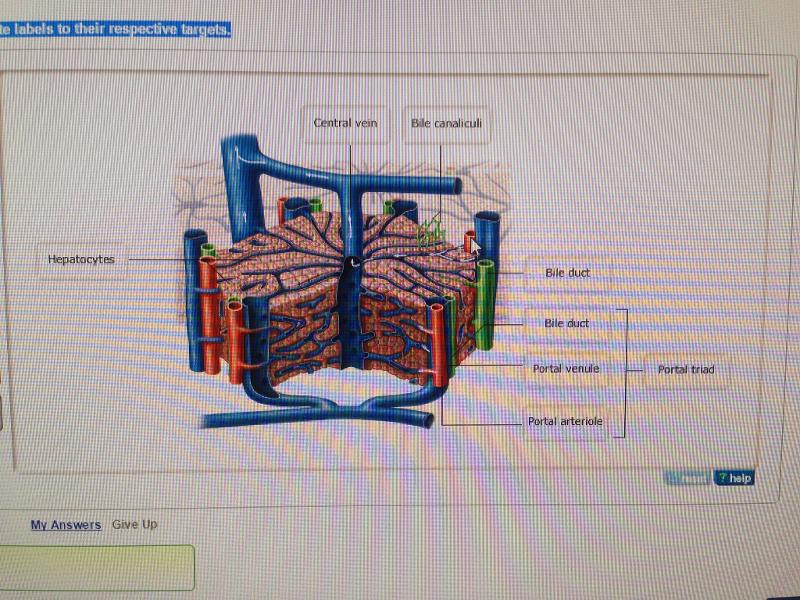 See Photo |
front 4 Art-labeling Activity: Figure 23.27 Drag the appropriate labels to their respective targets. | back 4 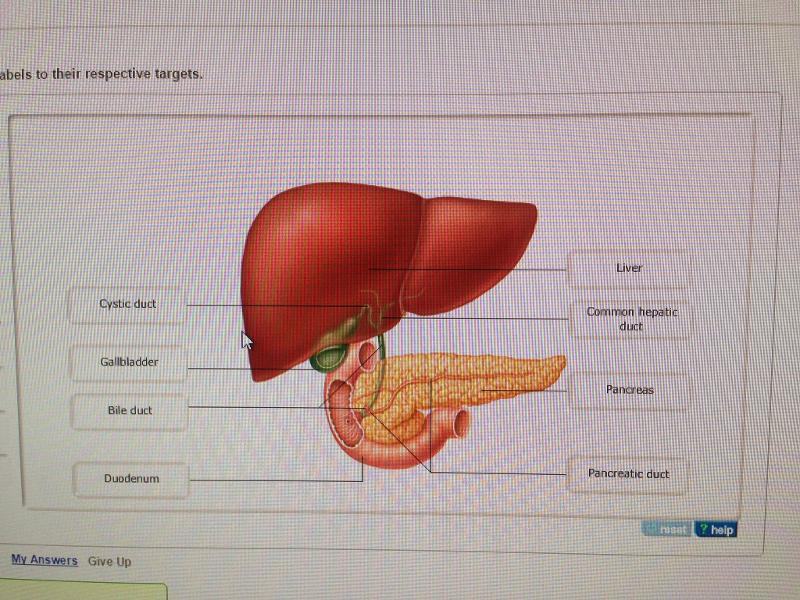 See Photo |
front 5 Art-labeling Activity: Figure 23.29 Drag the appropriate labels to their respective targets. | back 5 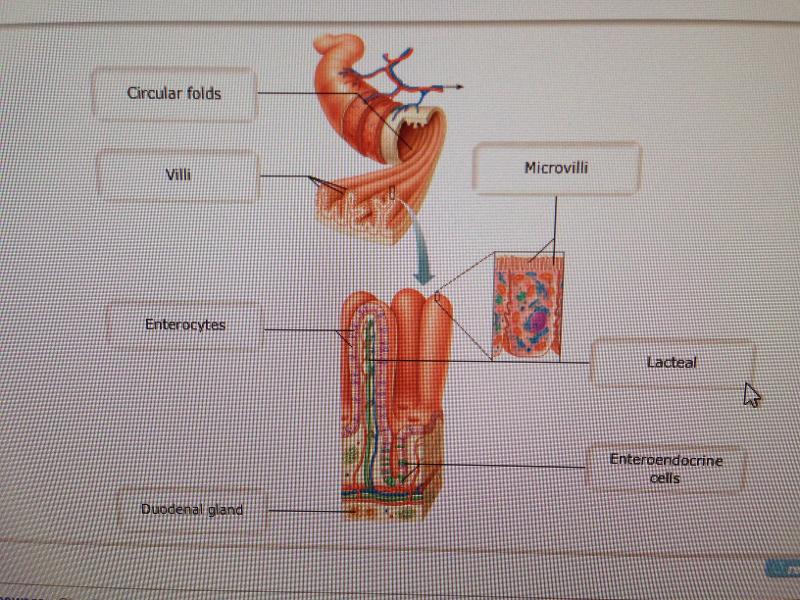 See Photo |
front 6 Art-labeling Activity: Figure 23.32d Drag the appropriate labels to their respective targets. | back 6 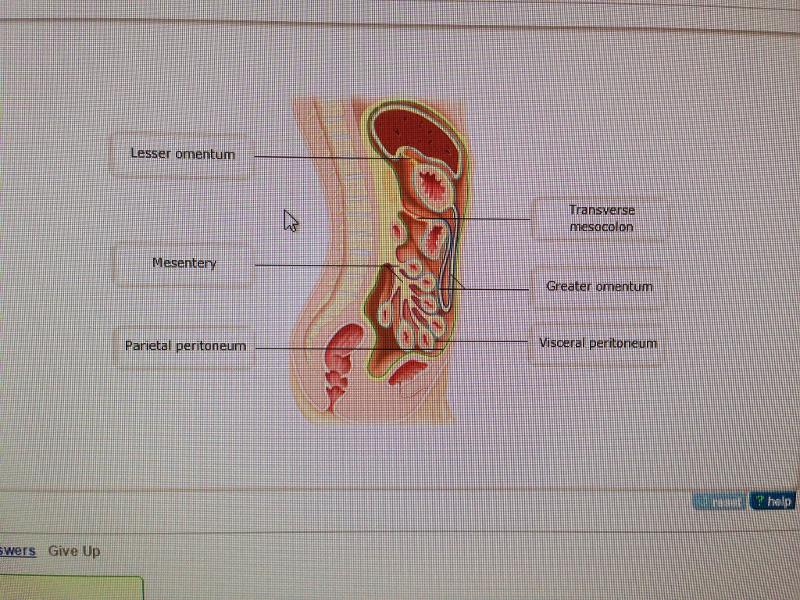 See Photo |
front 7 Art-labeling Activity: Figure 23.32c Drag the appropriate labels to their respective targets. | back 7 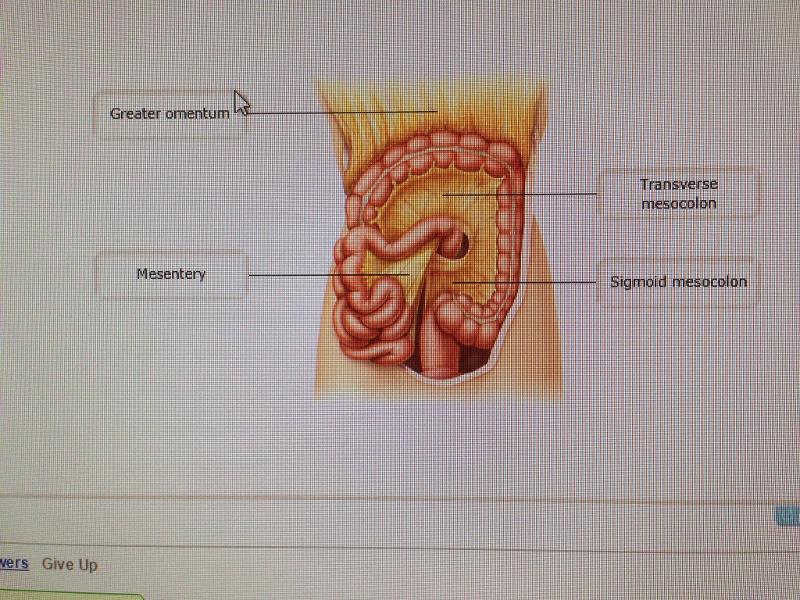 See Photo |
front 8 Which layer of the alimentary canal is responsible for segmentation and peristalsis? submucosa muscularis externa mucosa serosa | back 8 muscularis externa |
front 9 Which layer of the alimentary canal contains not only glands and blood vessels but also a nerve plexus that helps regulate digestive activity? serosa submucosa muscularis externa mucosa | back 9 submucosa |
front 10 The __________ circulation drains all of the organs of the digestive system. splanchnic hepatic portal peritoneal visceral | back 10 hepatic portal |
front 11 Which layer of the digestive tract controls digestive propulsion? mucosa serosa submucosa muscularis externa | back 11 muscularis externa |
front 12 Unitary smooth muscle is found in all hollow organs except for the heart. What structure do both heart muscle and unitary smooth muscle share that allows them to contract as a functional group? T tubules gap junctions caveolae epimysium | back 12 gap junctions |
front 13 Which digestive process does NOT occur in the mouth? mechanical breakdown digestion segmentation ingestion | back 13 segmentation |
front 14 What control mechanism opens the gastroesophageal sphincter? detection of nutrients in the esophagus pH changes in the esophagus constriction of the upper esophageal sphincter peristalsis in the esophagus | back 14 peristalsis in the esophagus |
front 15 Which of the following constitute a portal triad? the porta hepatis the hepatic artery and two hepatic veins a bile duct along with a portal venule and arteriole three lobules sharing a common central vein | back 15 a bile duct along with a portal venule and arteriole |
front 16 Which of the following best describes the capillary wall structure found in the liver lobules? The walls are continuous, only allowing small molecules and water to pass through. The walls only allow water to pass through. The walls have windows that allow small proteins to pass through but not cells. The capillary walls have openings that allow large proteins and small cells to pass through. | back 16 The capillary walls have openings that allow large proteins and small cells to pass through. |
front 17 What is a major function of pancreatic juice? acidifying the contents of the stomach acidifying the contents of the small intestine neutralizing chyme entering the small intestine from the stomach emulsifying fats by breaking them into smaller pieces | back 17 neutralizing chyme entering the small intestine from the stomach |
front 18 Bile is secreted by the __________ under hormonal influence of __________. pancreas; secretin liver; secretin gallbladder; CCK small intestine; CCK | back 18 liver; secretin |
front 19 Which of the following is NOT a secretion of the pancreas? bicarbonate nutrient enzymes insulin bile | back 19 Bile |
front 20 Which cells in the small intestine's mucosa secrete mucus? enteroendocrine cells Paneth cells goblet cells enterocytes | back 20 goblet cells |
front 21 Which of these best describes a lacteal? a projection of the small intestine wall designed to increase surface area a deep pocket in the intestinal wall where endocrine and antimicrobial cells are located special capillaries in the villi designed for absorbing food effectively a lymphatic vessel designed to help introduce fats to the blood | back 21 a lymphatic vessel designed to help introduce fats to the blood |
front 22 Most absorption of nutrients occurs in the __________. jejunum duodenum large intestine stomach | back 22 jejunum |
front 23 Which of the following propels food residue over large areas of the colon three to four times a day? Valsalva's maneuver mass movement haustral contractions defecation reflex | back 23 mass movement |
front 24 Which of the following is the primary physiological function of the large intestine? nutrient absorption mechanical breakdown of food water absorption and feces elimination primary digestion of food | back 24 water absorption and feces elimination |
front 25 What type of blood capillary located in this sublayer is uniquely suited for absorption of nutrient material? fenestrated continuous lacteals sinusoidal | back 25 fenestrated |