Print Options

Card layout: ?

← Back to notecard set|Easy Notecards home page

Instructions for Side by Side Printing
  1. Print the notecards
  2. Fold each page in half along the solid vertical line
  3. Cut out the notecards by cutting along each horizontal dotted line
  4. Optional: Glue, tape or staple the ends of each notecard together
  1. Verify Front of pages is selected for Viewing and print the front of the notecards
  2. Select Back of pages for Viewing and print the back of the notecards
    NOTE: Since the back of the pages are printed in reverse order (last page is printed first), keep the pages in the same order as they were after Step 1. Also, be sure to feed the pages in the same direction as you did in Step 1.
  3. Cut out the notecards by cutting along each horizontal and vertical dotted line
To print: Ctrl+PPrint as a list

151 notecards = 38 pages (4 cards per page)

Viewing:

OB midterm

front 1

duration of pregnancy

back 1

Prenatal period: a time of physical and psychologic preparation for birth and parenthood

Duration of pregnancy: gestation

  • spans 9 calender months, 10 lunar months.
  • 40 weeks or 280 days
  • trimesters
  • first: weeks 1-13
  • second: weeks 14-26
  • third: weeks 27-40

front 2

Healthy People 2020 maternal goals

back 2

  • Reduce the rate of fetal and infant deaths
  • Reduce the rate of maternal mortality
  • Reduce preterm births
  • Reduce cesarean births among low risk women

front 3

Top three risk factors ob

back 3

  • Hemorrhage—do pre-assessment, have blood ready
  • HTN—does not get better until placenta is delivered ie. placenta causes the HTN—try to wait until 37 to 39 weeks to deliver
  • Infection

front 4

Paternal adaptation to pregnancy

three phases

back 4

  • Accepting the pregnancy
    • uCouvade syndrome: has same symptoms as mom, nausea vomiting...so forth, weight gain
  • uDevelopmental tasks experienced by the expectant father
    • uAnnouncement phase- accept to the fact of it
    • uMoratorium phase- adjust tothe realityu
    • uFocusing phase- becoming a good papa, active involvement in prego and being a dad
  • uIdentifying with the father role
  • uReordering personal relationships
  • uEstablishing relationship with the fetus
  • uPreparing for birth

front 5

Maternal Adaptation to pregnancy

three phases

back 5

uMaternal adaptation

  • uAccepting the pregnancy
  • uIdentifying with the mother role
  • uReordering personal relationships
  • uEstablishing relationship with fetus: attachment process of the mother
    • uPhase 1: She accepts the biologic fact of pregnancy
    • uPhase 2: She accepts the growing fetus as distinct from herself
    • uPhase 3: She prepares realistically for the birth and parenting of the child
  • uPreparing for childbirth
  • Ambivalence is normal, especially in first trimester
  • May look into termination or adoption

front 6

3 parts to first prenatal visit

back 6

  1. Important components of the initial prenatal visit include detailed and carefully documented findings from the interview, a comprehensive physical examination, and selected laboratory tests.

front 7

Follow up visits

back 7

  1. Follow-up visits are shorter than the initial visit and are important for monitoring the health of the mother and fetus and providing anticipatory guidance as needed.

front 8

nnormal prenatal care timeline

back 8

Normal prenatal care = q month until 28 weeks, then q 2 months until 36 weeks, then every week until delivery.

front 9

iMMUNIZATIONS

back 9

Immunizations: MMR, TdAP (3rd trimester), flu, pneumovax, varicella

front 10

1.With regard to follow-up visits and the physical examination for women receiving prenatal care, nurses should be aware that:

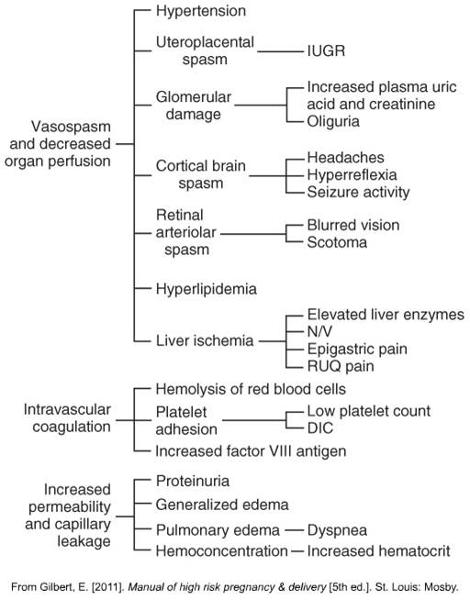
a.The interview portions become more intensive as the visits become more frequent over the course of the pregnancy.

b.Monthly visits are scheduled for the first trimester, every 2 weeks for the second trimester, and weekly for the third trimester.

c.During the abdominal examination, the nurse should be alert for supine hypotension.

d.For pregnant women, a systolic blood pressure (BP) of 130 mm Hg and a diastolic BP of 80 mm Hg is sufficient to be considered hypertensive

back 10

C

front 11

What is supervena cavas syndrome

back 11

HOTN and less O2 to baby

front 12

How to care for a variety of women in pregnancy

back 12

  • uCultural influences
    • uMany cultural variations are found in prenatal care
    • uCultural barriers to prenatal care: lack of money, lack of transportation, language barriers, modesty
  • uEmotional response
  • uPhysical activity and rest
  • uClothing
  • uSexual activity
  • uDiet
  • uAge differences
  • uAdolescents
    • uLess likely than older women to receive adequate prenatal care
  • uWomen older than 35 years
  • uMultifetal pregnancy
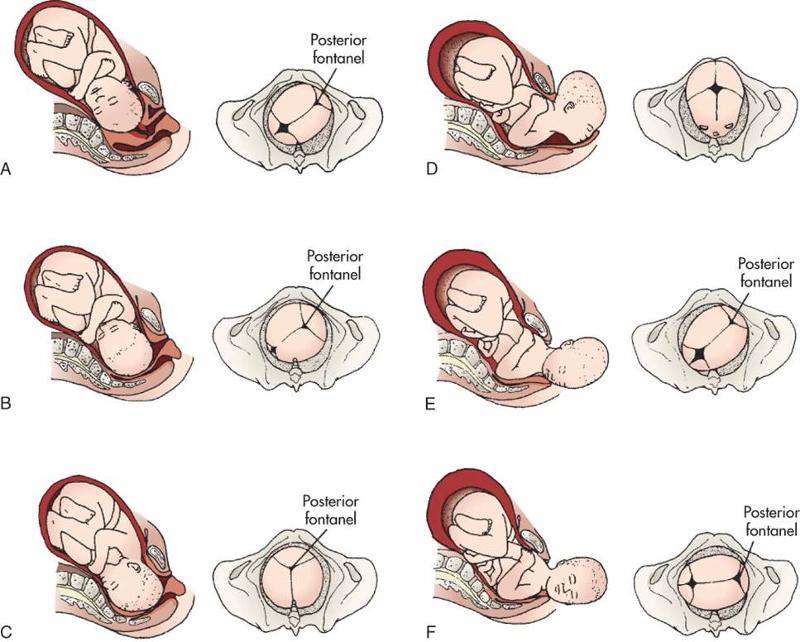
    • uPuts the mother and fetuses at increased risk for adverse outcomes
    • uMultifetal pregnancies are more likely to end in prematurity.
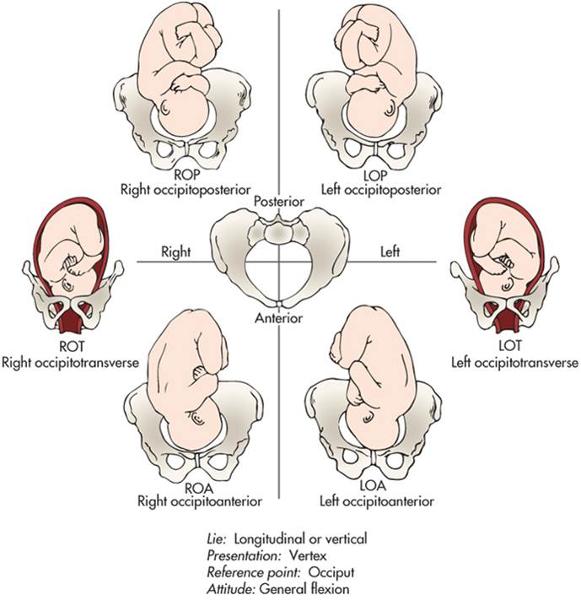
    • uSpontaneous rupture of membranes before term is more common.

front 13

sex and pregooss

back 13

  • Sex is okay. Lots of bleeding with sex and signs of preterm labor, must adjust.
  • Sperm contains PG which can stimulate contractions, so may be advised it post-term

front 14

cAN I TRAVEL BY AIRPLANE

back 14

Travel beyond 34 – 35 weeks not condoned by airlines 2/2 risk of contractions from cabin pressure changes

front 15

What else to teach mom at visits

back 15

  • uExpected maternal and fetal changes
  • uNutrition
  • uPersonal hygiene
  • uPrevention of urinary tract infections
  • uKegel exercises
  • uPreparation for breastfeeding
  • uDental health
  • uPhysical activity
  • ˜Posture and body mechanics
  • ˜Rest and relaxation
  • ˜Employment
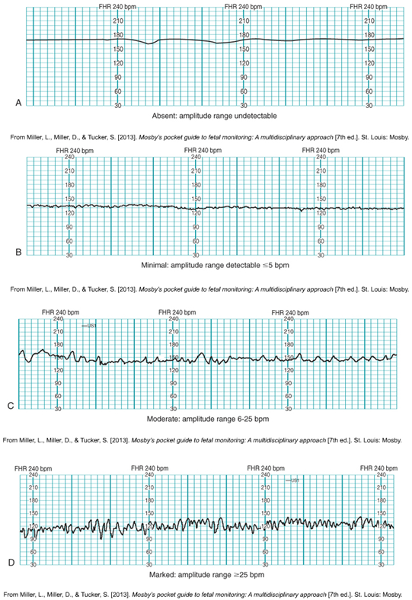
  • ˜Clothing
  • ˜Travel
  • ˜Medications and herbal preparations
  • ˜Immunizations
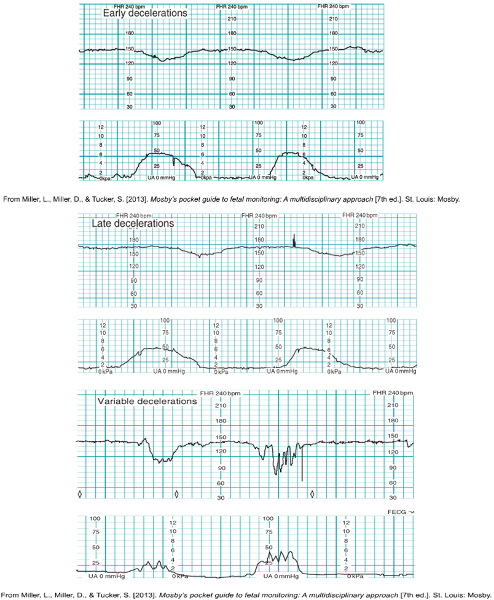
  • uAlcohol, cigarette smoking, caffeine, drugs
  • uNormal discomforts
  • uRecognizing potential complications
  • uRecognizing preterm labor—PROM, non BH contractions, etc, please come in.
  • uSexual counseling
    • uUsing the history
    • uCountering misinformation

front 16

When would mom get ultrasound to estimate date of delivery

back 16

best at 1-13 weeks

front 17

1. Prenatal period definition:

2. Gestation definition:

3. Length of pregnancy/how many weeks in 1st 2nd and 3rd term?:

back 17

1. A time of physical and psychologic preparation for birth and parenthood

2. Duration of pregnancy:

3.

Spans 9 calendar months, 10 lunar months

40 weeks or 280 days

Trimesters

First: weeks 1-13

Second: weeks 14-26

Third: weeks 27-40

front 18

Signs and Symptoms of Pregnancy:

1. Presumptive

2. Probable

3. Positive

back 18

1. Suggested by the patient

- GI: Amenhorrea, nausea, vomiting, morning sickness

- Breast tenderness, need to pee, fatigue

- Quickening- feel the baby move at 16-20 weeks.

2. Probable: by examiner

- Pregnancy Test

- Uterine enlargement

- Braxton Hicks contractions

- Placental souffle

- Ballottement

3. Positive: Attributed to the FETUS

- Ultrasound

- Movement felt by someone else- third trimester

- Fetal heart beat distinct from mom

- Visualization of fetus

front 19

Estimated Date of Birth/Delivery: how to calculate? And who came up w/ this calculation?

Also, what is the gold standard for finding date of birth?

back 19

1. Take last menstural period

2. Substract 3 calender months

3. Add 7 days

4 This rule was founded by: Naegeles

5. Gold standard is ultrasound

front 20

Prenatal period:

1. Initial interview items

back 20

1.

˜Initial visit

  • Prenatal interview:
  • Reason for seeking care
  • Current pregnancy
  • Childbearing and female reproductive history
  • Health history
  • Nutritional history
  • History of drug and herbal preparation use
  • Family history
  • Social, experiential, occupational history
  • Prenatal interview (Cont.):
  • History or risk of intimate partner violence
  • Review of systems:
  • Physical examination:
  • Laboratory tests
  • Urine, cervical, and blood samples
  • Screening and diagnostic tests for infectious diseases and metabolic conditions

2. Physical assessment:

  • Physical examination—teeth, thyroid, breast, breastfeeding, baby, abdomen size, vulva, vagina, cervix, pap, prenatal labs
  • 3. Laboratory tests
    • Urine, cervical, and blood samples
    • Screening and diagnostic tests for infectious diseases and metabolic conditions
    • Blood type, starting crit, hep, HIV, syph, asymptomatic bacteruria can cause preterm labor and ascend into kidney infxn, gonorrhea, chlamydia

front 21

Prenatal:

2. Follow up visits

back 21

˜Follow-up visits

  • Interview
  • Physical examination
  • Fetal assessment
  • Gestational age
  • Fetal heart tones
  • Health status
  • Fundal height
  • Laboratory/other tests

front 22

Terms:

1. Gravida

back 22

Gravida: women who is pregnant

front 23

2. Gravity

back 23

Gravity: the pregnancy

front 24

3. Mulitgravida

back 24

Multigravida- women with more than 2 pregnancies

front 25

Multipara

back 25

Multipara: women who has completed 2 or more pregnancies

front 26

Nulligravida

back 26

women who has never been pregnant

front 27

Parity

back 27

˜Parity : number of pregnancies in which fetus or fetuses have reached VIABILITY (20 wks), NOT the number of fetuses born

front 28

Nullipara

back 28

˜Nullipara : woman who has not completed pregnancy with a fetus or fetuses who have reached the stage of fetal viability

˜

front 29

Primipara

˜

back 29

Primipara : A woman who has completed one pregnancy with a fetus or fetuses who have reached 20 weeks of gestation

˜

front 30

Multipara:

back 30

Multipara : A woman who has completed two or more pregnancies to 20 weeks of gestation or more

˜

front 31

Preterm:

back 31

˜Preterm : a pregnancy that has reached 20 weeks of gestation but ends before completion of 37 weeks of gestation

front 32

Late preterm:

back 32

˜Late preterm : a pregnancy that has reached between 34 weeks 0 days and 36 weeks 6 days of gestation

front 33

Early Term:

back 33

˜Early term : a pregnancy that has reached between 37 weeks 0 days and 38 weeks 6 days of gestation

front 34

Full Term:

back 34

˜Full term : a pregnancy that has reached between 39 weeks 0 days and 40 weeks 6 days of gestation

front 35

˜Late term :

back 35

Late term : a pregnancy that has reached between 41 weeks 0 days and 41 weeks 6 days of gestation

˜

front 36

Post term:

back 36

˜Post term : a pregnancy that has reached between 42 weeks 0 days and beyond of gestation

front 37

2 digit system used to identify the number of pregnancies

back 37

2 digit system: G__ P__

G – Gravida

P - Parity

front 38

5 digit system

back 38

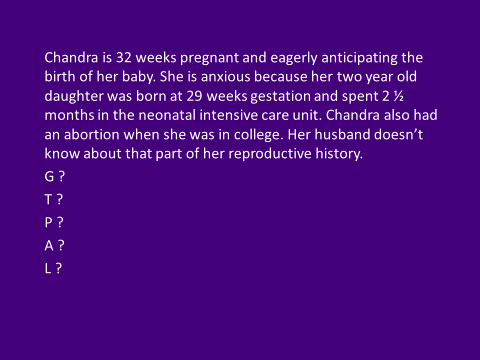
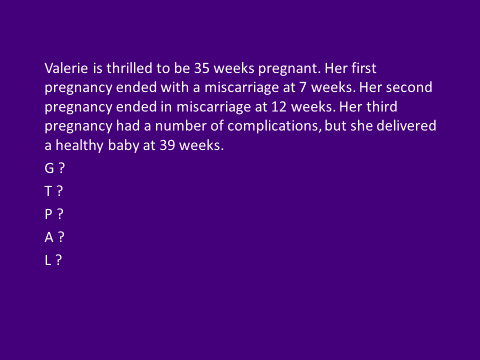
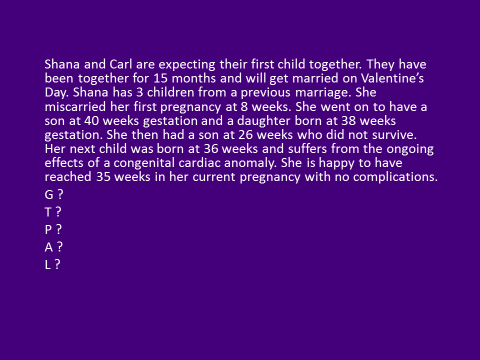
5 digit system: G__ T__ P__ A__ L__

G – Gravida

T – Term birth

P – Preterm birth

A – Abortions and Miscarriages

L – Living children

front 39

back 39

G- 3

T- 0

P-1

A- 1

L- 1

front 40

back 40

G- 4

T- 1

P- 0

A- 2

L-1

front 41

back 41

no data

front 42

Uterus Changes in Pregnancy:

- What is hegar sign

- What are false contractions called

- What is bouncing of the baby in utero called

- what is quickening

back 42

  • high levels of estrogen and progesterone stimulate growth in first tri.
    • Due to increased vascularity, dilation of blood vessels, hyperplasia and hypertrophy and decidua.
    • By 7 wk uterus = hen egg, 10=orange, 12= grapefruit.
    • After third month growth due to fetus.
    • 2nd trimester= uterine shape not pear anymore now globular. Then rises from pelvis to abdominal cavity. Start showing by 14-20 wks
    • Uterus palpated above symphysis pubis 12-14 wk. at umbilicus at 22-24 wk, to xyphoid prcess at term. Then 38-40 wk, fundal height decreases and goes into pelvis (lightening).
    • 6 wk= hegar sign, softening of the uterus and flexibility-press on wall of bladder= have to pee
    • Braxton hicks contractions- false contractions.
    • Uteroplacental blood flow: increases with size increase.
    • More oxygen, uterine soufflé or bruit can be heard.
    • Funic soufle is fetal blood moving through umbilical cord.
    • Fetus changes:ballottment: passive movement of unengaged fetus- moving fetus up and down, bouncing gently and feeling rebound.
    • Quickening-first fetal life recognition movement. 16-20 wks.

front 43

Cervical changes in pregnanyc:

what is chadwhick versus goodell sign

back 43

  • Cervical:
    • softening begins 6 wk.
    • goodell sign = hypertrophy, vascularity, hyperplasia (red).
    • Friability is increased= easily damaged tissue and bleeding.
    • Chadwick sign: blue

front 44

Vagina and vulva

What is operculum

back 44

  • Vagina and vulva:
    • Operculum: mucosa thickens- mucus block to protect from infection. Ph is more acidic. 3.5-6.0. this makes her vulnerable to yeast infections though.
    • connective tissue loosen, smooth muscle hypertrophy and vaginal vault to lengthen. Chadwick sign= more blood flow = bluish vaginal mucosa and cervis.
    • Leukorrhea is white gray mucus and musty odor, white due to excess epithelial cells.
    • Increased sensitivity due to vascularity of vagina. High degree of sexual interest and arousal.
    • Edema and varicosities. External structures are enlarged due to more vascularity.

front 45

Breast changes

back 45

  • fullness, sensitive, tingling, heaviness, pigmented nipples, hypertrophy of sebasious glands, Montgomery tubercles.
  • Striae gravidarum.
  • Colostrum-yellow fluid secreted during second trimester.

front 46

Cardiovascular changes

BP, blood flow, hr, coaguability?

back 46

Slight hypertrophy:bigger heart: moves and rotates due to the fetus pushing.
Blood pressure: same, but decreases in third trimester
Blood volume and composition: increases significantly during pregnancy by approximately 30% to 45%
Cardiac output: increases
Circulation and coagulation times
Pregnancy is considered a hypercoagulable state : @ risk for DVT

Pulse: Apical impulse shifts. 20 weeks, audible splitting of s12 and 3. Maternal hr begins increasing at wk 5 but increases by 10-15 by 32 week.

front 47

Respiratory changes

back 47

  • Pulmonary: ribs move due to estrogen relaxation. Upper resp is more vascular.
  • become thoracic breathers

front 48

Renal

- urine, ureters

back 48

  • Renal: renal pelvis and utereters dilate.
  • Urine contains more nutrients and sugars= more at risk for urinary tract infection.
  • Fetus pushing on bladder=Nocturia, bladder irritated, urinary urgency and frequencey.

front 49

  • Integrementery:

back 49

malasma: darkened pigmentation- especially in dark skinned people

Linea nigra- from symphimas pubis to top of fundus.

Striae gravadrum. PUPPP: pruritic, uriticaric, plaques and papules of pregnancy. – red marks on ab.

front 50

muskuloskeletal

back 50

-Musckuloskletal: relaxin hormones +progesterone relaxes bones, ribs are relaxed so you can fit the baby.

Pelvis- relactin makes it loser. Hip pain joint pain, waddleing.

Posture changes- lower back change. Walk straight. Belly band.

Carpel Tunnel

front 51

GI changes

GI, mouth, appetite, liver

back 51

Gastrointestinal system
Appetite- decreased
Mouth- raised red bumps sometimes
Esophagus, stomach, and intestines: decreased GI motility= constipation
Gallbladder and liver- distended gallbladder, decreased muscle tone, increasted emtying and thick bile= can cause gallstones. Liver sometimes retains bile= itching and jaundice sometimes
Abdominal discomfort: Pyrosis (heartburn) (due to LES loosening), Ptyalism (excessive salivation)
Appendicitis can be difficult to diagnose in pregnancy because the appendix is displaced upward and laterally

front 52

Sonograms in pregnacy

back 52

  • If woman is definite about their last menstrual period (ie first day of her last period), then you don’t need to go with a sonogram.
  • Best time to date with a sonogram is first trimester, second trimester is a couple weeks off, third trimester is about three weeks off.

front 53

induction in wmoen with previous scars

back 53

  • Don’t give induction medicines to women not in labor with a previous scar. Cervical massage is an acceptable alternative along with fetal testing to ensure placenta is still functioning well and baby is okay.
  • Cook catheter great way for mechanical dilation for women who can’t get meds due to previous scars.

front 54

  1. Decreased muscle tone during pregnancy contributes to 3 things.

back 54

  1. Decreased muscle tone during pregnancy contributes to heartburn, reflux, and constipation.

front 55

  1. Dilation of renal pelves and ureters during pregnancy increases the risk of ______.

back 55

UTI

front 56

Change in hr in pregnancy

back 56

  1. Heart rate increases 10 to 15 beats/minute by 32 weeks of gestation and persists until term.

front 57

Anemia in pregnancy due to

back 57

  1. Physiologic anemia of pregnancy results from increase in plasma volume greater than the increase in red blood cells.

front 58

Common antepartum complications

back 58

  • Gestational Diabetes
  • Hyperemesis Gravidarum
  • Hypertension
  • Hemorrhagic Disorders

front 59

Diabetes Mellitis

back 59

  • Diabetes mellitus (DM)
  • Affects 4% to 14% of pregnant women
  • Pregnancy complicated by diabetes is considered high risk
  • Pathogenesis
  • Group of metabolic diseases characterized by hyperglycemia resulting from defects in insulin secretion, insulin action, or both
  • Body compensates for its inability to convert glucose into energy by burning muscle and fats
  • Key to an optimal outcome is strict glycemic control

front 60

Diabetes Mellitis classifications and types

back 60

  • Classification
  • Type 1 diabetes
  • Absolute insulin deficiency
  • Type 2 diabetes
  • Relative insulin deficiency
  • Gestational diabetes mellitus (GDM)
  • Pregestational diabetes mellitus
  • Label given to type 1 or 2 diabetes that existed prior to pregnancy
  • White’s classification system
  • New ADA system (distinguishes with or without vascular complications)

front 61

Glucose changes in pregnnacy

back 61

  • Metabolic changes associated with pregnancy
  • Normal pregnancy is characterized by alterations in maternal glucose metabolism, insulin production, and metabolic homeostasis
  • Glucose is the primary fuel for the fetus
  • Glucose crosses the placenta, insulin does not
  • Insulin needs increase during the first trimester

front 62

Gestational Diabetes

back 62

˜Complicates 3% to 9% of all pregnancies

˜Fetal risks

  • No increase of birth defects if develop GDM after the first trimester
  • At risk for macrosomia and associated birth trauma and neonatal hypoglycemia

˜

front 63

Macrosemia vs. LGA

back 63

  • Macrosomia is either greater than 8 lbs 13 oz or 9 lbs 15 oz
  • LGA is weight, head circumference, or length greater than 90th or 97th percentile.
  • Can be both

front 64

macrosmia causes risk for...

back 64

shoulder dystopia

front 65

Screening for gestational diabetes:

1. What makes them at high risk for GDM:

2. Screening

back 65

-screening:

1. High risk: obesity, corticosteroids, hx of gdm in previous pregnancies, races AA, NA Asian

2. Screen:

-1 hour glucose testing test, glucola, sweet orange juice- draw one bloodwork or finger gluocse to see level- if over 130= positive

-Do between 24 and 28- if positive do a longer test, a fasting, 1hr, 2hr and 3hr.

-if before 20 weeks evaluated probably diabetes not GDM

front 66

GDM care management: Antepartium

back 66

  • Antepartum:
  • Diet
  • Exercise
  • Self-monitoring of blood glucose:
  • 4x a day!, fasting 1hr post prandial, 2hrs. Decrease to 2 or if stable to only fasting Pharmacologic therapy: glyburide
  • Fetal surveillance

front 67

GDM Care: Intrapartum

back 67

  • Intrapartum
  • Blood glucose monitored hourly in labor
  • Infusion of regular insulin

front 68

GDM care: postpartum

back 68

  • Postpartum
  • Will return to normal glucose levels after birth
  • Likely to recur in future pregnancies

front 69

Key points for diabetes in pregnancy

back 69

  • Poor glycemic control before and during pregnancy in women who have diabetes can lead to maternal and fetal complications.
  • Careful glucose monitoring, medication administration when necessary, and dietary counseling are used to create a normal intrauterine environment for fetal growth and development in the pregnancy complicated by diabetes mellitus.
  • Because GDM is asymptomatic in most cases, all women who are not known to have pregestational diabetes undergo routine screening by history, clinical risk factors, or laboratory assessment of blood glucose levels during pregnancy.

front 70

Hyperemesis Gravidarum

back 70

  • Normal nausea and vomiting complicates 50% to 80% of all pregnancies, typically beginning at 4 to 10 weeks of gestation, usually resolving by 20 weeks of gestation
  • Hyperemesis gravidarum is excessive, prolonged vomiting accompanied by the following:
    • Weight loss
    • Electrolyte imbalance
    • Nutritional deficiencies
    • Ketonuria

front 71

Assessment for HG

back 71

  • Assessment
  • Assess severity
  • Weight, V/S, presence of ketonuria
  • Psychosocial assessment: role of anxiety

front 72

Initial Care for HG: can be done outpatient!

back 72

  • Intravenous (IV) therapy for correction of fluid and electrolyte imbalances
  • Medications: Zofran can cause ceft palate, but they still give it, especially after 14 wks.
  • Enteral or parenteral nutrition as a last resort
  • Nursing interventions

front 73

Key points for managing HG

back 73

  • The woman with hyperemesis gravidarum may have significant weight loss and dehydration. Management focuses on restoring fluid and electrolyte balance and preventing recurrence of nausea and vomiting.

front 74

Women with hyperemesis gravidarum:

a.Are a majority, because 80% of all pregnant women suffer from it at some time

b.Have vomiting severe and persistent enough to cause weight loss, dehydration, and electrolyte imbalance

c.Need IV fluid and nutrition for most of their pregnancy

d.Often inspire similar, milder symptoms in their male partners and mothers

back 74

B

front 75

Hypertensive Disorders: background and significance

back 75

  • Common medical complication of pregnancy
  • Hypertensive disorders are a major cause of perinatal morbidity and mortality worldwide due to the following:
  • Uteroplacental insufficiency
  • Premature birth
  • Of maternal deaths worldwide, 10% to 15% can be attributed to preeclampsia and eclampsia.
  • Preeclampsia accounts for more than 50,000 maternal deaths each year.

front 76

Morbidity and Mortality due to HTN Disorders

back 76

  • Morbidity
  • Renal failure
  • Coagulopathy
  • Cardiac or liver failure
  • Placental abruption
  • Seizures
  • Stroke
  • Mortality
  • Pregnancy-related hypertension accounts for 10% to 15% of maternal deaths worldwide.

front 77

Types/Classification of HTN disorders

back 77

1. Gestational HTN

2. Preeclampsia

3. Eclampsia

4. Chronic HTN

5. Chronic HTN w/ superimposed preeclampsia

front 78

Gestational HTN:

back 78

  • Onset of hypertension without proteinuria or other systemic findings diagnostic for preeclampsia after week 20 of pregnancy
  • Systolic BP >140 or diastolic BP >90

front 79

Systolic over 140 or diastolic over 90 is ______________.

Systolic over 160 or diastolic over 110 is __________________.

back 79

1. hypertensive

2. very concerned

front 80

Preeclampsia definition

back 80

  • Pregnancy-specific condition in which hypertension and proteinuria develop after 20 weeks of gestation in a previously normotensive woman
  • In the absence of proteinuria, preeclampsia may be defined as hypertension along with the following:
    • Thrombocytopenia
    • Impaired liver function
    • New development of renal insufficiency
    • Pulmonary edema
    • New-onset cerebral or visual disturbances
  • THIS CONDITION DOES NOT GET BETTER UNTIL BABY IS BORN!

front 81

common feature of gest. htn and preecclampsia

back 81

What is a common feature of gestational HTN and preeclampsia?

front 82

Chronic HTN and

Chronic HTN w/ superimposed preeclampsia

back 82

  • Chronic hypertension:
  • Hypertension present before pregnancy or diagnosed before week 20 of gestation
  • Chronic hypertension with superimposed preeclampsia:
  • Women with chronic hypertension may acquire preeclampsia or eclampsia
  • Can be difficult to diagnose

front 83

Preeclampsia etiology

back 83

  • Etiology
  • A condition unique to human pregnancy
  • Common risk factors
  • Primigravidity in woman <19 or >40 years of age
  • First pregnancy with a new partner
  • History of preeclampsia
  • The cause of preeclampsia is unknown.
  • Many theories

front 84

Preeclampsia pathophysiology

back 84

  • Pathophysiology
  • Progressive disorder with placenta as the root cause
  • Begins to resolve after the placenta has been expelled
  • Spiral arteries in the uterus normally become larger and thicker to handle increased blood volume.
  • This vascular remodeling does not occur or only partially develops in women with preeclampsia and decreased placental perfusion and hypoxia result.
  • DOES NOT RESOLVE UNTIL AFTER PLACENTA IS GONE!

front 85

Preeclampsia pathophysiology 2: what does this mean happens?

back 85

  • lPathophysiology
  • Placental ischemia → endothelial cell dysfunction
  • Generalized vasospasm → poor tissue perfusion in all organ systems
  • Increased peripheral resistance and blood pressure (BP)
  • Increased endothelial cell permeability
  • Reduced kidney perfusion
  • Plasma colloid osmotic pressure decreases.
  • Decreased liver perfusion
  • Neurologic complications

front 86

labs for preeclampsia

back 86

  • Kidney function
  • Chem sevens
  • Uric acid, BUN,
  • Liver function tests to establish baseline, then recheck one week later.

front 87

What does Right upper gastric pain test in preeclampsia

back 87

-Upper gastric is liver backing up!

front 88

What does Headache, blurred vision, swelling mean in preeclampsia

back 88

retinal spasm and cortical brain spasm

front 89

edema where is most important

back 89

hands nad face

front 90

Chart on what happens in preeclampsia and s&sypmtoms

Corticobrain spasm causes what three things?

back 90

front 91

Identifying and preventing preeclampsia

back 91

  • No reliable test or screening tool has been developed
  • Low-dose aspirin (60 to 80 mg) may help certain high risk women

front 92

Assessment and Nurising Diagnoses for Preeclampsia

What is HELLP syndrome in preeclampsia

back 92

  • Accurate measurement of BP
  • Assessment of edema, although the presence of edema is no longer included in the definition of preeclampsia
  • Deep tendon reflexes (DTRs)
  • Assess for hyperactive reflexes (clonus) (uauLLY THIS OCCURS PRIOR TO SEIZURE)
  • Proteinuria: ideally determined by evaluation of a 24-hour urine collection
  • Evaluate for signs and symptoms of severe preeclampsia:
    • Headaches
    • Epigastric pain
    • Right upper quadrant abdominal pain
    • Visual disturbances
  • HELLP: hemolysis, elevated liver enzymes, and low platelet

front 93

Interventions Preeclampsia mild

back 93

  • Mild gestational hypertension and preeclampsia without severe features
    • Goals of therapy are to ensure maternal safety and deliver a healthy newborn close to term.
    • Home care
    • Maternal and fetal assessment
    • Activity restriction
    • Diet

front 94

Interventions preeclampsia SEVERE

wHEN DO PREECLAMPSIA PT USUALLY HAVE THE BABY?

back 94

  • Severe gestational hypertension and preeclampsia with severe features
    • Goals of care are to ensure maternal safety and formulate a plan for delivery.
    • Intrapartum care
    • Bed rest with siderails up
    • Darkened environment
    • Magnesium sulfate therapy
    • Antihypertensive medications
  • AT 37 WEEKS, THE RISKS OUTWEIGH THE BENEFITS OF KEEPING THE BABY IN. THEY WILL INDUCE

front 95

When is delivery usually called for before 39 weeks

back 95

Consistent 160/110, organ compromise, or consistent elevated labs call for delivery regardless of whether 39 weeks has been reached.

front 96

After 1st preeclampsia pregnancy will I have another, or HTN?

back 96

  • Women with preeclampsia with severe features have a significantly increased risk of developing preeclampsia in a future pregnancy.
  • These women have an increased risk of developing chronic hypertension and cardiovascular disease later in life.
  • For now, women should be educated about lifestyle changes (maintaining a healthy weight, increasing physical activity, and avoiding smoking) that may decrease the risk for developing future health problems.

front 97

Key points preeclampsia

back 97

  • Hypertensive disorders during pregnancy are a leading cause of maternal and perinatal morbidity and mortality worldwide.
  • The cause of preeclampsia is unknown, and there are no known reliable tests for predicting women at risk for developing preeclampsia.
  • Preeclampsia is a multisystem disease.
    • Magnesium sulfate, the anticonvulsant of choice for preventing or controlling eclamptic seizures, requires careful monitoring of reflexes, respirations, renal function, and mental status.
    • Women with preeclampsia (especially early-onset and preeclampsia with severe features) have an increased risk of developing chronic hypertension and cardiovascular disease later in life.

front 98

A client at 36 weeks of gestation presents to labor and delivery complaining of a constant headache for the past 2 days. She also states that her face “seems more swollen than usual.” What should be the nurse’s first action?

a.Obtain a urine sample.

b.Place the client on a fetal heart monitor.

c.Notify the physician of the client’s concerns.

d.Take the client’s blood pressure.

back 98

D

front 99

why do we want a babe to make it to 34 wks

what do we give then if required delivery

back 99

try to keep baby in for 34 weeks to allow for lung maturation and ensure baby will be able to breathe on its own once born.

Give betamethasone in case delivery before 34 weeks is required.

front 100

Antepartal Hemorragic Disorders: why are they a big deal and what are people at risk for?

back 100

  • Bleeding in pregnancy jeopardizes maternal and fetal well-being.
  • Maternal blood loss decreases oxygen-carrying capacity and increases risk for the following conditions:
  • Hypovolemia
  • Anemia
  • Infection
  • Preterm labor
  • Impaired oxygen delivery to the fetus

front 101

Fetal risks from maternal hemmorage

back 101

  • Fetal risks from maternal hemorrhage
  • Blood loss, anemia
  • Hypoxemia
  • Hypoxia
  • Anoxia
  • Preterm birth
  • Hemorrhagic disorders in pregnancy are medical emergencies.
  • The incidence and type of bleeding vary by trimester.

front 102

Early Pregnancy Bleeding usually results in this

back 102

  • Miscarriage (spontaneous abortion): a pregnancy that ends as a result of natural causes before 20 weeks of gestation
  • Approximately 10% to 15% of pregnancies end in miscarriage.
  • Types of miscarriages
  • Threatened
  • Inevitable
  • Incomplete
  • Complete
  • Missed
  • Recurrent

front 103

Types of miscarriages and what they mean

back 103

-Threatened: bleed a little, still viable. Do sonogram-check fetal heart

-Inevitable: mom bleeding heavier, expelling everything- provide supportive measures.

-Incomplete: tissue comes out, rather than formed fetus. Blood tissue clots- expel some of it, but some still stuck inside- intervene, send for scraping and vaccuuming.

-Complete- everything comes out. No more disconfort- severe cramping, getsrid of everything, uterus stops crampong.

-Missed- no bleeding, but no heart beat. Abortion. 3 fold treatment: expectant – let the body do it itself. 2nd is medical intervention = misoprostil- use for inducing missed miscarriage.

-Recurrent: probably need sto go to reproductive med. 3 is a lot of babys to lose. >35 needs to go to see a specialist.

-Recurrent-

front 104

Miscarriage Management

back 104

  • Miscarriage care management
  • Assessment and nursing diagnoses
  • Initial care
  • Depends on the classification of the miscarriage and on signs and symptoms
  • Expectant management
  • Medical management: misoprostol (Cytotec)
  • Surgical management: dilation and curettage (D&C)
  • Follow-up care
  • Follow-up phone calls; support groups

front 105

What is an ectopic Pregnancy

incidence and etiology

clinical manifestations

back 105

  • Ectopic pregnancy: the fertilized ovum is implanted outside the uterine cavity; also called “tubal pregnancies”
  • Incidence and etiology
  • Clinical manifestations
  • Typically s/s occur 6 to 8 weeks after the last normal menstrual period
  • The three most classic symptoms are the following:

1.Abdominal pain

2.Delayed menses

3.Abnormal vaginal bleeding (spotting)

front 106

More on ectopic pregnancies, what do you do

back 106

-ectopicà lifethreatening. Instead of imbedding into the uterus, it is imbedded into follopian tubes. May rupture! ED

- PAIN! One sided pain not general cramping.

-Ectopic severe pain on the tube side.

-Sonogram to determine where it is.

-Ectopicàgive meds to abort.

front 107

Late Pregnancy bleeding:

Placenta Previa

back 107

  • Placenta previa
  • Placenta implanted in lower uterine segment near or over internal cervical os
  • Degree to which the internal cervical os is covered by placenta used to classify three types
  • Complete placenta previa
  • Marginal placenta previa
  • Low-lying placenta

front 108

placenta previa

incidence

manifestations

maternal fetal outcomes

back 108

  • Placenta previa (Cont.)
  • Incidence and etiology
  • 1 in 200 pregnancies
  • Clinical manifestations
  • Painless bright red vaginal bleeding during second or third trimester
  • Maternal and fetal outcomes
  • Major complication is hemorrhage
  • Fetal death (caused by preterm birth)
  • Stillbirth, malpresentation, fetal anemia, intrauterine growth restriction (IUGR)

front 109

placenta previa: diagnoses and care management

back 109

  • Diagnosis
  • Transabdominal ultrasound examination
  • Care management
  • Expectant management
  • Home care
  • Active management

front 110

Placental Abruption, premature

Risk factors?

back 110

  • Premature separation of placenta (abruptio placentae) [placental abruption]
  • Detachment of part or all of placenta from implantation site after 20 weeks of gestation
  • Occurs in 1 in 75 to 1 in 226 pregnancies

Maternal hypertension is a primary risk factor

front 111

Placental Abruptions:

manifestations

diagnoses

back 111

  • Premature separation of placenta (abruptio placentae) [placental abruption] (Cont.)
  • Clinical manifestations
  • Separation may be partial, complete, or only involve margin of placenta
  • Vaginal bleeding, abdominal pain, and uterine tenderness and contractions
  • Boardlike abdomen; Couvelaire uterus (discolered ab)
  • Maternal and fetal outcomes
  • Diagnosis
  • Management
  • Expectant
  • Active
  • WILL NEED CSECTION-
  • See bright red bleeding= V/s and change position.

front 112

key points hemmoragic disorders

back 112

  • Blood loss during pregnancy should always be regarded as a warning sign until the cause is determined.
  • Some miscarriages occur for unknown reasons, but fetal or placental maldevelopment and maternal factors account for many others.
  • The type of miscarriage and signs and symptoms direct care management.
    • Ectopic pregnancy is a significant cause of maternal morbidity and mortality.
    • Placenta previa and placental abruption are differentiated by type of bleeding, uterine tonicity, and presence or absence of pain.
    • Management of late-pregnancy bleeding requires immediate evaluation; care is based on gestational age, amount of bleeding, and fetal condition.

front 113

What is the passenger during labor?

- what is important in the passenger

What is the presentation?

back 113

Passenger: fetus

Size of the fetal head

Bones in the fetal skull

Fontanels

Molding

Presentation of the fetus: the part of the fetus that enters the pelvic inlet first and leads through the birth canal during labor

Cephalic

Breech

Shoulder

front 114

More to do with the passenger:

What is the hardest part of passenger to come through? Why can this part come through okay?

When should they lie in a cephalic position by? and why?

What do they do if the baby is not cephalic?

What does cephalic mean?

What does breech mean?

What does scapula mean

Transverse??

back 114

Passenger: Hardest part is head, which needs to maneuver and come out first.

Majority come out head first.

Should be in cephalic position by 37 weeks (term) baby is big, and cant maneuver.

Will do an external rotation if not in cephalic at 37 weeks. Decreases csection rates.

Cephalic- head down

Breech- sacrum down

Scapula- shoulder

Transverese

Fetal head: not completely fused, even though they have bones- don’t fuse till 18 montsh of age. helps with birth because still moveable. Biparietal diameter is the largest piece to get through thte pelvis.

front 115

Fetal position means:

What is cephalic

Vertex?

ROA?

LOA?

Rot/Lot

Rop//Lot

back 115

Fetal position : the relationship of a reference point on the presenting part to the four quadrants of the mother’s pelvis

Position is denoted by a three-part letter abbreviation

Vertex= cephalic/head first.

-Roa and loa are most common

-ROA- has to do with the bone.

-Put heart rate monitor on back .

-ROT-

-ROP, LOP- posterior.

-Transvere and posterior tak e a little longer and it is more uncomfortable.

front 116

Factors affecting the labor of the passenger:

Fetal lie

vs

Fetal attitude

back 116

Fetal lie : the relation of the long axis (spine) of the fetus to the long axis (spine) of the mother

Longitudinal/

Vertical

Fetal lie- in relation to long axis of spine in baby and mom

- longitudinal/vertical is straight up and down in relationship to mom spine

- transverse is horizontal

Fetal attitude : the relation of the fetal body parts to one another

General flexion

front 117

Fetal position

Fetal Station

Fetal Engagement

What landmark do we use to measure these?

back 117

Fetal position : the relationship of a reference point on the presenting part to the four quadrants of the mother’s pelvis

Position is denoted by a three-part letter abbreviation

Fetal station : a measure of the degree of descent of the presenting part of the fetus through the birth canal

Fetal engagement : usually corresponds to 0 station

*-Ischial spines is important landmark- most narrow diameter that baby needs to go through, talking about station that is the point of reference. O statioin is ischial spines. Anything above is negative. Anything below it is positive.

-+4 you usually can see the head.

front 118

What is the passageway

back 118

˜Passageway: Birth canal

  • Bony pelvis
  • Soft tissues

2 openings, goes into inlet, comes out the outlet (spines, tuberosities and arch)

front 119

Powers during labor:

primary vs secondary and what effects both of these powers

back 119

Powers

Primary powers: contractions

Frequency, duration, intensity

Effacement

Dilation

Secondary powers: bearing-down efforts

Valsalva maneuver

Laboring Down

front 120

Positition and psychologic state of pt affecting labor

back 120

Position of laboring woman

Discussed in depth in Chapter 19

Psychologic state of laboring woman

Discussed in depth in Chapter 19

front 121

The process of labor begins w/ something in the cervix happening? What comes first

back 121

Thinning-->dilation-->decent of fetus

front 122

How the fetus comes through in labor

Mechanism of labor

THIS ISIMPORTANT

Seven cardinal movements

back 122

Mechanism of labor

Turns and adjustments necessary in human birth process

Seven cardinal movements of mechanism of labor

1.Engagement

2.Descent

3.Flexion

4.Internal rotation

5.Extension

6.Restitution and external rotation

7.Expulsion

front 123

Each cardinal movement explained

back 123

1.Engage: goes through internal inlet.

2.Descent – move down.

(0 station is engaged and descended

3. Pelvic muscle flexes neck

4. internally rotaiton of head to get out of bony pelvic outlet

5. Extension of head to say hell

6. Restitution and aligns head with shoulders, head moves back

7. expulsion- baby pops out.

front 124

cardinal again

back 124

  1. Engagement - the biparietal diameter of the head passes the pelvic inlet, the head is said to be engaged in the pelvic inlet.
  2. Descent - refers to the progress of the presenting part through the pelvis. descent depends on at least four forces: 1. pressure exerted by the amniotic fluid, 2. direct pressure exerted by the contracting fundus on the fetus, 3. force of the contraction of the maternal diaphragm and abdomnial muscles in the second stage of labor, and 4. extension and straightening of the fetal body. The degree of descent is measured by the station of the presenting part.
  3. Flexion - as soon as the descending head meets resistance from the cervix, pelvic wall, or pelvic floor, it normally flexes so that the chin is brough into closer contact with the fetal chest. flexion permits the smaller subooccipitobregmatic diamter rather than the larger diameters to present to outlet.
  4. Internal rotation - the maternal pelvic inlet is widest in the transverse diameter; therefore, the fetal head passes the inlet into the true pelvis in the occipitotransverse position. the outlet is widest is the anteroposterior diameter; for the fetus to exit, the head must rotate. The head is almost always rotated by the time it hits the pelvic floor. both the levator ani muscles and the bony pelvis are important for achieving anterior rotation. a previous childbirth injury or regional anesthesia may compromise the function of the levator sling.
  5. Extension - the fetal head reaches the perineum for birth, it is deflected anteriorly by the perineum.
  6. Restitution and external rotation - After the head is born it rotates briefly to the position it occupied when it was engaged in the inlet. this movement is referred to as restitiution.
  7. Expulsion - after birth of the shoulders, the head and shoulders are lifted up toward the mother’s pubic bone and the trunk of the baby is born by flexing it laterally in the direction of the symphysis pubis.

front 125

Four stages of labor: know these

back 125

The first stage of labor lasts from the time dilation begins to the time when the cervix is fully dilated.

The second stage of labor lasts from the time of full cervical dilation to the birth of the infant. (even if she is laboring down)

The third stage of labor lasts from the infant’s birth to the expulsion of the placenta.

The fourth stage of labor begins with the delivery of the placenta and includes at least the first 2 hours after birth. (q15 monitoring)

front 126

5 ps of pregnancy

back 126

Labor and birth are affected by the five Ps: passenger, passageway, powers, position of the woman, and psychologic response.

front 127

factors affecting pain response in laboring women

back 127

Physiologic factors

Culture

Anxiety

Previous experience

Gate-control theory of pain

Comfort

Support

Environment

front 128

Non pharmacologic pain measures

back 128

Childbirth preparation methods

Relaxing and breathing techniques

Focusing and relaxation

Breathing techniques

Effleurage and counterpressure

Touch and massage

Therapeutic touch

Application of heat and cold

front 129

non pharmaco pain methods

back 129

˜Acupressure and acupuncture

˜Transcutaneous electrical nerve stimulation

˜Water therapy (hydrotherapy)

˜Intradermal water block

˜Aromatherapy

˜Music

˜Hypnosis

˜Biofeedback

front 130

Pharm pain methods: anaelgesia vvs. anesthesia

back 130

Anesthesia encompasses analgesia, amnesia, and relaxation

Analgesia : the alleviation of the sensation of pain or the raising of the threshold for pain perception without loss of consciousness

The type of analgesic or anesthetic chosen is determined in part by the stage of labor of the woman and by the method of birth planned.

FENTANYL GREAT

front 131

Two types of anesthesia

back 131

Systemic analgesia

Nerve block analgesia and anesthesia

Epidural anesthesia or analgesia (block): currently the most effective pharmacologic pain relief method for labor

Combined spinal-epidural (CSE) analgesia: sometimes referred to as a “walking epidural,” although women often choose not to walk because of sedation and fatigue, abnormal sensations in and weakness of the legs, and a feeling of insecurity

Epidural and intrathecal (spinal) opioids

front 132

Nursing guidelines for pharm therapies

back 132

General informed consent

Informed consent for anesthesia

Timing of administration

Preparation for procedures

Administration of medication

Intravenous route

Intramuscular route

Regional (epidural or spinal) anesthesia

Safety and general care

front 133

When are sedatives a good idead?

What is narcan used for

back 133

Sedatives may be appropriate for women in prolonged early labor when there is a need to decrease anxiety or promote sleep or therapeutic rest.

Naloxone (Narcan) is an opioid (narcotic) antagonist that can reverse narcotic effects, especially respiratory depression.

Pharmacologic control of pain during labor requires collaboration among the health care providers and the laboring woman.

front 134

use of an epidural vs general

back 134

Epidural anesthesia and analgesia are the most effective available pharmacologic pain relief methods for labor.

General anesthesia is rarely used for vaginal birth but may be used for cesarean birth or whenever rapid anesthesia is needed in an emergency childbirth situation.

front 135

W/ anesthesia: what happens to moms bp, moms hr, and babies hr

back 135

bp down

hr up in mom

hr down in baby

front 136

Different fetal monitoring techniques

back 136

Intermittent auscultation :
Listening to fetal heart sounds at periodic intervals to assess FHR
Easy to use, inexpensive, less invasive than EFM
Difficult to perform on women who are obese
Does not provide a permanent record
Electronic fetal monitoring:
External monitoring
Ultrasound transducer
Toco transducer (tocodynamometer)

front 137

Electronic fetal monitoring techniques:

back 137

Electronic fetal monitoring (Cont.):
Internal monitoring
Spiral electrode
Intrauterine pressure catheter (IUPC) -->can insert fluid through this!
Display: displayed on the monitor paper or computer screen, with the FHR in the upper section and UA in the lower section

front 138

Fetal HR patterns:

What is baseline HR?

back 138

˜Baseline fetal heart rate

  • Average rate during a 10-minute segment
  • There must be at least 2 minutes of interpretable data
  • Should be 110-160

front 139

What is variabilitiy

back 139

uVariability

uDescribed as irregular waves or fluctuations in the baseline FHR of two cycles per minute or greater

u4 possible categories of variability:

uAbsence

uMinimal

uModerate

uMarked

front 140

Variability patterns:

back 140

Normal baby- hr fluctuates.

A- absent fluctuations, CONCERNED!

B: minimal variability- less than 5 bpm change in fluctuation

C- 6-25 bpm fluctuations- moderate variability

D- Marked-active baby!

Dark blue lines a minute

Little squares are 10 seconds

front 141

Another rare finding

back 141

Rare event= IN TROUBLE . Fetal anemia- moms blood type doesn’t match, rh- and +

front 142

Fetaal tachycardia and bradycardia levels

back 142

Bradycardia= <110.

Tahy= >160

front 143

Change in fetal HR : what is a deceleration

back 143

Changes in FHR (Cont.):
Decelerations:
Early decelerations in response to fetal head compression (mirrors contractions, head is hitting pelvic floor, compressing cerebral blood flow. NORMAL
Late decelerations due to uteroplacental insufficiency-

WORRY- due to blood flow insufficiency: contraction happens, decel happens after the contraction.

Variable decelerations due to umbilical cord compression

NOT variability, is due to umbilical cord compression. No pattern to variable decels. V for variable- SHARP dip. Baby may be leaning on cord, need to turn mom off of that cord.

Prolonged decelerations:;

lasting longer, 2 minutes, 5 minutes,2-10min is polonnged, tryin to get her to move, get it to get back up.

front 144

what is acceleration

back 144

  • Acceleration - is defined as a visually apparent abrupt (onset to peak less than 30 sec) increase in FHR above the baseline rate. the peak is at least 15 beats/minute above the baseline, and the acceleration lasts 15 seconds or more, with a return to baseline less than 2 minutes from the beginning of the acceleration. before 32 weeks of gestation the definition of an acceleration is a peak of 10 beats/minute or more above the baseline and a duration of at least 10 seconds. acceleration of the FHR for more than 10 minutes is considered a change in baseline rate.
  • can be either periodic or episodic. Similar to moderate variability, accelerations are considered an indication of fetal well-being. their presence is highly predictive of a normal fetal acid-base balance.

front 145

Categories for fetal hr's

back 145

uCategory I: normal

uCategory II: indeterminate

uCategory III: abnormal

front 146

Category I

back 146

uBaseline FHR in the normal range of 110-160 beats/min

uBaseline fetal heart rate variability: moderate

uLate or variable decelerations: absent

uEarly decelerations: may be present or absent

uAccelerations: either present or absent

front 147

Category II

back 147

uBradycardia not accompanied by absence of baseline variability

uTachycardia

uMinimal or absence of baseline variability not accompanied by recurrent decelerations

uMarked baseline variability

uNo accelerations in response to fetal stimulation

uPeriodic or episodic decelerations

front 148

Category III

back 148

uNonreassuring FHR patterns associated with fetal hypoxemia

uHypoxemia can deteriorate to severe fetal hypoxia

uAbsence of baseline variability

uRecurrent or late decelerations

uBradycardia

uSinusoidal pattern

front 149

5 Essential parts to a fetal HR

back 149

The five essential components of the FHR tracing that must be evaluated regularly are baseline rate, baseline variability, accelerations, decelerations, and changes or trends over time.

front 150

Components of Intrauterine resuscitation

back 150

If any component is abnormal, corrective measures must be taken immediately to improve fetal oxygenation: intrauterine resuscitation

Supplemental oxygen

Maternal position changes

Increasing intravenous fluids

front 151

1.While evaluating an external monitor tracing of a woman in active labor whose labor is being induced, the nurse notes that the fetal heart rate (FHR) begins to decelerate at the onset of several contractions and returns to baseline before each contraction ends. The nurse should:

a.Change the woman’s position

b.Discontinue the oxytocin infusion

c.Insert an internal monitor

d.Document the finding in the client’s record

back 151

D, document

this is a normal finding!