Instructions for Side by Side Printing
- Print the notecards
- Fold each page in half along the solid vertical line
- Cut out the notecards by cutting along each horizontal dotted line
- Optional: Glue, tape or staple the ends of each notecard together
Micro Lab Practical 1 Review
front 1 Cells that are round have the following morphology: | back 1 Coccus |
front 2 Cells that are rectangular in shape have the following morphology: | back 2 Bacillus |
front 3 Long thing flexible cells shaped like a corkscrew, containing axial filaments, have the following morphology: | back 3 spirochete |
front 4 Two round cells that are physically stuck together have teh following arrangement: | back 4 diplococcus |
front 5 several rectangular cells that form a chain have the following arrangement: | back 5 Streptobacillus |
front 6 Cells shaped like a comma have the following morphology: | back 6 Vibrio |
front 7 A simple staining employs the use of a ___ charged dye to stain cells that are ___ charged: | back 7 Positively, Negatively |
front 8 True/False: The purpose of a heat-fixation is to kill the organisms, they will adhere to the slide, and it will stimulate motility by activating flagella | back 8 False |
front 9 Smears should never be heat-fixed while they are still wet because | back 9 creates living aerosols |
front 10 True/False: Simple staining is not very useful for examining living organisms or for testing an organisms' motility. | back 10 True |
front 11 True/False: When performing negative staining, it is important to heat fix the microbial smear prior to staining. | back 11 False |
front 12 Cells that are wavy, large, and rigid, with external flagella, have the following morphology: | back 12 Spirillum |
front 13 After performing a negative stain, for the most part, how will the cells look? | back 13 colorless |
front 14 Four or more bacilli shaped cells that are arranged in a long chain: | back 14 Streptobacillus |
front 15 Multiple Choice: Living cells have a net (negative OR positive) charge and will (attract OR repel) negatively charge stains. | back 15 Negative, Repel |
front 16 True/False: Gram negative cells have a thick cell wall and are surrounded by an additional layer of lipid. | back 16 False |
front 17 When Gram-negative cells lyce in KOH test, what cellular material causes the characteristic "stringing"? | back 17 Chromosomal DNA |
front 18 In the Gram stain, the primary stain is: | back 18 Crystal Violet |
front 19 If the iodine step is missed, Gram positive cells will appear ___ at the completion of the protocol: | back 19 Red |
front 20 True/False: Gram-positive cells are susceptible to Vancomycin while most Gram-negative cells are resistance. | back 20 True |
front 21 Bacterial cells that are actively undergoing metabolic processes and binary fission are referred to as: | back 21 Vegetative |
front 22 the two clinically significant genera that are capable of producing endospores: | back 22 Bacillus, Clostridium |
front 23 Why is steam used during endospore staining? | back 23 Heat i necessary for driving stain into the spore coat |
front 24 In the capsule stain, what stain serves as the negative stain? | back 24 Congo Red |
front 25 In the capsule stain, what stain serves as the positive stain? | back 25 Maneval's |
front 26 Four chemical elements essential for comprising 98% all living things: | back 26 Carbon (C), Hydrogen (H), Oxygen (O) and Nitrogen (N)
|
front 27 What are the optimum temperatures at which all living organisms grow? | back 27 Body temperature 37*C Room temperature 20-27*C Refrigerator temperature 4-10*C Freezer temperature -20*C Note: Some microbes grow above or below these temperatures |
front 28 Members of Microbial world Living Members: Nonliving Members: | back 28 Living: bacteria, protozoa, fungi, algae, and parasitic worms Nonliving: viruses, viroids, and prions |
front 29 Media (singular: Medium) | back 29 the food that is used to culture microorganisms |
front 30 Physical Factors that affect Growth of Microorganisms: | back 30 1. Temperature - there is an optimum temperature for all living organisms to grow 2. pH - reflects the relative acidity/alkalinity of a solution (0
[most acidic] to 14 [most alkaline]) all living organisms have an
optimum pH 3. Oxygen gas: only 50% of all microorganisms require oxygen 4. Salt concentration: Controls the amount of water available to a cell (also the same with sugar) |
front 31 Isotonic | back 31 Define: Solute concentration is the same outside & inside the cell What happens: Stays the same Why: Equilibrium already reached |
front 32 Hypertonic | back 32 Define: Solute concentration greater outside the cell than inside the cell What happens: Crenates (shrinks) Why: water rushes out of the cell |
front 33 Hypotonic | back 33 Define: Solute concentration less outside the cell than inside What happens: Lysis (swells) Why: water rushes into the cell |
front 34 Types of media | back 34 1. Solid: Agar 2. Liquid: Broth 3. Semisolid: contains lower % of agar than solid media (bit runny) |
front 35 Agar | back 35 an algal extract that acts as a solidifying ingredient when added to microbial media
the media is mixed , heated to boiling, & sterilized into an autoclave. Once sterile, molten media is put into sterile Petri dishes or test tubes. |
front 36 Why not use gelatin instead of agar? | back 36 Gelatinized media turns to a liquid at 37* (room temperature) and agar does not. Aldo some organisms produce enzymes that turn gelatin into a liquid. |
front 37 Most bacteria divide by a process called... | back 37 Binary fission
|
front 38 Generation time | back 38 the time it takes for a single cell to split into two new cells |
front 39 When you start to see one little colony approximately how many cells need to be in the colony for you to be able to "see" it? | back 39 About 1 million |
front 40 Descriptive terms for colonies grown on a solid surface | back 40 1. Whole colony shape |
front 41 NA Agar | back 41 Bacterial |
front 42 SDA agar | back 42 Fungal |
front 43 Bacterial Configurations: | back 43 1 Round, |
front 44 Fungal Configurations | back 44 1 Filamentous, |
front 45 Bacterial Margins: | back 45 1. Smooth (entire) |
front 46 Fungal Margins: | back 46 1. Ciliate |
front 47 Bacterial Elevations: | back 47 1. flat (5.) Umbonate ?? |
front 48 Fungal Elevations: | back 48 1. Hilly (4.) Umbonate ?? |
front 49 Ring | back 49 Film of growth clinging to the test tube at the liquid-air interface |
front 50 Pellicle | back 50 A membrane or scum-like structure that floats on the top of the liquid media |
front 51 Sediment | back 51 Organisms may settle and grow, forming a layer at the bottom of the tube. |
front 52 Folcculent | back 52 Visible chunks/flakes/broken particles supended throughout the broth medium |
front 53 Uniform Fine Tubridity | back 53 Turbidity means "cloudy" |
front 54 Why might an organism fail to grow? | back 54 bad culture, loop was too hot when trying to transfer, or the nutrients weren't right for the the organism |
front 55 Why might two different organisms show exactly the same growth features even if they are not supposed to? | back 55 Cross contamination |
front 56 Why is it necessary to use a negative control? | back 56 It make it easier for a base-line comparison |
front 57 What is meniscus? | back 57 When water beads or pools up on a surface |
front 58 what growth patterns are similar or different among the organisms tested? | back 58 Bacillus subtilius - Pellicle (the only one that had it) Everything had sediment |
front 59 Is it possible for an organism to produce more than one growth pattern in the same tube? | back 59 Yes |
front 60 A film of growth on teh surface: | back 60 Pellicle |
front 61 Even cloudiness | back 61 Uniform fine turbidity |
front 62 Growth adhering to the glass at the liquid/air interface: | back 62 ring |
front 63 Suspended flakes or particles: | back 63 Flocculent |
front 64 A layer of growth at the bottom of the broth | back 64 Sediment |
front 65 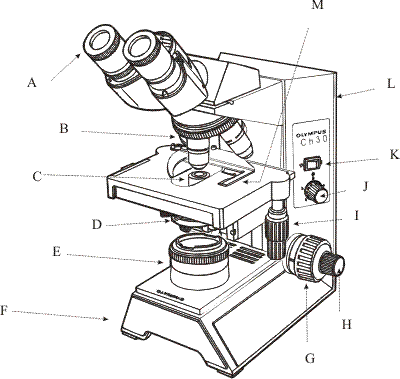 | back 65 #A is the Ocular |
front 66 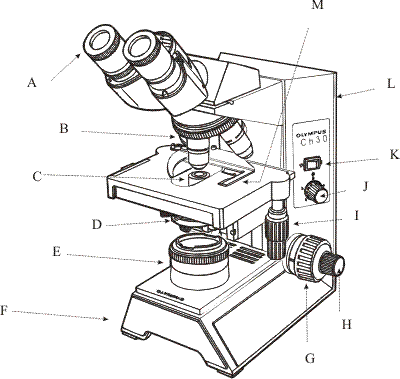 | back 66 #B is the rotating nosepiece |
front 67 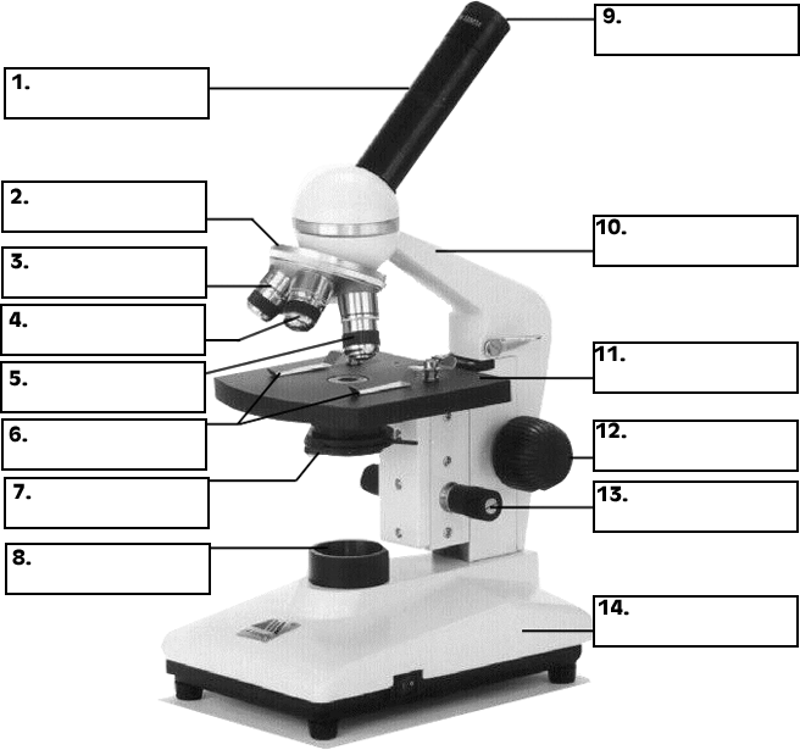 | back 67 # 3, 4, 5 are the objectives |
front 68 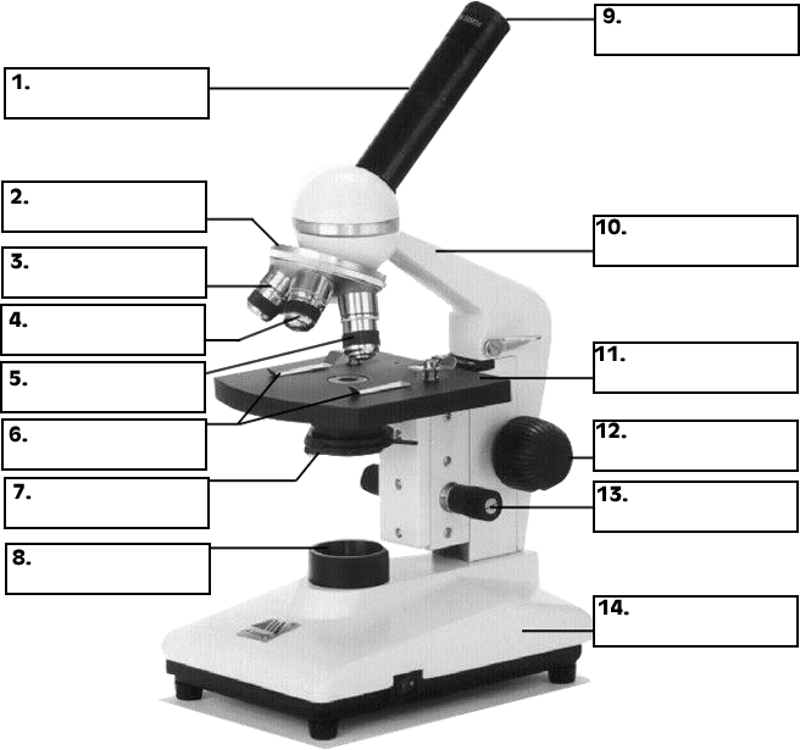 | back 68 #11 is the mechanical stage |
front 69  | back 69 #I is the stage adjustment knobs |
front 70 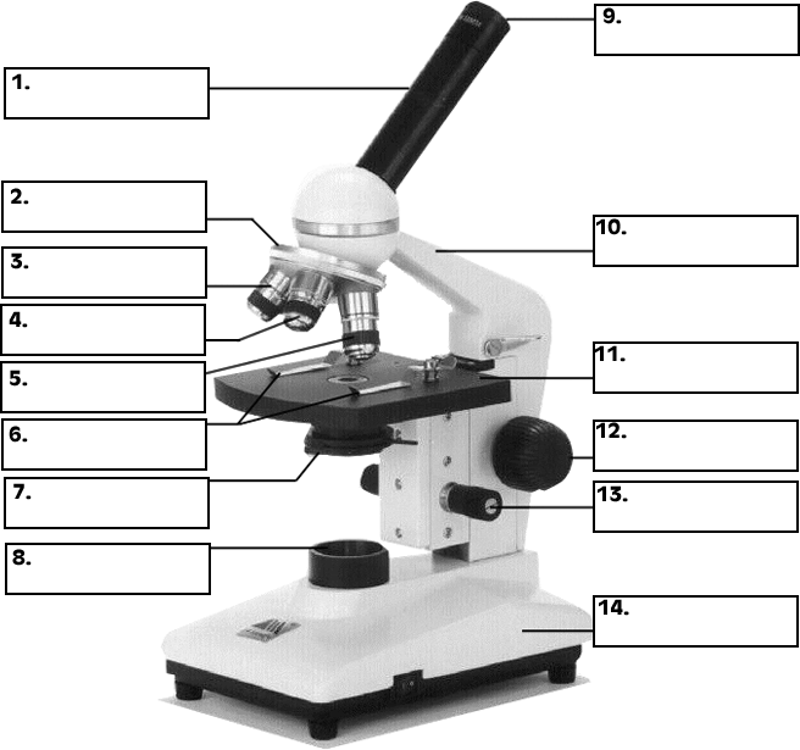 | back 70 #8 is the Substage light |
front 71 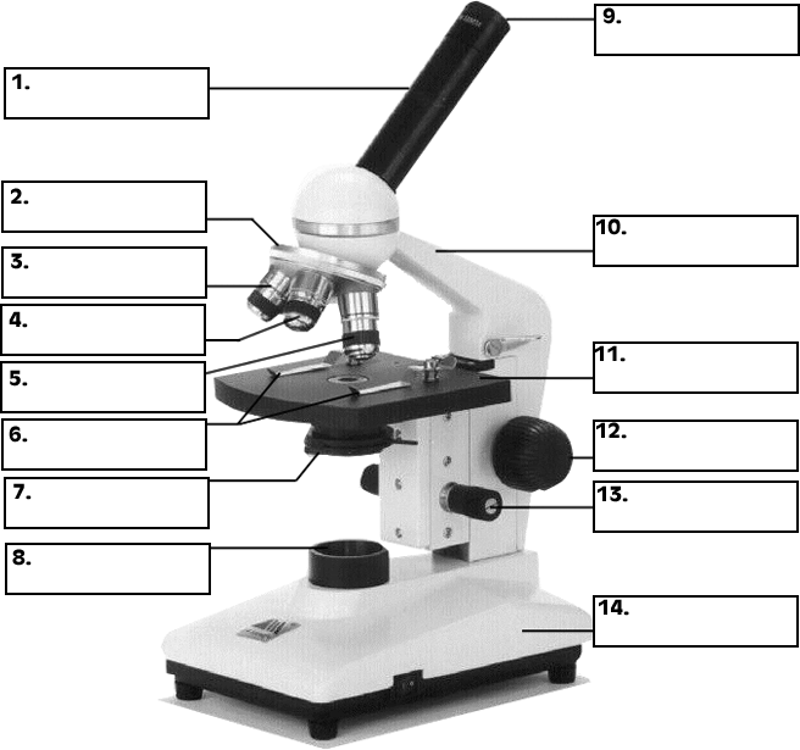 | back 71 #14 is the Base |
front 72 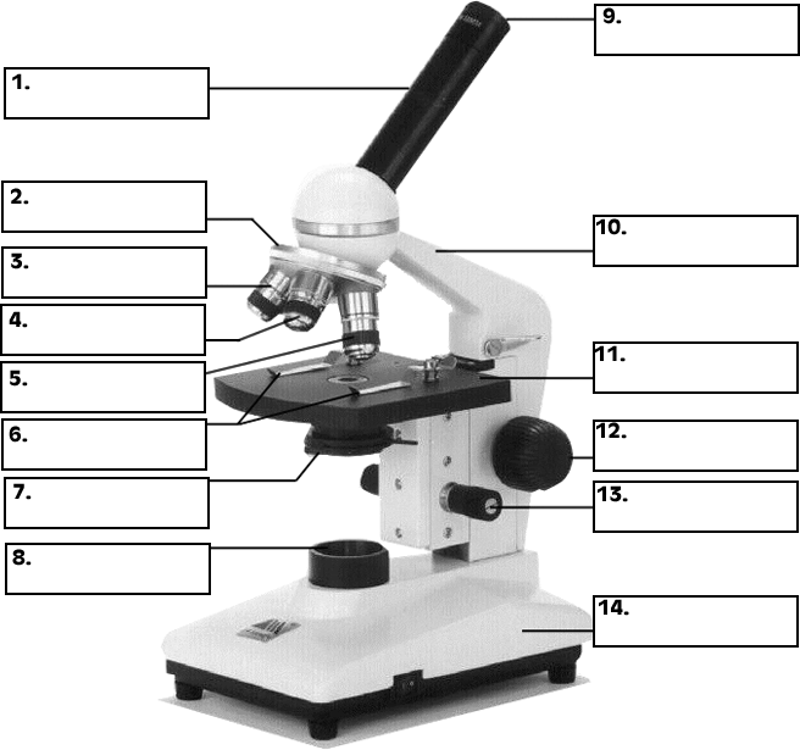 | back 72 #10 is the Arm |
front 73 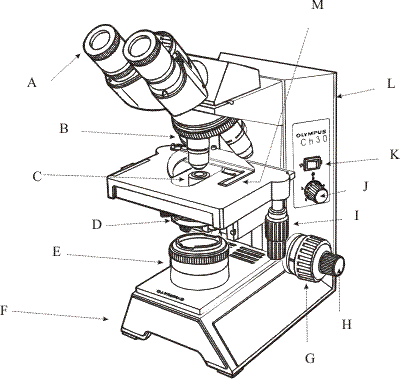 | back 73 #G is the Coarse adjustment knob |
front 74 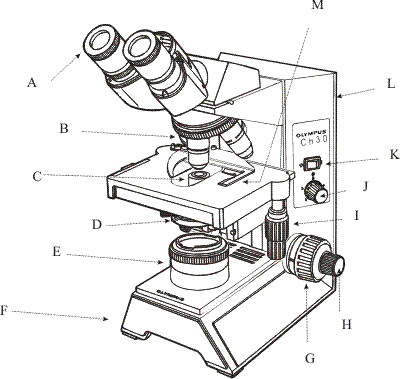 | back 74 #H is the Fine adjustment knob |
front 75 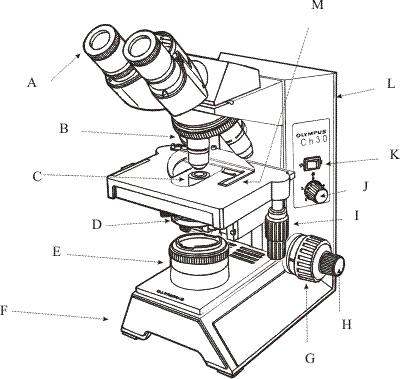 | back 75 #K is the power switch |
front 76 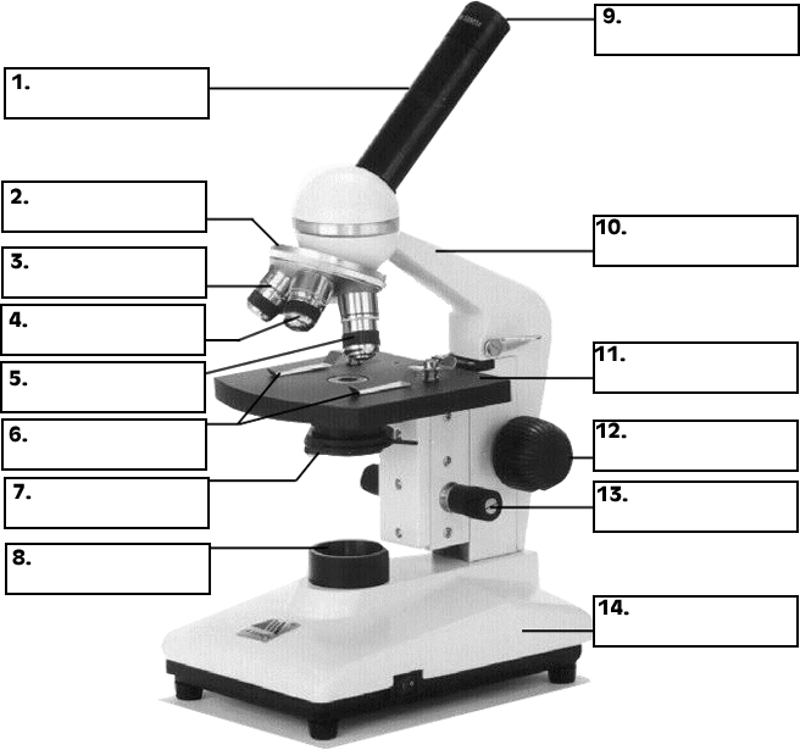 | back 76 #7 Condenser
|
front 77 Working distance | back 77 The distance between the slide and the objective lens |
front 78 Calculating total magnification: | back 78 Ocular 10X 10X 10X 10X |
front 79 Refraction: | back 79 The bending of light as it passes from one medium to the next
|
front 80 what happens to the field of view as the magnification increases? | back 80 it decreases |
front 81 What happens to the light when the iris diaphragm lever is moved to the left (increases or decreases)? Moved to the right (increases or decreases)? | back 81 Increases, Decreaes |
front 82 What happens to the contrast when the iris diaphragm lever is moved the left (increases or decreases)? Moved to the right (increases or decreases)? | back 82 Decreases, Increases |
front 83 True/False: The Coarse adjustment knob may be used with all 4 objective lenses. | back 83 False |
front 84 True/False: The fine adjustment knob may be used with all 4 objective lenses | back 84 True |
front 85 What part of the microscope should be used to center the speciment in the field of view? | back 85 Stage adjustment knobs |
front 86 What part of the microscope can be adjustment to increase or decrease the contrast? | back 86 iris diaphragm lever |
front 87 True/False: Immersion oil helps to increase the refraction of light as it passes through the glass specimen slide | back 87 False |
front 88 If the power of the ocular is 5X and the total magnification is 200X, what is the power f the objective? Justify your answer by showing your work. | back 88 200/5 = 40 40X |
front 89 If the power of the ovular is 10X and the power of the objective lens is 45X, what is the total magnification? Justify your answer by showing your work | back 89 45X*10X=450X |