front 5 On the anterior thorax, what surface
landmarks do you look for? | back 5 - The suprasternal notch.
- The
sternum (or breastbone).
- The
sternal angle (or angle of Louis).
- The
costal angle.
|
front 6 Where is the Suprasternal Notch and how can you
identify it? | back 6 It feels like a hollow U-shaped depression just above the sternum,
between the clavicles. |
front 7 Where is the Sternum and how can you identify it? | back 7 - It's made of three parts:
- The manubrium
- The body
-
The xiphoid process.
-
Walk your fingers down the manubrium a few
centimeters (cm) until you feel a distance bony ridge = the
sternal angle.
|
front 8 Where is the Sternal Angle, what else is it called,
and how can you identify it? | back 8 -
Angle of Louis (AoL)
-
It's articulation of the manubrium and body of the sternum,
and is continuous with the 2nd rib.
- It's useful place to
start counting ribs, localizing the respiratory finding
horizontally.
- Once AoL is identified, palpate
lightly to the second rib and slide down to the 2nd intercostal
space (ICS).
|
front 9 What does the Angle of Louis mark for the
respiratory system and the cardiac system? | back 9 - It marks the site of tracheal bifurcation into the right and
left main bronchi.
- It corresponds with the upper border of
the atria of the heart.
- It lies above the 4th Thoracic
vertebra on the back.
|
front 10 Where is the Costal Angle and why is it important? | back 10 - It's where the right and left costal margins meet at the
xiphoid process, usually forming a 90 degrees angle, or
less.
- This angle increases when the rib cage is
chronically overinflated.
- Ex. Emphysema (a condition in
which the air sacs of the lungs are damaged and enlarged,
causing breathlessness; or a condition in which air is
abnormally present within the body tissues).
|
front 11 What are the four surface landmarks on the posterior thorax? | back 11 - The V
ertebra Prominens.
- The Spinous
Processes.
- The Inferior Border of the
Scapula
- Usually the lower tip is at the seventh
or eighth rib.
- The 12th
rib.
|
front 12 What are the references lines on the
anterior chest? | back 12 - The Midsternal
line.
- The Midclavicular
line.
|
front 13 Describe the position of the midclavicular line. | back 13 This line bisects the center of each clavicle at a point halfway
between the palpated sternoclavicular and acromioclavicular joints. |
front 14 What are the references lines on the
posterior chest? | back 14 - The Vertebral
(midspinal) line.
- The Scapular
line.
|
front 15 Describe the position of the scapular line. | back 15 This line extents through the inferior angle of the scapula when the
arms are at the side of the body. |
front 16 Lift up the person's arm at 90 degrees, and the lateral chest can be
divided in three reference lines. What are they? | back 16 - The Anterior Axillary line.
- The
Posterior
Axillary line.
- The
Midaxillary line.
|
front 17 Describe the anterior axillary line. | back 17 This line extends down from the anterior axillary fold where the
pectoralis major muscle inserts. |
front 18 Describe the posterior axillary line. | back 18 This line continues down from the posterior axillary fold where the
latissimus dorsi muscle inserts. |
front 19 Describe the mid axillary line. | back 19 This line runs down from the apex of the axilla and lies between and
parallel to the other two. |
front 20 The mediastinum is the middle section of the
thoracic cavity and contains, what? | back 20 Contains the:
- Esophagus
- Trachea
- Heart
- Great vessels.
|
front 21 What do the right and left pleural cavities on
either side of the mediastinum contain? | |
front 22 Anteriorly, where does the apex (highest point) of the lungs lie? | back 22 They lie 3 or 4 centimeters above the inner third of the clavicles |
front 23 Where does the base (lower border) of the lungs rest? | back 23 They rest on the diaphragm at about the fifth intercostal space in
the right midclavicular line and at the 6th rib in the left
midclavicular line. |
front 24
Laterally, the lungs extend from the apex of the
axilla to what? | back 24 Extends to the 7th or 8th rib. |
front 25 Posteriorly, C7 marks the
1. and T10 usually corresponds to the 2. On
deep inspiration, the base descends to 3. | |
front 26 The right lung is shorter than the left lung, and
has how many lobes? | |
front 27 The left lung is narrower than the right lung, and
has how many lobes? | |
front 28 Why is the right lung shorter than the left lung? | back 28 Because the liver lies underneath it. |
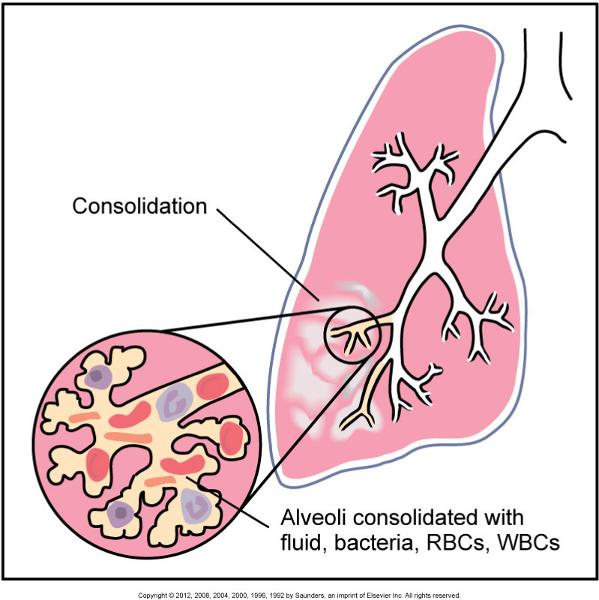
front 29 Why left lung narrower than the right lung? | back 29 Because the heart bulges to the left. |
front 30 On the anterior chest, where does the oblique (major or
diagonal) fissure lie and terminate? | back 30 This fissure crosses the 5th rib in the midaxillary line and
terminates at the 6th rib in the midclavicular line. |
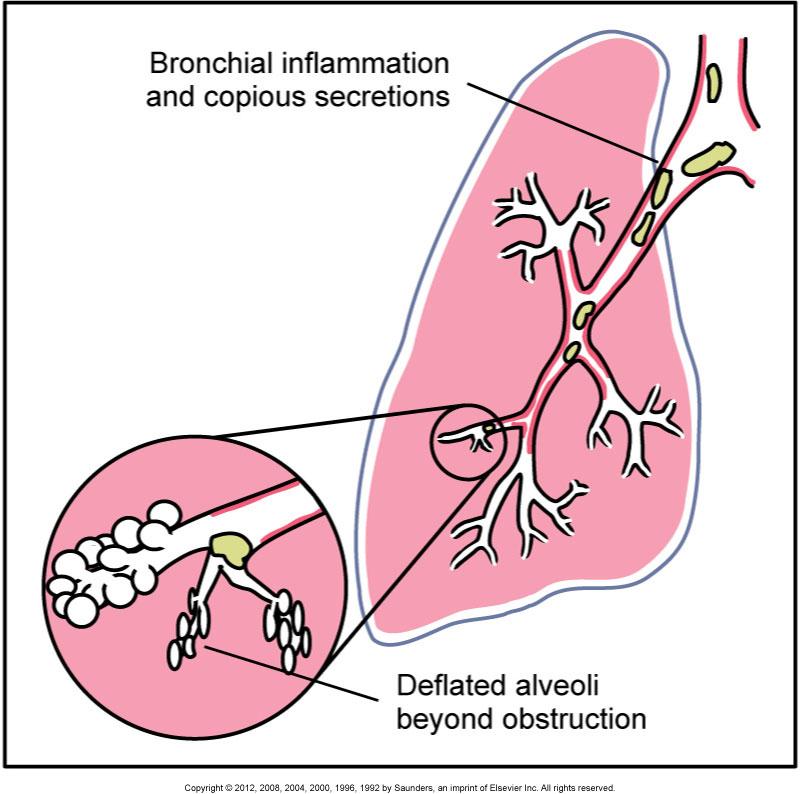
front 31 Anteriorly, the right lung also contains the horizontal
(minor) fissure, which divides the right upper and middle
lobes. Describe where it lies. | back 31 This fissure extends from the 5th rib in the right midaxillary line
to the third intercostal space (ICS), or the 4th rib at the right
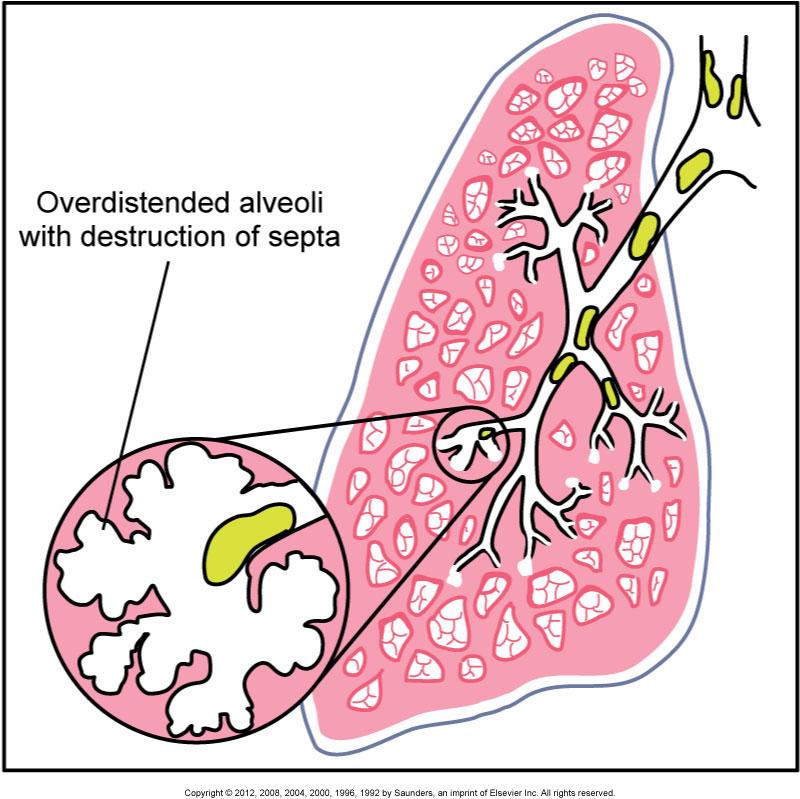
sternal border. |
front 32 Posteriorly, what is the most remarkable thing about the lungs? | back 32 It's almost all lower lobe of the lungs on both sides. |
front 33 Posteriorly, the upper lobes' apices lies where? | back 33 They begin at T1 and reach down to T3 or T4. |
front 34 At what level do the lower lobes begin posteriorly and where do they end? | back 34 They begin at T3 or T4 and reach down to level of T10 (or T12). |
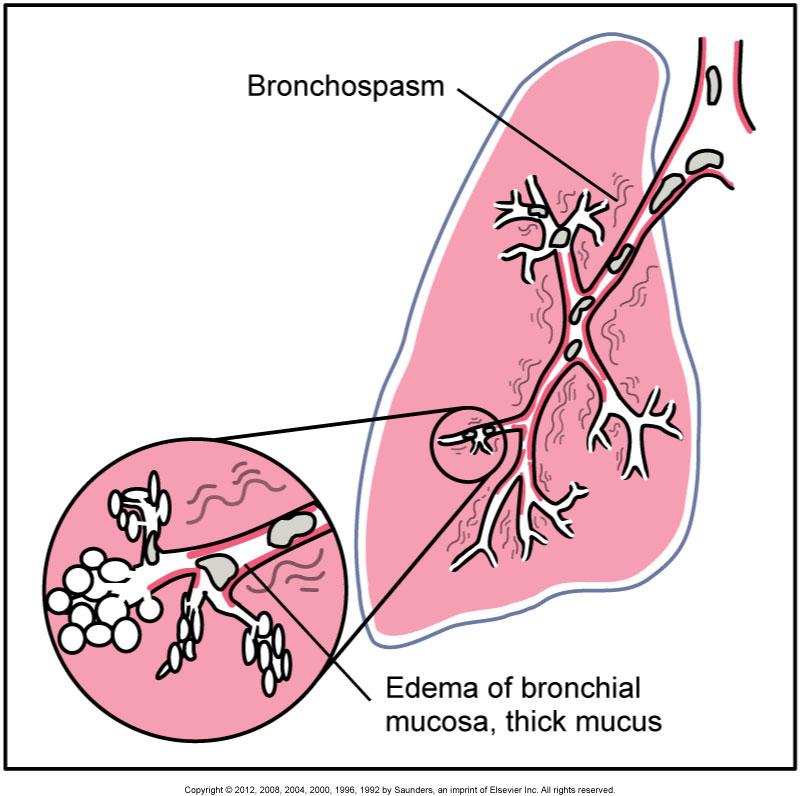
front 35 When would the posterior lungs reach T10? And T12? | back 35 - During Expiration.
- During Inspiration.
|
front 36 Laterally, the lungs extend from where to where? | back 36 The lung tissue extends from the apex of the axilla down to the 7th
or 8th rib. |
front 37 Laterally, the right upper lobe extends from where
to where? | back 37 It extends from the apex of the axilla down to the horizontal fissure
at the 5th rib. |
front 38 Laterally, the right middle lobe extends from where
to where? | back 38 It extends from the horizontal fissure down and forward to the 6th
rib at the midclavicular line. |
front 39 Laterally, the right lower lobe extends from where
to where? | back 39 It continues from the 5th rib to the 8th rib in the midaxillary line. |
front 40 Laterally, the left upper lobe
extends from where to where? | back 40 It extends from the apex of the axilla down to the 5th rib at the
midaxillary line. |
front 41 Laterally, the left lower lobe
extends from where to where? | back 41 It continues down to the 8th rib in the midaxillary line. |
front 42 The anterior chest contains mostly...? | back 42 Upper and middle lobe with very little lower lobe. |
front 43 The posterior chest contains...? | |
front 44 What are the four major functions of the respiratory system? | back 44 - Supplying O2 to the body for energy production.
- Removing CO2 as a waste product of energy reactions (rxns).
- Maintaining homeostasis (acid-base balance) of arterial
blood.
- Maintaining heat exchange (less important in
humans).
|
front 45 Hypoventilation (slow, shallow breathing) causes what to build up in
the blood? | |
front 46 Hyperventilation (rapid, deep breathing) causes what to be blown off? | |
front 47 What mediates the involuntary control mechanism of respiration? | back 47 The Pons and Medulla in the brainstem. |
front 48 What is the normal stimulus that causes us to breathe? | back 48
Hypercapnia: an increase of CO2 in the blood. |
front 49 What also causes an increase of respiration, but is less effective
than hypercapnia? | back 49
Hypoxemia: a decrease of O2 in the blood. |
front 50
In inspiration, increasing the size of the thoracic
container creates 1. what kind of pressure in
relation to the atmosphere and 2. what occurs
because of it? | back 50 -
Slightly negative pressure.
-
Causes air to rush in to fill the partial
vacuum.
|
front 51 What major muscle(s) is responsible for the lengthening of
the vertical diameter? | |
front 52 What major muscle(s) is responsible for the lengthening of
the horizontal diameter? | back 52 Intercostal muscles lift the sternum and elevates the ribs. |
front 53 Together, the diaphragm and the intercostal muscles increase what? | back 53 The anteroposterior (A-P) diameter of the thoracic cavity. |
front 54 Expiration is primarily passive. As the diaphragm relaxes, elastic
forces within the lung, chest cage, and abdomen cause it to dome up.
All this squeezing creates what kind of pressure and what occurs? | back 54 Relatively positive pressure within the alveoli, and air flows out. |
front 55 To obtain subjective data, what kind of questions
should be asked? | back 55 -
About Cough.
-
Shortness of breath.
-
Chest pain with breathing.
- History
of respiratory infections.
-
Smoking history ("pack year": packs per
year).
-
Environmental exposure, especially on the job.
-
Self-care behaviors
- Such as pneumonia or
influenza immunizations.
|
front 56
When can shortness of breath (SOB) be related to heart failure? | back 56 - If the patient has orthopnea,
"two pillow orthopnea," and/or paroxysmal
nocturnal dyspnea.
|
| back 57 Difficulty breathing while supine (laying down). |
front 58 Define the meaning of "Two pillow orthopnea." | back 58 Needs 2+ pillows supporting them in order to be comfortable. |
front 59 Define Paroxysmal Nocturnal Dyspnea. | back 59 Awakening from sleep with SOB (caused by an unknown source)
and needs to be upright to achieve comfort. |
front 60 Some conditions of cough have characteristic sputum production.
What could white or clear mucoid indicate? | back 60 - Colds
- Bronchitis
- Viral infections
|
front 61 Some conditions of cough have characteristic sputum production.
What could yellow or green mucoid indicate? | |
front 62 Some conditions of cough have characteristic sputum production.
What could rust-colored mucoid indicate? | back 62 - Tuberculosis
- Pneumococcal pneumonia
|
front 63 Some conditions of cough have characteristic sputum production.
What could pink, frothy mucoid indicate? | back 63 - Pulmonary edema
- Some sympathomimetic medications' side
effect (pink-tinged mucus).
|
front 64 Some conditions have a characteristic cough. What could a
hacking cough indicate? | |
front 65 Some conditions have a characteristic cough. What could a dry
cough indicate? | |
front 66 Some conditions have a characteristic cough. What could a
barking cough indicate? | back 66 - Croup (aka Laryngotracheobronchiti)
- A
respiratory condition that is usually triggered by an acute
viral infection of the upper airway.
- The infection
leads to swelling inside the throat, which interferes with
normal breathing and produces the classical symptoms of a
"barking" cough, stridor, and hoarseness.
|
front 67 Some conditions have a characteristic cough. What could a
congested cough indicate? | back 67 - Cold
- Bronchitis
- Pneumonia
|
front 68 To obtain objective data, inspect the posterior and
anterior chest.
- Note the shape, configuration, and symmetry of the
thoracic cage, including...
- Assess the quality of
the...
- Also observe the skin color and condition and the
patient’s...
| back 68 - Anteroposterior ratio, placement of the scapulae, angle of the
ribs, and development of the neck and trapezius muscles.
- Respirations.
- Position for breathing,
facial expression, and level of consciousness.
|
front 69 The anteroposterior (AP) ratio should be...1. than the transverse
(TV) diameter. The ratio of AP to TV diameter is from...2. | |
front 70 Describe the characteristics of Barrel Chest. | back 70 - AP = TV diameter.
- Costal angle > 90 degrees.
- Ribs are horizontal instead of the normal downward slope.
- Chest appears as if held in continuous inspiration.
- This occurs in chronic emphysema and asthma from hyperinflation
of the lungs; and normal aging (see Table 18-3, p. 440).
|
front 71 Define symptoms of Chronic Obstructive Pulmonary Disease (COPD). | back 71 - Skinny legs.
- Barrel chest.
- Clubbed
nails.
- Tense, strained tired facies.
- Pursed lips in
whistling position.
|
front 72 The neck muscles and trapezius muscles should be normally developed
for age and occupation. What is an abnormal finding? | back 72 Neck muscles are hypertrophied in COPD from aiding in forced respiration. |
front 73 Note the position the person takes to breathe.
- What is a normal finding?
- Abnormal findings for
people with COPD?
| back 73 - Posture is relaxed and they have the ability to support their
own weight with arms comfortably at the sides or in the lap.
- Sit in a tripod position, leaning forward with arms braced
against their knees, chair, or bed.
|
front 74 Why do people with COPD assume a tripod position to breathe? | back 74 This gives them leverage so that their rectus abdominis, intercostal,
and accessory neck muscles can all aid in expiration. |
front 75 Why is it extremely important to monitor a person with COPD closely
when they receive O2? | back 75 They can stop breathing when they get enough O2. This occurs because
we normally breathe to get rid of CO2; but they breathe to get O2.
Once they have enough O2, they stop breathing. |
front 76
Palpate the thorax and lungs, assessing the entire
chest wall, posterior and anterior. What are the three main things
that need to be checked? | back 76 - Confirm symmetric chest expansion.
- Assess tactile (or vocal) fremitus.
- Check for any lumps, masses, or
tenderness.
|
front 77 Define (Tactile/Vocal) Fremitus. | back 77 A palpale vibration because sounds generated from the larynx are
transmitted through patent bronchi and through the lung parenchyma to
the chest wall, where the vibrations are felt. |
front 78 Fremitus varies among persons, but it should be? | back 78 Symmetrical; felt in the same corresponding areas on each side. |
front 79 What are some normals that could
affect the normal intensity of tactile fremitus? | back 79 - Relative location of bronchi to the chest wall.
- Normally most prominent between the scapulae and around the
sternum; sites where the major bronchi are closest to the chest
wall.
- It normally decreases with downward progression
because more and more tissue impedes the sound
transmission.
- Thickness go the chest wall.
- It feels greater over a thin chest wall than over an
obese or heavily muscular one where thick tissue dampens the
vibration.
- Pitch and intensity.
- A
loud, low-pitched voice generates more vibration than a soft,
high-pitched one.
|
front 80 What are some abnormals that could cause decreased fremitus? | back 80 - When anything obstructs transmission of vibrations (e.g.,
obstructed bronchus, pleural effusion or thickening, pneumothorax,
or emphysema).
- Any barrier that comes between the sound and
your palpating hand.
|
front 81 What are some abnormals that could cause increase
fremitus? | back 81 - Occurs with compression or consolidation of lung tissue (e.g.,
lobar pneumonia).
- This is present only when the bronchus is
patent and when the consolidation extends to the lung
surface.
|
front 82 Define Rhonchal fremitus. | back 82 Palpable with thick bronchial secretions. |
front 83 Define Pleural friction fremitus. | back 83 Palpable with inflammation of the pleura. |
| back 84 A coarse, crackling sensation palpable over the skin surface. It
occurs in subcutaneous emphysema when air escapes from the lungs and
enters the subcutaneous tissue (as after open thoracic injury or surgery). |
front 85
Percuss the posterior and anterior chest; over the 1.
to determine the 2. Also percuss to map out the lower lung border and
measure 3. | back 85 - Lung fields
- Predominant note
- Diaphragmatic
excursion
|
front 86 What is the predominate sound heard in percussion over the lungs? | |
front 87 - Define the percussion sound: Resonance.
- When (why) is it heard?
| back 87 - Low-pitched, clear, hollow sound.
- Found in healthy
lung tissue of adults.
|
front 88 - Define the percussion sound:
Hyper-resonance.
- When/why is it heard?
| back 88 - A lower-pitched booming sound.
- Found when too much air
is present (such as emphysema or pneumothorax).
|
front 89 - Define the percussion sound: Dull.
- When/why is it heard?
| back 89 - A soft, muffled thud.
- Signals abnormal density in the
lungs (pneumonia, pleural effusion, atelectasis, or tumor).
|
| back 90 A partial or complete collapsed lung. |
front 91 When you auscultate the lobes of the lungs, what are two questions
you should be asking yourself as you go? | back 91 - What AM I hearing in this spot?
- What should I EXPECT
to be hearing?
|
front 92 What are the three types of normal breath sounds heard in an adult
and older child during auscultation? | back 92 - Bronchial (aka tracheal or tubular)
- Bronchovesicular
- Vesicular
|
front 93 What are the characteristics of normal Bronchial
(Tracheal) breathing sounds? List the pitch, amplitude,
duration, quality, and normal location. | back 93 - Pitch: High
- Amplitude:
Loud
- Duration: Inspiration <
Expiration
- Quality: Harsh, hollow
tubular
- Normal location: Trachea and
larynx
|
front 94 What are the characteristics of normal
Bronchovesicular breathing sounds? List the pitch,
amplitude, duration, quality, and normal location. | back 94 - Pitch: Moderate
- Amplitude:
Moderate
- Duration: Inspiration =
Expiration
- Quality: Mixed
- Normal location: Over major bronchi where fewer alveoli
are located.
-
Posterior
-
Between scapulae, especially on right.
-
Anterior
-
Around upper sternum in 1st and 2nd
ICS
|
front 95 What are the characteristics of normal Vesicular
breathing sounds? List the pitch, amplitude, duration,
quality, and normal location. | back 95 - Pitch: Low
- Amplitude:
Soft
- Duration: Inspiration >
Expiration
- Quality: Rustling (like the sound
of wind in the trees)
- Normal location:
Over peripheral lung fields where air flows through small
bronchioles and alveoli.
|
front 96 What are three reasons that would decreased or absent breath sounds? | back 96 - When the bronchial tree is obstructed at some point by
secretions, mucus, plug, or a foreign body.
- In emphysema as
a result of loss of elasticity in the lung fibers and decreased
force of inspired air.
- Also, the lungs are already hyper
inflated so the inhaled air doesn't make as much noise.
- When anything obstructs transmission of sound between
the lung and your stethoscope, such as pleurisy or pleural
thickening, or air (pneumothorax) or fluid (pleural effusion) in the
pleural space.
A silent chest means no air is moving in or out, which is an
ominous sign. |
front 97 What are some reasons for increased breath sounds? | back 97 - The sounds are louder than they should be (e.g., bronchial
sounds are abnormal when they are heard over an abnormal location,
the peripheral lung fields).
- They have a high-pitched,
tubular quality, with a prolonged expiratory phase and a distinct
pause between inspiration and expiration.
- They sound very
close to your stethoscope; occur when consolidation (e.g.,
pneumonia) or compression (e.g., fluid in the intrapleural space)
yields a dense lung area that enhances the transmission of sound
from the bronchi.
- When inspired air reaches the alveoli, it
hits solid lung tissue that conducts sound more efficiently to the
surface.
|
front 98 Define Adventitious sounds. | back 98 - They are sounds that are not normally heard in the lungs.
- If present, they are heard as being superimposed on the breath
sounds.
- They are caused by moving air colliding with
secretions in the tracheobronchial passageways or by the popping
open of previously deflated airways.
|
front 99 What are discontinuous sounds? | back 99 Discrete, crackling sounds. |
front 100 What are continuous sounds? | back 100 Connected, musical sounds. |
front 101 Describe Fine Crackles (or Rales). | back 101 -
Description
- Discontinuous, high-pitched,
short crackling, popping sounds heard during inspiration that
are not cleared by coughing.
- Sound can be simulated by
rolling a strand of hair between your fingers near your ear, or
by moistening your thumb and index finger and separating them
near your ear.
-
Mechanism
- Inspiratory crackles:
- Inhaled air collides with previously deflated
airways.
- Airways suddenly pop open, creating
explosive crackling sound.
- Expiratory
crackles:
-
Clinical Example
- Late inspiratory crackles
- Occur with restrictive disease: pneumonia, heart
failure, and interstitial fibrosis.
- Early inspiratory crackles
- Occur with obstructive
disease: chronic bronchitis, asthma, and emphysema.
- Posturally induced crackles (PICs)
- Fine
crackles that appear with a change from sitting to the
supine position or with a change from supine to supine with
legs elevated.
|
front 102 Describe Coarse Crackles (Coarse Rales) | back 102 -
Description
- Loud, low-pitched, bubbling
and gurgling sounds that start in early inspiration and may be
present in expiration.
- May decrease somewhat by
suctioning or coughing but will reappear shortly - sounds like
opening a Velcro fastener.
-
Mechanism
- Inhaled air collides with
secretions in the trachea and large bronchi.
-
Clinical Example
- Pulmonary edema,
pneumonia, pulmonary fibrosis, and the terminally ill who have a
depressed cough reflex.
|
front 103 Describe Atelectatic Crackles (Atelectatic Rales). | back 103 -
Description
- Sounds like fine crackles but
do not last and are not pathologic.
- Disappear after the
first few breaths.
- Heard in axillae and bases (usually
dependent) of lungs.
-
Mechanism
- When sections of alveoli are not
fully aerated, they deflate and accumulate secretions.
- Crackles are heard when these sections re-expand with a few
deep breaths.
-
Clinical Example
- In aging adults.
- In bedridden persons.
- In persons just aroused from
sleep.
|
front 104 Describe Pleural Friction Rub. | back 104 -
Description
- A very superficial sound that
is coarse and low pitched.
- It has a grating quality as
if two pieces of leather are being rubbed together.
- Sounds just like crackles, but close to the ear.
- Sounds louder if you push the stethoscope harder onto the
chest wall.
- Sound is inspiratory and expiratory.
-
Mechanism
- Caused when pleurae become
inflamed and lose their normal lubricating fluid.
- Their
opposing roughened pleural surfaces rub together during
respiration.
- Heard best in anterolateral wall where
greatest lung mobility exists.
-
Clinical Example
- Pleuritis, accompanied by
pain with breathing (rub disappears after a few days if pleural
fluid accumulates and separates pleurae).
|
front 105 Describe Wheeze (Sibilant). | back 105 -
Description
- High-pitched, musical
squeaking sounds that sound polyphonic (multiple notes as in a
musical chord).
- Predominate in expiration but may occur
in both expiration and inspiration.
-
Mechanism
- Air squeezed or compressed
through passageways narrowed almost to closure by collapsing,
swelling, secretions, or tumors.
- The passageway walls
oscillate in apposition between the closed and barely open
positions.
- The resulting sound is similar to a vibrating
reed.
-
Clinical Example
- Diffuse airway
obstruction from acute asthma or chronic emphysema.
|
front 106 Describe Wheeze (Sonorous Rhonchi). | back 106 -
Description
- Low-pitched, monophonic single
note, musical snoring, moaning sounds.
- They are heard
throughout the cycle, although they are more prominent on
expiration.
- May clear somewhat by coughing.
-
Mechanism
- Airflow obstruction as described
by the vibrating reed mechanism from the high-pitched
wheezing.
- The pitch of the wheeze cannot be correlated to
the size of the passageway that generates it.
-
Clinical Example
- Bronchitis, single
bronchus obstruction from airway tumor.
|
front 107 Are atelectatic crackles an adventitious sound? Why
or why not? | back 107 - Not an adventitious sound.
- They are short, popping,
crackling sounds (fine crackles), but do not last beyond a few
breaths.
- In older adults or people who are asleep, sections
of alveoli are not fully aerated, since they deflate slightly and
accumulate secretions.
- Crackles are heard when these
secretions are expanded by a few deep breaths.
- They are
only heard in the periphery, usually in dependent portions of the
lungs, and disappear after the first few breaths or after a
cough.
|
front 108 Normally there should be no retraction or bulging of the interspaces
during inspiration. What could be indicated if the abnormal
findings of retraction and bulging are seen? | back 108 - Retraction suggests obstruction of respiratory tract or
increased inspiratory effort is needed (as with atelectasis).
- Bulging indicates trapped air as in forced expiration associated
with emphysema or asthma.
|
front 109 Describe the characteristics of Scoliosis. | back 109 - A lateral S-shaped curvature of the thoracic and lumbar
spine.
- Usually involves vertebrae rotation.
- Note:
- Unequal shoulder
- Scapular height
- Unequal hip levels
- Rib interspaces flared on convex
side.
- More prevalent in adolescent age-groups,
especially girls.
- If severe (> 45 degrees), it may
reduce lung volume and person is at risk for impaired
cardiopulmonary function.
|
front 110 Describe the respiratory pattern of a Normal Adult. | back 110 - Rate: 10-20 breaths per minute.
- Depth: 500-800 mL; air
moving in and out with each respiration.
- Pattern:
Even.
- The ratio of pulse to respiratory is fairly constant;
about 4:1.
- Both values increase as a normal response to
exercise, fear, or fever.
|
front 111 Describe the respiratory pattern of a Sigh. | back 111 - Occasionally punctures the normal breathing pattern and
purposefully expands alveoli.
- If frequent, it may indicate
emotional dysfunction.
- It may also lead to hyperventilation
and dizziness.
|
front 112 Describe the respiratory pattern of a Tachypnea. | back 112 - Rapid, shallow breathing.
- Increased rate: > 24 per
minute.
- Normal response to fever, fear, or exercise.
- Rate also increases with:
- Respiratory
insufficiency
- Pneumonia
- Alkalosis
- Pleurisy
- Lesions in the pons.
|
front 113 Describe the respiratory pattern of a Bradypnea . | back 113 - Slow breathing.
- A decreased, but regular rate: < 10
per minute.
- As in:
- Drug-induced depression of the
respiratory center in the medulla.
- Increased
intracranial pressure
- Diabetic coma
|
front 114 Describe the respiratory pattern of a Hyperventilation. | back 114 - Increased rate and depth.
- Normally occurs with extreme
exertion, fear, or anxiety.
- Also occurs with:
- Diabetic ketoacidosis (Kussmaul respirations).
- Hepatic coma.
- Salicylate overdose.
- Producing a respiratory alkalosis to compensate for the
metabolic acidosis.
- Lesions in the
midbrain.
- Alteration in blood gas concentration.
- Either an increase in CO2 or a decrease in O2.
- It blows off CO2, causing a decreased
level in the blood (alkalosis).
|
front 115 Describe the respiratory pattern of a Hypoventilation. | back 115 - An irregular shallow pattern.
- Caused by an overdose of
narcotics or anesthetics.
- May also occur with prolonged
bedrest or conscious splinting of the chest to avoid respiratory
pain.
|
front 116 Describe the respiratory pattern of a Cheyne-Stokes Respiration. | back 116 - Aka "Death breathing" or agonal breathing.
- A
cycle in which respiration gradually wax and wane in a regular
pattern.
- Increasing in rate and depth, then
decreasing.
- The breathing periods last 30-45
seconds, with periods of apnea (20 seconds) alternating the
cycle.
- The most common cause is severe heart failure, or:
- Renal failure
- Meningitis
- Drug
overdose
- Increased intracranial pressure
- Occurs normally in infants and aging persons during sleep.
|
front 117 Describe the respiratory pattern of a Chronic Obstructive Breathing. | back 117 - Normal inspiration and prolonged expiration to overcome
increased airway resistance.
- In a person with chronic
obstructive lung disease, any situation calling for increased heart
rate (ex. exercise) may lead to dyspneic episode (air trapping),
because then the person doesn't have enough time for full
expiration.
|
front 118 Describe the Assessment of the Common Respiratory Conditions of
Lobar Pneumonia. | back 118 - Condition
- Infection in lung parenchyma
leaves alveolar membrane edematous and porous, so RBCs and
WBCs pass from blood to alveoli.
-
Alveoli progressively fill up (become consolidated)
with bacteria, solid cellular debris, fluid, and blood cells,
which replace alveolar air.
- This
decreases surface area of the respiratory membrane, causing
hypoxemia.
- Inspection
-
Increased respiratory rate.
-
Guarding and lag on expansion on affected
side.
- In children: sternal retraction
and nasal flaring.
- Palpation
- Chest expansion decreased on affected
side.
- Tactile fremitus increased if
bronchus patent, decreased if bronchus
obstructed.
- Percussion
-
Dull over lobar pneumonia.
- Auscultation
- Breath sounds louder with patent
bronchus, as if coming directly from larynx.
- Voice sounds have increased clarity.
- Bronchophony, egophony, whispered pectoriloquy
present.
- In children: diminished
breath sounds may occur early in pneumonia.
- Adventitious Sounds
- Crackles, fine
to medium.
|
front 119 What is some subjective data for Lobar Pneumonia? | back 119
Pt. c/o:
-
Dyspnea
-
Fatigue
-
Cough (may be productive)
-
Chest pain
-
Back pain
-
Possible fever
|
front 120 What is some objective data for Lobar Pneumonia? | back 120 -
Increase respiratory rate.
-
Chest expansion decreased.
-
Rales over affected area.
-
Dull to percussion over affected area.
|
| |
front 122 Describe the Assessment of the Common Respiratory Conditions of Bronchitis. | back 122 - Condition
- Proliferation of mucus glands in
the passageways, resulting in excessive mucus
secretion.
- Inflammation of bronchi
with partial obstruction of bronchi by secretions or
constrictions.
- Sections of lung distal
to obstruction may be deflated.
-
Bronchitis may be acute or chronic with recurrent
productive cough.
- Chronic
bronchitis is usually caused by cigarette
smoking.
- Inspection
-
Hacking, rasping cough productive of thick mucoid
sputum.
- Chronic: dyspnea, fatigue,
cyanosis, possible clubbing of fingers.
- Palpation
- Percussion
- Auscultation
- Normal vesicular.
- Voice
sounds normal.
- Chronic: prolonged
expiration.
- Adventitious Sounds
- Crackles over deflated areas.
- May have wheeze.
|
front 123 What is some subjective data for Acute Bronchitis? | back 123
Pt. c/o:
-
Acute or chronic, dry cough
-
Dyspnea
-
Increase respiratory rate
-
Sputum production
-
Fatigue
|
front 124 What is some objective data for Acute Bronchitis? | back 124 -
Palpation and Percussion findings normal.
-
Crackles over area of obstruction.
-
May have wheezes.
|
| |
front 126 Describe the Assessment of the Common Respiratory Conditions of Emphysema. | back 126 - Condition
- Caused by destruction of pulmonary
connective tissue (elastin, collagen).
-
Characterized by permanent enlargement of air sacs
distal to terminal bronchioles and rupture of inter alveolar
walls.
- This increases airway
resistance, especially on expiration - producing a
hyper-inflated lung and an increase in lung
volume.
- Cigarette smoking accounts for
80%-90% of cases of emphysema.
- Inspection
- Increased anteroposterior
diameter.
- Barrel chest.
- Use of accessory muscles to aid
respiration.
- Tripod
position.
- Shortness of breath,
especially on exertion.
-
Respiratory distress.
-
Tachypnea.
- Palpation
- Decreased tactile fremitus and chest
expansion.
- Percussion
-
Hyper-resonant.
- Decreased
diaphragmatic excursion.
- Auscultation
- Decreased breath
sounds.
- May have prolonged
expiration.
- Muffled heart sounds
resulting from over-distention of lungs.
- Adventitious Sounds
- Usually
none.
- Occasionally,
wheeze.
|
front 127 What is some subjective data for Emphysema? | back 127
Pt. c/o:
- Dyspnea (also DOE)
- Increase respirations
|
front 128 What is some objective data for Emphysema? | back 128 -
Increase respiratory rate.
-
Use of accessory muscles.
-
Barrel chest (chronic).
-
Cyanosis.
-
Tactile fremitus decreased.
-
Breath sounds decreased.
-
May have bilateral wheezing.
|
| |
front 130 Describe the Assessment of the Common Respiratory Conditions of
Asthma (aka Reactive Airway Disease) . | back 130 - Condition
- An allergic hypersensitivity to
certain inhaled allergens (pollen), irritants (tobacco,
ozone), microbes, stress, or exercise that produces a complex
response characterized by bronchospasm and inflammation,
edema in walls of bronchioles, and secretion of highly
viscous mucus not airways.
- These
factors greatly increase airway resistance, especially during
expiration, and produce the symptoms of wheezing, dyspnea,
and chest tightness.
- Inspection
- During severe attack:
-
Increased respiratory rate
-
SOB with audible wheeze
-
Use of accessory muscles
-
Cyanosis
-
Apprehension
- Retraction of
ICSs
- Expiration labored,
prolonged.
- When
chronic, may have barrel chest.
- Palpation
- Decreased tactile
fremitus.
- Tachycardia.
- Percussion
- Resonant.
- May be hyper-resonant if chronic.
- Auscultation
- Diminished air
movement.
- Breath
sounds decreased, with prolonged
expiration.
- Voice sounds
decreased.
- Adventitious Sounds
- Bilateral wheezing on expiration
- Sometimes inspiratory and expiratory
wheezing.
|
front 131 What is some subjective data for Asthma? | back 131 - Dyspnea
- Increase respiratory rate
- Wheezing
- Use of accessory muscles
|
front 132 What is some objective data for Asthma? | back 132 - Tactile fremitus decreased.
- Inspiratory &
Expiratory wheezing.
|