Print Options

Card layout: ?

← Back to notecard set|Easy Notecards home page

Instructions for Side by Side Printing
  1. Print the notecards
  2. Fold each page in half along the solid vertical line
  3. Cut out the notecards by cutting along each horizontal dotted line
  4. Optional: Glue, tape or staple the ends of each notecard together
  1. Verify Front of pages is selected for Viewing and print the front of the notecards
  2. Select Back of pages for Viewing and print the back of the notecards
    NOTE: Since the back of the pages are printed in reverse order (last page is printed first), keep the pages in the same order as they were after Step 1. Also, be sure to feed the pages in the same direction as you did in Step 1.
  3. Cut out the notecards by cutting along each horizontal and vertical dotted line
To print: Ctrl+PPrint as a list

109 notecards = 28 pages (4 cards per page)

Viewing:

Chapter 25 The Urinary System

front 1

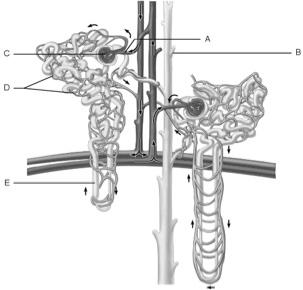
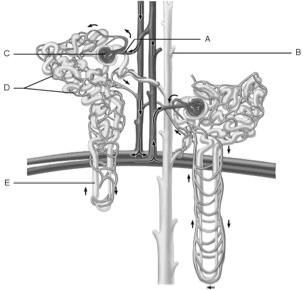
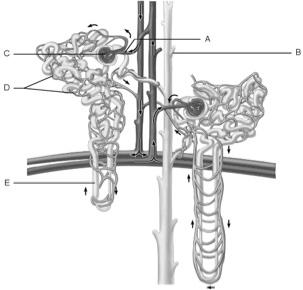
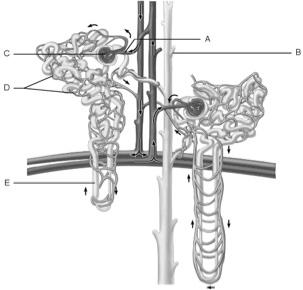
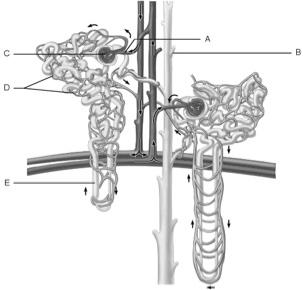
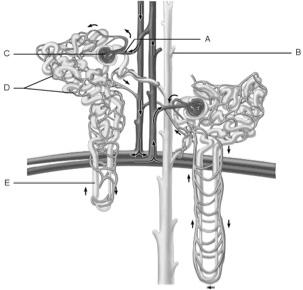
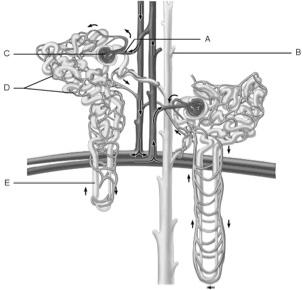
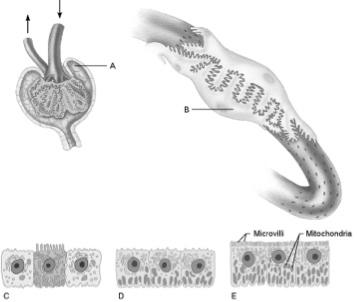
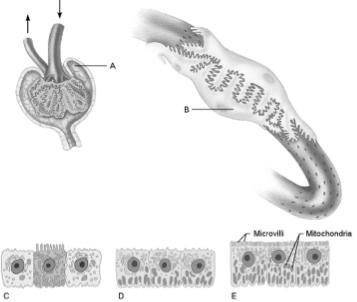
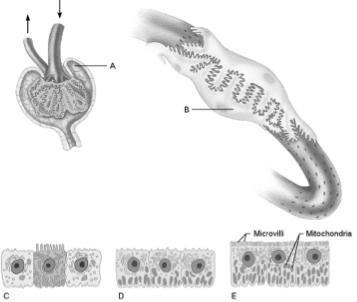
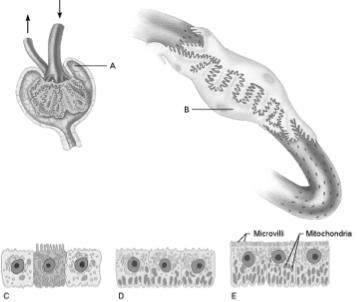
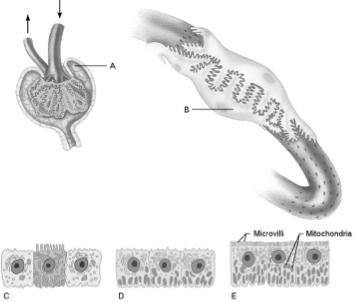
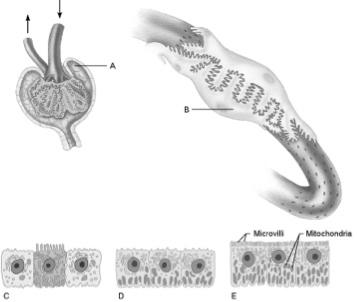
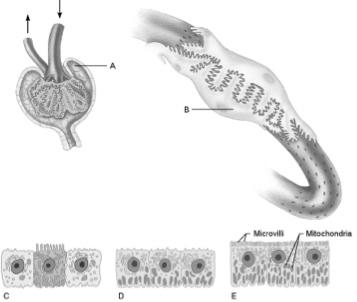
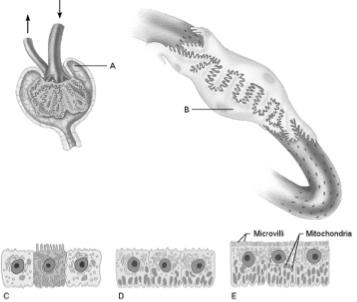
Glomerulus

back 1

C

front 2

Afferent arteriole

back 2

A

front 3

Collecting duct

back 3

B

front 4

Loop of Henle

back 4

E

front 5

Peritubular capillaries

back 5

D

front 6

Structure most closely associated with granular cells

back 6

A

front 7

Medulla of the kidney

back 7

E

front 8

Podocyte

back 8

B

front 9

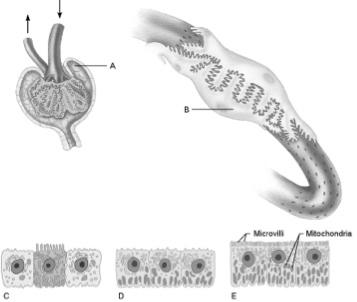
Is composed of simple squamous epithelium

back 9

A

front 10

Collecting duct cells

back 10

C

front 11

Proximal convoluted tubule cells

back 11

E

front 12

Filtrate at the site of these cells is about the same osmolarity as blood plasma

back 12

E

front 13

Cells that are the most active in reabsorbing the filtrate

back 13

E

front 14

Cells that reabsorb virtually all the nutrients

back 14

E

front 15

Cells that are most affected by ADH

back 15

C

front 16

Almost no water is absorbed in these cells

back 16

D

front 17

Proximal convoluted tubule
A) Site at which most of the tubular reabsorption occurs.
B) Blood supply that directly receives substances from the tubular cells.
C) Site of filtrate formation.
D) Site that drains the distal convoluted tubule.

back 17

A) Site at which most of the tubular reabsorption occurs.

front 18

Glomerulus
A) Site at which most of the tubular reabsorption occurs.
B) Blood supply that directly receives substances from the tubular cells.
C) Site of filtrate formation.
D) Site that drains the distal convoluted tubule.

back 18

C) Site of filtrate formation.

front 19

Peritubular capillaries
A) Site at which most of the tubular reabsorption occurs.
B) Blood supply that directly receives substances from the tubular cells.
C) Site of filtrate formation.
D) Site that drains the distal convoluted tubule.

back 19

B) Blood supply that directly receives substances from the tubular cells.

front 20

Collecting duct
A) Site at which most of the tubular reabsorption occurs.
B) Blood supply that directly receives substances from the tubular cells.
C) Site of filtrate formation.
D) Site that drains the distal convoluted tubule.

back 20

D) Site that drains the distal convoluted tubule.

front 21

True/False Questions
If the GFR is too low, needed substances may pass so quickly through the renal tubules that they are not absorbed and instead are lost in the urine

back 21

False

front 22

True/False Questions
In the kidneys, the countercurrent mechanism involves the interaction between the flow of filtrate through the loop of Henle of the juxtamedullary nephrons (the countercurrent multiplier) and the flow of blood through the limbs of adjacent blood vessels (the countercurrent exchanger). This relationship establishes and maintains an osmotic gradient extending from the cortex through the depths of the medulla that allows the kidneys to vary urine concentration dramatically

back 22

True

front 23

True/False Questions
The ureter transports urine from the kidney to the urinary bladder

back 23

True

front 24

True/False Questions
Water reabsorption through the proximal convoluted tubule is termed obligatory water reabsorption, whereas water reabsorption through the distal convoluted tubule is termed facultative water reabsorption

back 24

True

front 25

True/False Questions
The position of the kidneys behind the peritoneal lining of the abdominal cavity is described by the term retroperitoneal

back 25

True

front 26

True/False Questions
The entire responsibility for urine formation lies with the nephron

back 26

True

front 27

True/False Questions
Urine is 95% water by volume

back 27

True

front 28

True/False Questions
The act of emptying the bladder is called voiding

back 28

True

front 29

True/False Questions
Glomerular filtration is an ATP-driven process

back 29

False

front 30

True/False Questions
In the absence of hormones, the distal tubule and collecting ducts are relatively impermeable to water

back 30

True

front 31

True/False Questions
The collecting duct is impermeable to water in the presence of ADH

back 31

False

front 32

True/False Questions
The urethra contains an internal sphincter of smooth muscle

back 32

True

front 33

True/False Questions
Angiotensin II is a substance made by the body to lower blood pressure during stress

back 33

False

front 34

True/False Questions
Aldosterone is a hormone that causes the renal tubules to reclaim sodium ions from the filtrate

back 34

True

front 35

True/False Questions
Blood pressure in the renal glomerulus is lower than in most parts of the body in order to conserve body water

back 35

False

front 36

True/False Questions
The proximal convoluted tubule is the portion of the nephron that attaches to the collecting duct

back 36

False

front 37

True/False Questions
Urea is reabsorbed in the loop of Henle

back 37

False

front 38

True/False Questions
Incontinence is the inability to control voluntary micturition

back 38

True

front 39

True/False Questions
The myogenic mechanism reflects the tendency of vascular smooth muscle to stretch

back 39

False

front 40

True/False Questions
An excessive urine output is called anuria

back 40

False

front 41

True/False Questions
Tubular secretion is effective in controlling blood pH

back 41

True

front 42

True/False Questions
The trigone is so named because of the shape of the urinary bladder

back 42

False

front 43

True/False Questions
Atrial naturetic peptide inhibits sodium reabsorption

back 43

True

front 44

True/False Questions
The macula densa cells are chemoreceptors that respond to changes in the urea content of the filtrate

back 44

False

front 45

True/False Questions
Blood in the urine may be a symptom of bladder cancer

back 45

True

front 46

True/False
Obligatory water reabsorption involves the movement of water along an osmotic gradient

back 46

True

front 47

True/False Questions
Having a kinked ureter is called renal ptosis

back 47

False

front 48

The mechanism that establishes the medullary osmotic gradient depends most on the permeability properties of the ________.
A) loop of Henle
B) glomerular filtration membrane
C) collecting duct
D) distal convoluted tubule

back 48

A) loop of Henle

front 49

Urine passes through the ________.
A) renal hilum to the bladder to the ureter
B) pelvis of the kidney to ureter to bladder to urethra
C) glomerulus to ureter to renal tubule
D) hilum to urethra to bladder

back 49

B) pelvis of the kidney to ureter to bladder to urethra

front 50

Which of the following is not associated with the renal corpuscle?
A) a podocyte
B) a vasa recta
C) a fenestrated capillary
D) an efferent arteriole

back 50

B) a vasa recta

front 51

An increase in the permeability of the cells of the collecting tubule to water is due to a(n) ________.
A) decrease in the production of ADH
B) increase in the production of ADH
C) increase in the production of aldosterone
D) decrease in the concentration of the blood plasma

back 51

B) increase in the production of ADH

front 52

The urinary bladder is composed of ________ epithelium.
A) transitional
B) simple squamous
C) stratified squamous
D) pseudostratified columnar

back 52

A) transitional

front 53

The kidneys are stimulated to produce renin ________.
A) when the peritubular capillaries are dilated
B) when the pH of the urine decreases
C) by a decrease in the blood pressure
D) when the specific gravity of urine rises above 1.10

back 53

C) by a decrease in the blood pressure

front 54

Which of the choices below is not a function of the urinary system?
A) helps maintain homeostasis by controlling the composition, volume, and pressure of blood
B) regulates blood glucose levels and produces hormones
C) maintains blood osmolarity
D) eliminates solid, undigested wastes and excretes carbon dioxide, water, salts, and heat

back 54

D) eliminates solid, undigested wastes and excretes carbon dioxide, water, salts, and heat

front 55

Which gland sits atop each kidney?
A) adrenal
B) thymus
C) pituitary
D) pancreas

back 55

A) adrenal

front 56

The ________ artery lies on the boundary between the cortex and medulla of the kidney.
A) lobar
B) arcuate
C) interlobar
D) cortical radiate

back 56

B) arcuate

front 57

The glomerulus differs from other capillaries in the body in that it ________.
A) has a basement membrane
B) is impermeable to most substances
C) is drained by an efferent arteriole
D) has a blood pressure much lower than other organ systems

back 57

C) is drained by an efferent arteriole

front 58

The descending limb of the loop of Henle ________.
A) is not permeable to water
B) is freely permeable to sodium and urea
C) pulls water by osmosis into the lumen of the tubule
D) contains fluid that becomes more concentrated as it moves down into the medulla

back 58

D) contains fluid that becomes more concentrated as it moves down into the medulla

front 59

Select the correct statement about the ureters.
A) Ureters contain sphincters at the entrance to the bladder to prevent the backflow of urine.
B) The epithelium is stratified squamous like the skin, which allows a great deal of stretch.
C) The ureters are capable of peristalsis like that of the gastrointestinal tract.
D) The ureter is innervated by parasympathetic nerve endings only.

back 59

C) The ureters are capable of peristalsis like that of the gastrointestinal tract.

front 60

The fatty tissue surrounding the kidneys is important because it ________.
A) ensures adequate energy for the adrenal glands to operate efficiently
B) stabilizes the position of the kidneys by holding them in their normal position
C) is necessary as a barrier between the adrenal glands and kidneys
D) produces vitamin D

back 60

B) stabilizes the position of the kidneys by holding them in their normal position

front 61

The renal corpuscle is made up of ________.
A) Bowman's capsule and glomerulus
B) the descending loop of Henle
C) the renal pyramid
D) the renal papilla

back 61

A) Bowman's capsule and glomerulus

front 62

The functional and structural unit of the kidneys is the ________.
A) nephron
B) loop of Henle
C) glomerular capsule
D) basement membrane of the capillaries

back 62

A) nephron

front 63

The juxtaglomerular apparatus is responsible for ________.
A) the secretion of drugs
B) the secretion of acids and ammonia
C) reabsorption of organic molecules, vitamins, and water
D) regulating the rate of filtrate formation and controlling systemic blood pressure

back 63

D) regulating the rate of filtrate formation and controlling systemic blood pressure

front 64

The chief force pushing water and solutes out of the blood across the filtration membrane is ________.
A) the design and size of the podocytes
B) the thickness of the capillary endothelium
C) glomerular hydrostatic pressure (glomerular blood pressure)
D) the size of the pores in the basement membrane of the capillaries

back 64

C) glomerular hydrostatic pressure (glomerular blood pressure)

front 65

Which of the following statements describes the histology of the ureters?
A) They are trilayered (mucosa, muscularis, and adventitia).
B) They are actually an extension of the visceral peritoneum.
C) They are made up of several layers of endothelium.
D) They are made up entirely of muscle tissue because they need to contract in order to transport urine efficiently.

back 65

A) They are trilayered (mucosa, muscularis, and adventitia).

front 66

Which of the following statements is a false or incorrect statement?
A) The male urethra serves both the urinary and reproductive systems at the same time.
B) The male urethra serves both the urinary and reproductive systems but at different times.
C) The male urethra is longer than the female urethra.
D) The male urethra is a passageway for both urine and semen.

back 66

A) The male urethra serves both the urinary and reproductive systems at the same time.

front 67

Which of the following acts as the trigger for the initiation of micturition (voiding)?
A) the stretching of the bladder wall
B) motor neurons
C) the pressure of the fluid in the bladder
D) the sympathetic efferents

back 67

A) the stretching of the bladder wall

front 68

The filtration membrane includes all except ________.
A) glomerular endothelium
B) podocytes
C) renal fascia
D) basement membrane

back 68

C) renal fascia

front 69

The mechanism of water reabsorption by the renal tubules is ________.
A) active transport
B) osmosis
C) solvent drag
D) cotransport with sodium ions

back 69

B) osmosis

front 70

Most electrolyte reabsorption by the renal tubules is ________.
A) not Tm limited
B) in the distal convoluted tubule
C) hormonally controlled in distal tubule segments
D) completed by the time the loop of Henle is reached

back 70

C) hormonally controlled in distal tubule segments

front 71

The macula densa cells respond to ________.
A) aldosterone
B) antidiuretic hormone
C) changes in pressure in the tubule
D) changes in solute content of the filtrate

back 71

D) changes in solute content of the filtrate

front 72

Which of the following is not reabsorbed by the proximal convoluted tubule?
A) Na+
B) K+
C) glucose
D) creatinine

back 72

D) creatinine

front 73

The fluid in the glomerular (Bowman's) capsule is similar to plasma except that it does not contain a significant amount of ________.
A) glucose
B) hormones
C) electrolytes
D) plasma protein

back 73

D) plasma protein

front 74

Alcohol acts as a diuretic because it ________.
A) is not reabsorbed by the tubule cells
B) increases the rate of glomerular filtration
C) increases secretion of ADH
D) inhibits the release of ADH

back 74

D) inhibits the release of ADH

front 75

The function of angiotensin II is to ________.
A) constrict arterioles and increase blood pressure
B) decrease the production of aldosterone
C) decrease arterial blood pressure
D) decrease water absorption

back 75

A) constrict arterioles and increase blood pressure

front 76

A disease caused by inadequate secretion of antidiuretic hormone (ADH) by the pituitary gland with symptoms of polyuria is ________.
A) diabetes mellitus
B) diabetes insipidus
C) diabetic acidosis
D) coma

back 76

B) diabetes insipidus

front 77

An important characteristic of urine is its specific gravity or density, which is ________.
A) 1.041-1.073
B) 1.001-1.035
C) 1.030-1.040
D) 1.000-1.015

back 77

B) 1.001-1.035

front 78

Place the following in correct sequence from the formation of a drop of urine to its elimination from the body.
1. major calyx
2. minor calyx
3. nephron
4. urethra
5. ureter
6. collecting duct

A) 3, 1, 2, 6, 5, 4
B) 6, 3, 2, 1, 5, 4
C) 2, 1, 3, 6, 5, 4
D) 3, 6, 2, 1, 5, 4

back 78

D) 3, 6, 2, 1, 5, 4

front 79

Select the correct statement about the nephrons.
A) The parietal layer of the glomerular capsule is simple squamous epithelium.
B) The glomerulus is correctly described as the proximal end of the proximal convoluted tubule.
C) Podocytes are the branching epithelial cells that line the tubules of the nephron.
D) Filtration slits are the pores that give fenestrated capillaries their name.

back 79

A) The parietal layer of the glomerular capsule is simple squamous epithelium.

front 80

What would happen if the capsular hydrostatic pressure were increased above normal?
A) Net filtration would increase above normal.
B) Net filtration would decrease.
C) Filtration would increase in proportion to the increase in capsular pressure.
D) Capsular osmotic pressure would compensate so that filtration would not change

back 80

B) Net filtration would decrease.

front 81

Which of the following is not a part of the juxtaglomerular apparatus?
A) granular cells
B) macula densa
C) podocyte cells
D) mesangial cells

back 81

C) podocyte cells

front 82

Tubular reabsorption ________.
A) includes substances such as creatinine
B) by active mechanisms usually involves movement against an electrical and/or chemical gradient
C) by passive processes requires ATP to move solutes from the interior of the tubule to the blood
D) is a way for the body to get rid of unwanted waste

back 82

B) by active mechanisms usually involves movement against an electrical and/or chemical gradient

front 83

Which of the following is not a reason why substances are either not reabsorbed or are incompletely reabsorbed from the nephron?
A) They lack carriers.
B) They are not lipid soluble.
C) They are too large to pass through the fenestrations.
D) They are extremely complex molecules.

back 83

D) They are extremely complex molecules.

front 84

Reabsorption of high levels of glucose and amino acids in the filtrate is accomplished by ________.
A) facilitated diffusion
B) passive transport
C) countertransport
D) secondary active transport

back 84

D) secondary active transport

front 85

Which of the choices below is a function of the loop of Henle?
A) form a large volume of very concentrated urine or a small volume of very dilute urine
B) form a large volume of very dilute urine or a small volume of very concentrated urine
C) absorb electrolytes actively with an automatic absorption of water by osmosis
D) none of these

back 85

B) form a large volume of very dilute urine or a small volume of very concentrated urine

front 86

Fetal kidneys do not have to work very hard because ________.
A) fetuses do not have any waste to excrete
B) there are no functional nephrons until after birth
C) the placenta allows the mother's urinary system to clear the waste from fetal blood
D) there is no way a fetus could excrete urine until the seventh month of development

back 86

C) the placenta allows the mother's urinary system to clear the waste from fetal blood

front 87

Which of the following best describes kidney function in older adults (70 years or older)?
A) Kidney function remains the same throughout life, regardless of age.
B) Only about 3% of older adults have any loss of kidney function.
C) Only obese and diabetic older adults have any kidney dysfunction.
D) Kidney function decreases due to kidney atrophy.

back 87

D) Kidney function decreases due to kidney atrophy.

front 88

The factor favoring filtrate formation at the glomerulus is the ________.
A) colloid osmotic pressure of the blood
B) glomerular hydrostatic pressure
C) capsular hydrostatic pressure
D) myogenic mechanism

back 88

B) glomerular hydrostatic pressure

front 89

If the Tm for a particular amino acid is 120 mg/100 ml and the concentration of that amino acid in the blood is 230 mg/100 ml, the amino acid will ________.
A) be actively secreted into the filtrate
B) be completely reabsorbed by the tubule cells
C) appear in the urine
D) be reabsorbed by secondary active transport

back 89

C) appear in the urine

front 90

If one says that the clearance value of glucose is zero, what does this mean?
A) The glucose molecule is too large to be filtered out of the blood.
B) Most of the glucose is filtered out of the blood and is not reabsorbed in the convoluted tubules.
C) Normally all the glucose is reabsorbed.
D) The clearance value of glucose is relatively high in a healthy adult.

back 90

C) Normally all the glucose is reabsorbed.

front 91

Excretion of dilute urine requires ________.
A) relative permeability of the distal tubule to water
B) impermeability of the collecting tubule to water
C) transport of sodium and chloride ions out of the descending loop of Henle
D) the presence of ADH

back 91

B) impermeability of the collecting tubule to water

front 92

Which of the choices below is not a method by which the cells of the renal tubules can raise blood pH?
A) by secreting hydrogen ions into the filtrate
B) by reabsorbing filtered bicarbonate ions
C) by producing new bicarbonate ions
D) by secreting sodium ions

back 92

D) by secreting sodium ions

front 93

In the ascending limb of the loop of Henle the ________.
A) thin segment is freely permeable to water
B) thick segment is permeable to water
C) thin segment is not permeable to sodium and chloride
D) thick segment moves ions out into interstitial spaces for reabsorption

back 93

D) thick segment moves ions out into interstitial spaces for reabsorption

front 94

Select the correct statement about urinary system development.
A) Kidneys develop from urogenital ridges.
B) The metanephric ducts will become the urethras.
C) The pronephros (first tubule system) develops during the tenth week of gestation.
D) The mesonephros will develop into the kidneys.

back 94

A) Kidneys develop from urogenital ridges.

front 95

Which of the choices below does not describe the importance of tubular secretion?
A) disposing of substances not already in the filtrate, such as certain drugs
B) eliminating undesirable substances such as urea and uric acid that have been reabsorbed by passive processes
C) ridding the body of bicarbonate ions
D) ridding the body of excessive potassium ions

back 95

C) ridding the body of bicarbonate ions

front 96

Which statement is correct?
A) Reabsorption of water is hormonally controlled.
B) Normal filtrate contains a large amount of protein.
C) Most of the water passing through the kidney is eliminated as urine.
D) The excretion of sodium ions is one of the mechanisms that maintains the pH balance of the blood.

back 96

A) Reabsorption of water is hormonally controlled.

front 97

What is the function of the juxtaglomerular apparatus?
A) help regulate blood pressure and the rate of blood filtration by the kidneys
B) help regulate blood pressure and the rate of excretion by the kidneys
C) help regulate urea absorption by the kidneys
D) help regulate water and electrolyte excretion by the kidneys

back 97

A) help regulate blood pressure and the rate of blood filtration by the kidneys

front 98

Which of the choices below is the salt level-monitoring part of the nephron?
A) macula densa
B) principal cell
C) vasa recta
D) loop of Henle

back 98

A) macula densa

front 99

Which of the hormones below is responsible for facultative water reabsorption?
A) ADH
B) thyroxine
C) aldosterone
D) atrial natriuretic peptide

back 99

A) ADH

front 100

Which of the choices below is not a glomerular filtration rate control method?
A) renal autoregulation
B) neural regulation
C) electrolyte levels
D) hormonal regulation

back 100

C) electrolyte levels

front 101

Which of the choices below are the most important hormone regulators of electrolyte reabsorption and secretion?
A) angiotensin II and ADH
B) angiotensin II and aldosterone
C) angiotensin I and epinephrine
D) angiotensin I and atrial natriuretic peptide

back 101

B) angiotensin II and aldosterone

front 102

Which cells of the kidney are chemoreceptors that respond to changes in solute content of the filtrate?
A) juxtaglomerular cells
B) mesangial cells
C) macula densa cells
D) podocytes

back 102

C) macula densa cells

front 103

The capillary bed that surrounds the descending and ascending loop of Henle of juxtamedullary nephrons is called the ________.

back 103

Vasa Recta

front 104

Urine crystals in the renal pelvis are called ________.

back 104

Renal Calculi

front 105

The need to get up in the middle of the night to urinate is called ________.

back 105

Nocturia

front 106

The area between the ureters and urethra is called the ________ in a bladder.

back 106

Trigone

front 107

The ________ mechanism is the general tendency of vascular smooth muscle to contract when stretched

back 107

Myogenic

front 108

The presence of pus in the urine is a condition called ________.

back 108

Pyuria

front 109

Sodium-linked water flow across a membrane is called ________ water reabsorption.

back 109

Obligatory