Print Options

Card layout: ?

← Back to notecard set|Easy Notecards home page

Instructions for Side by Side Printing
  1. Print the notecards
  2. Fold each page in half along the solid vertical line
  3. Cut out the notecards by cutting along each horizontal dotted line
  4. Optional: Glue, tape or staple the ends of each notecard together
  1. Verify Front of pages is selected for Viewing and print the front of the notecards
  2. Select Back of pages for Viewing and print the back of the notecards
    NOTE: Since the back of the pages are printed in reverse order (last page is printed first), keep the pages in the same order as they were after Step 1. Also, be sure to feed the pages in the same direction as you did in Step 1.
  3. Cut out the notecards by cutting along each horizontal and vertical dotted line
To print: Ctrl+PPrint as a list

113 notecards = 29 pages (4 cards per page)

Viewing:

Chapter 24 Nutrition, Metabolism, and Body Temperature Regulation

front 1
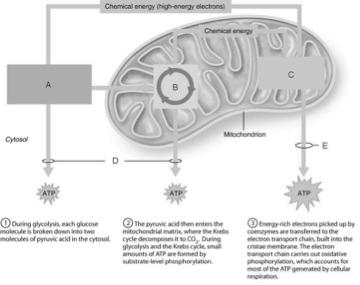
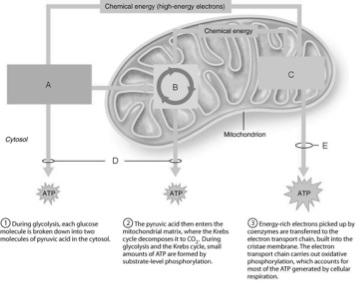
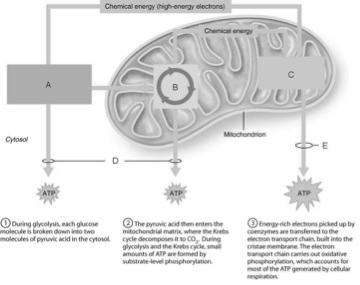
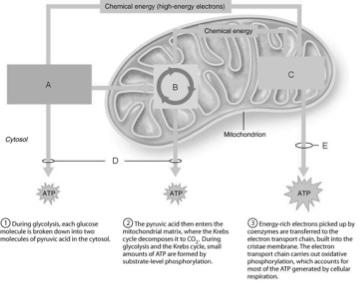
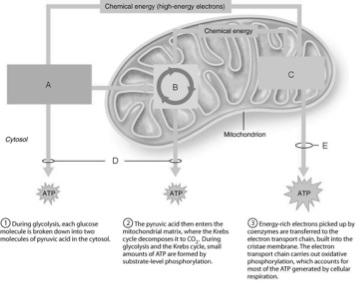
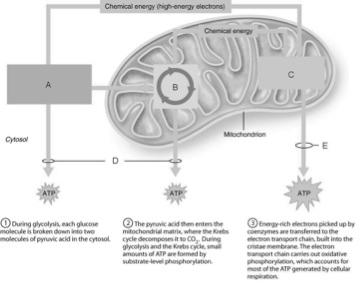
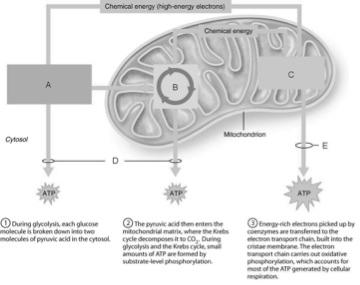
Ten-step enzymatically driven process that converts glucose into pyruvic acid

back 1

A

front 2

Occurs via substrate-level phosphorylation.

back 2

D

front 3

Produces the CO2 involved during glucose oxidation

back 3

B

front 4

Where the hydrogens removed during the oxidation of food fuels are combined with O2.

back 4

C

front 5

Contains ATP synthases, small rotary motors

back 5

C

front 6

ATP formed by oxidative phosphorylation.

back 6

E

front 7

Involves sugar activation, sugar cleavage, and oxidation and ATP formation.

back 7

A

front 8

Glucose serves as the initial reactant.

A) Glycolysis
B) Oxidation reaction
C) Krebs cycle and electron transport chain.

back 8

A

front 9

Involves the removal of hydrogen electrons and CO2 from the substrate molecule

A) Glycolysis
B) Oxidation reaction
C) Krebs cycle and electron transport chain.

back 9

B

front 10

Occurs in the cytosol of a cell.

A) Glycolysis
B) Oxidation reaction
C) Krebs cycle and electron transport chain.

back 10

A

front 11

Produces the most ATP

A) Glycolysis
B) Oxidation reaction
C) Krebs cycle and electron transport chain.

back 11

C

front 12

Involves the use of oxygen to pick up excess hydrogen and electrons.

A) Glycolysis
B) Oxidation reaction
C) Krebs cycle and electron transport chain.

back 12

B

front 13

Breakdown of glycogen to release glucose.

A) glycogenesis
B) glycogenolysis
C) glycolysis
D) gluconeogenesis

back 13

B

front 14

Formation of glucose from proteins or fats.

A) glycogenesis
B) glycogenolysis
C) glycolysis
D) gluconeogenesis

back 14

D

front 15

Storage of glucose in the form of glycogen

A) glycogenesis
B) glycogenolysis
C) glycolysis
D) gluconeogenesis

back 15

A

front 16

Breakdown of glucose to pyruvic acid.

A) glycogenesis
B) glycogenolysis
C) glycolysis
D) gluconeogenesis

back 16

C

front 17

Synthesis of lipids from glucose or amino acids.

A) lipolysis
B) beta oxidation
C) lipogenesis
D) ketogenesis

back 17

C

front 18

Splitting of triglycerides into glycerol and fatty acids.

A) lipolysis
B) beta oxidation
C) lipogenesis
D) ketogenesis

back 18

A

front 19

Conversion of fatty acids into acetyl groups.

A) lipolysis
B) beta oxidation
C) lipogenesis
D) ketogenesis

back 19

B

front 20

Formation of ketone bodies

A) lipolysis
B) beta oxidation
C) lipogenesis
D) ketogenesis

back 20

D

front 21

True/False Questions
Beta oxidation is the initial phase of fatty acid oxidation, and it occurs in the cytoplasm.

back 21

False

front 22

True/False Questions
The increased use of noncarbohydrate molecules for energy to conserve glucose is called glucose sparing

back 22

True

front 23

True/False Questions
Except for lactose and some glycogen, the carbohydrates we ingest are mainly from animals.

back 23

False

front 24

True/False Questions
The term essential nutrient refers to the chemicals that can be interconverted in the liver so that the body can maintain life and good health.

back 24

False

front 25

True/False Questions
The most abundant dietary lipids in the diets of most Americans are triglycerides.

back 25

True

front 26

True/False Questions
There are no complete proteins. All animal products should be eaten with plant material to make a complete protein.

back 26

False

front 27

True/False Questions
The body is considered to be in nitrogen balance when the amount of nitrogen ingested in lipids equals the amount excreted in urine.

back 27

False

front 28

True/False Questions
The amount of protein needed by each person is determined by the age, size, and metabolic rate of the person.

back 28

True

front 29

True/False Questions
Vitamins are inorganic compounds that are essential for growth and good health.

back 29

False

front 30

True/False Questions
Cellular respiration is an anabolic process

back 30

False

front 31

True/False Questions
Glycolysis is a series of six chemical steps, most of which take place in the mitochondria

back 31

False

front 32

True/False Questions
Glycogenesis begins when ATP levels are high, and glucose entering cells is phosphorylated to glucose-6-phosphate and converted to its isomer, glucose-1-phosphate.

back 32

True

front 33

True/False Questions
All athletes require diets high in protein and calories in order to perform and to maintain their muscle mass.

back 33

False

front 34

True/False Questions
In order for amino acids to be oxidized for energy, the amine group (NH2) must be removed.

back 34

True

front 35

True/False Questions
Including the ATP from glycolysis, the cell gains 34 ATP molecules from aerobic metabolism of one glucose molecule.

back 35

False

front 36

True/False Questions
The body requires adequate supplies of only three minerals (calcium, sodium, chloride) and trace amounts of all others.

back 36

False

front 37

True/False Questions
Processes that break down complex molecules into simpler ones are anabolic.

back 37

False

front 38

True/False Questions
For use as fuel, all food carbohydrates are eventually transformed to glucose.

back 38

True

front 39

True/False Questions
Triglycerides and cholesterol do not circulate freely in the bloodstream.

back 39

True

front 40

True/False Questions
Normal body temperature range is 98.6-100°F, regardless of external temperature.

back 40

False

front 41

True/False Questions
A deficit of potassium can cause rickets.

back 41

False

front 42

True/False Questions
It would not be healthy to eliminate all fats from your diet because they serve a useful purpose in maintaining the body.

back 42

True

front 43

True/False Questions
The body's thermoregulatory centers are located in the thalamus.

back 43

False

front 44

True/False Questions
Carbohydrate and fat pools are oxidized directly to produce cellular energy, but amino acid pools must first be converted to a carbohydrate intermediate before being sent through cellular respiration pathways.

back 44

True

front 45

True/False Questions
High levels of HDLs are considered good

back 45

True

front 46

True/False Questions
Diets high in cholesterol and saturated fats tend to produce high HDL concentrations.

back 46

False

front 47

True/False Questions
Ghrelin, produced by the stomach, is a powerful appetite stimulant.

back 47

True

front 48

True/False Questions
Peptides called NPY and AgRP are powerful appetite enhancers.

back 48

True

front 49

True/False Questions
The primary function of carbohydrates is energy production within cells.

back 49

True

front 50

The molecule that serves as the major source of readily available fuel for neurons and blood cells is ________.
A) fat
B) glucose
C) acetyl CoA
D) cellulose

back 50

B) glucose

front 51

Which of the choices below is not a fate of carbohydrate taken into the body?
A) ATP production
B) lipogenesis
C) amino acid synthesis
D) conversion to a nucleic acid
E) glycogenesis

back 51

D) conversion to a nucleic acid

front 52

Dietary fats are important because they ________.
A) keep blood pressure normal
B) help the body absorb fat-soluble vitamins
C) contribute significantly to the health of the skin
D) help prevent the common cold

back 52

B) help the body absorb fat-soluble vitamins

front 53

Cholesterol, though it is not an energy molecule, has importance in the body because it ________.
A) is a stabilizing component of the plasma membranes and is the parent molecule of steroid hormones
B) helps provide essential nutrients to the brain and lungs
C) helps mobilize fats during periods of starvation
D) enters the glycolytic pathway without being altered

back 53

A) is a stabilizing component of the plasma membranes and is the parent molecule of steroid hormones

front 54

Which of the following statements best describes complete protein?
A) derived from meat and fish only
B) meets all the minimum daily requirements for a healthy diet
C) derived only from legumes and other plant material
D) must meet all the body's amino acid requirements for maintenance and growth

back 54

D) must meet all the body's amino acid requirements for maintenance and growth

front 55

The term metabolism is best defined as ________.
A) the length of time it takes to digest and absorb fats
B) a measure of carbohydrate utilization, typically involving measurement of calories
C) the number of calories it takes to keep from shivering on a cold day
D) biochemical reactions involved in building cell molecules or breaking down molecules for energy

back 55

D) biochemical reactions involved in building cell molecules or breaking down molecules for energy

front 56

The term metabolic rate reflects the ________.
A) energy the body needs to perform only its most essential activities
B) loss of organic molecules in urine
C) energy needed to make all organic molecules
D) loss of energy to perspiration

back 56

A) energy the body needs to perform only its most essential activities

front 57

When proteins undergo deamination, the waste substance found in the urine is mostly________.
A) urea
B) ammonia
C) acetyl CoA
D) ketone bodies

back 57

A) urea

front 58

It is important to ensure that your diet is adequately rich in vitamins because ________.
A) vitamins provide protection against the common cold
B) very few foods contain vitamins
C) most vitamins are coenzymes needed to help the body utilize essential nutrients
D) all vitamins are water soluble and pass out of the body too quickly to ensure utilization

back 58

C) most vitamins are coenzymes needed to help the body utilize essential nutrients

front 59

Oxidation-reduction reactions are catalyzed by which of the following enzymes?
A) dehydrogenases and oxidases
B) kinases and phosphorylases
C) phosphatases and kinases
D) synthetases and lipases

back 59

A) dehydrogenases and oxidases

front 60

Which of the choices below describes the pathway of cellular respiration (the complete oxidation of glucose)?
A) glycolysis, Krebs cycle, electron transport chain, oxidative phosphorylation
B) gluconeogenesis, Krebs cycle, lipolysis
C) lipolysis, glycogenolysis, beta oxidation
D) glycogenesis, lipogenesis, electron transport chain

back 60

A) glycolysis, Krebs cycle, electron transport chain, oxidative phosphorylation

front 61

Anabolism includes reactions in which ________.
A) carbohydrate utilization increases
B) larger molecules or structures are built from smaller ones
C) structural proteins are used as a potential energy source
D) ketone bodies are formed

back 61

B) larger molecules or structures are built from smaller ones

front 62

Catabolism would be best described as a process that ________.
A) causes a decline in circulating ketone bodies
B) builds up triglycerides during the postabsorptive state
C) breaks down complex structures to simpler ones
D) elevates glucagon levels

back 62

C) breaks down complex structures to simpler ones

front 63

The primary function of cellular respiration is to ________.
A) determine the amount of heat needed by the human body
B) provide the body with adequate amounts of vitamins and minerals
C) efficiently monitor the energy needs of the body
D) break down food molecules and generate ATP

back 63

D) break down food molecules and generate ATP

front 64

The process of breaking triglycerides down into glycerol and fatty acids is known as ________.
A) gluconeogenesis
B) fat utilization
C) lipogenesis
D) lipolysis

back 64

D) lipolysis

front 65

Which of the following mechanisms produces the most ATP during cellular respiration?
A) oxidative phosphorylation
B) substrate-level phosphorylation
C) oxidation-reduction reactions
D) oxidation reactions

back 65

A) oxidative phosphorylation

front 66

Lipogenesis occurs when ________.
A) there is a shortage of fatty acids
B) glucose levels drop slightly
C) excess proteins are transported through the cell membrane
D) cellular ATP and glucose levels are high

back 66

D) cellular ATP and glucose levels are high

front 67

Oxidative deamination takes place in the ________.
A) liver
B) muscles
C) kidneys
D) blood

back 67

A) liver

front 68

Transamination is the process whereby the amine group of an amino acid is ________.
A) transferred to acetyl CoA
B) converted to urea
C) transferred to a keto acid
D) converted to ammonia

back 68

C) transferred to a keto acid

front 69

Glycogen is formed in the liver during the ________.
A) postabsorptive state
B) absorptive state
C) starvation period
D) period when the metabolic rate is lowest

back 69

B) absorptive state

front 70

Which of the following is a normal consequence of the activation of the heat-promoting center?
A) release of epinephrine
B) sympathetic sweat gland activation
C) increase in ADH production
D) vasodilation of cutaneous blood vessels

back 70

A) release of epinephrine

front 71

Gluconeogenesis is the process in which ________.
A) glycogen is broken down to release glucose
B) glucose is formed from noncarbohydrate precursors
C) glycogen is formed
D) glucose is converted into carbon dioxide and water

back 71

B) glucose is formed from noncarbohydrate precursors

front 72

Glycolysis is best defined as a catabolic reaction based upon the ________.
A) conversion of glucose into carbon dioxide and water
B) conversion of glucose into two molecules of pyruvic acid
C) conversion of pyruvic acid into carbon dioxide and water
D) formation of sugar

back 72

B) conversion of glucose into two molecules of pyruvic acid

front 73

What is the outcome of ketosis?
A) water retention and edema
B) metabolic acidosis
C) metabolic alkalosis
D) glycogen buildup
E) glucogenesis

back 73

B) metabolic acidosis

front 74

Which of the choices below happens during the absorptive state?
A) Anabolic processes exceed catabolic ones.
B) Catabolic processes exceed anabolic ones.
C) No metabolism occurs.
D) Only glucose metabolism occurs.

back 74

A) Anabolic processes exceed catabolic ones.

front 75

In the case of a person who consumes a normal, balanced diet, proteins are essential to the body for all of the following except ________.
A) production of energy
B) production of some hormones
C) production of enzymes, clotting factors, and antibodies
D) formation of functional molecules like hemoglobin and cytochromes

back 75

A) production of energy

front 76

The most abundant dietary lipids are ________.
A) cholesterol
B) phospholipids
C) fatty acids
D) triglycerides

back 76

D) triglycerides

front 77

Loss of heat in the form of infrared waves is termed ________.
A) radiation
B) convection
C) conduction
D) evaporation

back 77

A) radiation

front 78

Which hormone directs essentially all the events of the absorptive state?
A) growth hormone
B) thyroid hormone
C) epinephrine
D) insulin

back 78

D) insulin

front 79

Prostaglandins play a role in ________.
A) skeletal muscle contraction
B) control of blood volume
C) noninflammatory responses
D) control of blood pressure

back 79

D) control of blood pressure

front 80

Which of the following is the most important function of the liver?
A) carbohydrate and lipid metabolism
B) synthesis of bile salts
C) processing of drugs and hormones and activation of vitamin D
D) protein metabolism

back 80

D) protein metabolism

front 81

As the body progresses from the absorptive to the postabsorptive state, only the ________ continues to burn glucose while every other organ in the body mostly switches to fatty acids.
A) liver
B) brain
C) pancreas
D) spleen

back 81

B) brain

front 82

In gluconeogenesis, during the postabsorptive state, amino acids and ________ are converted to glucose.
A) glycerol
B) glycogen
C) glyceraldehyde
D) glucagon

back 82

A) glycerol

front 83

In the liver, the amine group of glutamic acid is removed as ________ in the oxidative state.
A) glyceraldehyde
B) pyruvic acid
C) ammonia
D) oxaloacetic acid
Answer: C

back 83

C) ammonia

front 84

Which of the choices below is not a mechanism of heat production?
A) vasoconstriction of cutaneous blood vessels
B) shivering
C) sweating
D) enhanced thyroxine release

back 84

C) sweating

front 85

Heat-loss mechanisms do not include ________.
A) reducing activity
B) the evaporation of sweat
C) behavior measures such as wearing light, loose clothing
D) vasoconstriction of peripheral blood vessels

back 85

D) vasoconstriction of peripheral blood vessels

front 86

The amount of ________ produced is probably the most important hormonal factor in determining BMR.
A) norepinephrine
B) thyroxine
C) prolactin
D) ADH

back 86

B) thyroxine

front 87

When ketone bodies are present in the blood and urine in large amounts, it usually indicates increased metabolism of ________.
A) amino acids
B) fatty acids
C) glycogen
D) lactic acid

back 87

B) fatty acids

front 88

Many factors influence BMR. What is the most critical factor?
A) the way an individual metabolizes fat
B) the way skeletal muscles break down glycogen
C) the ratio of surface area to volume (weight) of the body
D) an individual's body weight

back 88

C) the ratio of surface area to volume (weight) of the body

front 89

The primary reason elderly people should decrease their caloric intake is that ________.
A) muscle mass and metabolism decline with age
B) their appetite begins to diminish
C) they have a higher metabolic rate and do not need large amounts of food
D) they spend most of the day at rest, and their food will quickly turn to fat

back 89

A) muscle mass and metabolism decline with age

front 90

Which of the choices below is not a major route of heat exchange?
A) radiation
B) conduction/convection
C) evaporation
D) shivering

back 90

D) shivering

front 91

Which of the following statements is a false or incorrect statement?
A) The amino acid pool is the body’s total supply of amino acids in the body’s proteins.
B) Fats and carbohydrates are oxidized directly to produce cellular energy.
C) Amino acids can be used to supply energy only after being converted to a carbohydrate intermediate.
D) Excess carbohydrate and fat can be stored as such, whereas excess amino acids are oxidized for energy or converted to fat or glycogen for storage.

back 91

A) The amino acid pool is the body’s total supply of amino acids in the body’s proteins.

front 92

Which of the following molecules are considered key molecules at metabolic crossroads?
A) glucose-6-phosphate, pyruvic acid, acetyl CoA
B) glucose-6-phosphate, lactic acid, acetyl CoA
C) acetone, beta-hydroxybutyric acid, ATP
D) ATP, pyruvic acid, lactic acid

back 92

A) glucose-6-phosphate, pyruvic acid, acetyl CoA

front 93

Which of the following nutrients yield the highest amount of energy per gram when metabolized?
A) fats
B) vitamins and minerals
C) foods and beverages high in caffeine
D) proteins

back 93

A) fats

front 94

Which of the following does not occur in the mitochondria?
A) electron transport
B) glycolysis
C) Krebs cycle
D) formation of malic acid from fumaric acid

back 94

B) glycolysis

front 95

Which of the following is not true of beta oxidation?
A) It occurs in the mitochondrion.
B) Every second carbon is reduced.
C) It involves the anabolism of fats.
D) Fatty acids are broken into acetic acid fragments.

back 95

C) It involves the anabolism of fats.

front 96

Select the correct statement about proteins.
A) Strict vegetarians need not worry about adequate protein intake, as most vegetables are almost perfect sources of amino acids.
B) Proteins can be synthesized in the body if most of the amino acids are present.
C) Proteins will be used by most cells for ATP synthesis if insufficient carbohydrates are ingested.
D) Catabolic steroids (hormones) accelerate the rate of protein synthesis.

back 96

C) Proteins will be used by most cells for ATP synthesis if insufficient carbohydrates are ingested.

front 97

Oxidation reduction reactions ________.
A) utilize hydrogenases
B) may involve the loss of hydrogen and electrons
C) are rarely coupled together
D) occur via the gain of hydrogen or the loss of oxygen

back 97

B) may involve the loss of hydrogen and electrons

front 98

What process primes a molecule to change in a way that increases its activity, produces motion, or does work?
A) phosphorylation
B) beta oxidation
C) cellular respiration
D) glycolysis

back 98

A) phosphorylation

front 99

Which of the choices below is not a source of glucose during the postabsorptive state?
A) glycogenolysis in the liver
B) lipolysis in adipose tissues and the liver
C) absorption of glucose from the GI tract
D) catabolism of cellular protein

back 99

C) absorption of glucose from the GI tract

front 100

Which of the following is correct?
A) Most of the ATP are produced by substrate-level phosphorylation.
B) Oxidation of FADH2 eventually yields four ATP via oxidative phosphorylation.
C) Glycolysis relies on substrate-level oxidation for the four ATP produced in this pathway.
D) Most ATP from cellular respiration are produced directly in the Krebs cycle.

back 100

B) Oxidation of FADH2 eventually yields four ATP via oxidative phosphorylation.

front 101

Which of the following food groups are considered good sources of complete proteins?
A) corn, cottonseed oil, soy oil, and wheat germ
B) lima beans, kidney beans, nuts, and cereals
C) egg yolk, fish roe, and grains
D) eggs, milk, yogurt, meat, and fish

back 101

D) eggs, milk, yogurt, meat, and fish

front 102

Conditions that promote the oxidative deamination and energy use of amino acids include ________.
A) adequate essential amino acids
B) adequate fat calories to provide adequate ATP formation
C) excessive amounts of protein in the diet
D) ammonia combining with oxygen to form urea

back 102

C) excessive amounts of protein in the diet

front 103

When a person's hypothalamic thermostat is set to a higher level and the actual body temperature is below that level, the person may ________.
A) pant
B) exhibit vasodilation of skin vessels
C) perspire heavily
D) shiver

back 103

D) shiver

front 104

Glucose can be obtained from ________.
A) glycogenolysis
B) triglyceride anabolism
C) protein anabolism
D) lipogenesis

back 104

A) glycogenolysis

front 105

Which of the following is not a function of LDLs?
A) transport cholesterol from the peripheral tissues to the liver
B) regulate cholesterol synthesis in tissue cells
C) make cholesterol available to tissue cells for membrane or hormone synthesis
D) influence cholesterol synthesis in tissue cells

back 105

A) transport cholesterol from the peripheral tissues to the liver

front 106

Which of the following best defines negative nitrogen balance?
A) Protein breakdown exceeds protein synthesis.
B) It is a condition usually caused by having a diet low in fish and meat.
C) A negative nitrogen balance is normal and is a way of maintaining homeostasis.
D) It occurs when amino acids are broken down by liver enzymes and carried to the bloodstream.

back 106

A) Protein breakdown exceeds protein synthesis.

front 107

The Krebs cycle produces ________ ATP molecules per glucose molecule by substrate-level phosphorylation.

back 107

two

front 108

Which nutritional state constitutes the period during and shortly after eating when nutrients are flushing into the bloodstream from the GI tract?

back 108

absorptive

front 109

Fat burning causes an accumulation of acetyl CoA, which the liver converts to ________.

back 109

ketones

front 110

________ is controlled hyperthermia

back 110

Fever

front 111

The enzymes that catalyze oxidation-reduction reactions by removing hydrogen are specifically called ________.

back 111

dehydrogenases

front 112

The process of splitting glucose through a series of steps that produces two pyruvic acid molecules is called ________.

back 112

glycolysis

front 113

In the Krebs cycle, citric acid is followed by ________ acid.

back 113

isocitric