Instructions for Side by Side Printing
- Print the notecards
- Fold each page in half along the solid vertical line
- Cut out the notecards by cutting along each horizontal dotted line
- Optional: Glue, tape or staple the ends of each notecard together
Art Appreciation: Chapters 4-6 Test Preparation
front 1  Titan's "Assumption and Consecration of the Virgin" demonstrates the poser of: | back 1 lines of sight. |
front 2  "The Starry Night," by Vincent van Gogh, indicates the power of the artist's | back 2 expressive line. |
front 3  How is Sol LeWitt's line best described in his work, "Wall Drawing No. 681 C"? | back 3 analytic |
front 4 The organization of visual elements in an artwork is called | back 4 a composition. |
front 5 When a style of line becomes associated as an artist's work, we say it is | back 5 autographic. |
front 6  In Giacometti's "Man Pointing," our eye is directed down his right arm and past his pointed finger to some imagined point of interest beyond. This is an example of which formal element? | back 6 implied line |
front 7  Leonardo da Vinci's "The Last Supper" is based on what specific type of perspective? | back 7 one-point linear perspective |
front 8  Gustave Caillebotte's "Place de l'Europe on a Rainy Day" is based on what specific type of perspective? | back 8 two-point linear perspective |
front 9  Where is the negative space in the Rubin vase? | back 9 in both, depending on how you look at it |
front 10  As is common in Japanese art, the Kumano mandala creates the illusion of space by utilizing: | back 10 oblique projection. |
front 11  In "The Dead Christ," Andrea Mantegna utilizes what technique in order to adjust the distortion created by the point of view? | back 11 foreshortening |
front 12 When and where was linear perspective first codified (studied, organized, and written down)? | back 12 during the Renaissance in Italy |
front 13 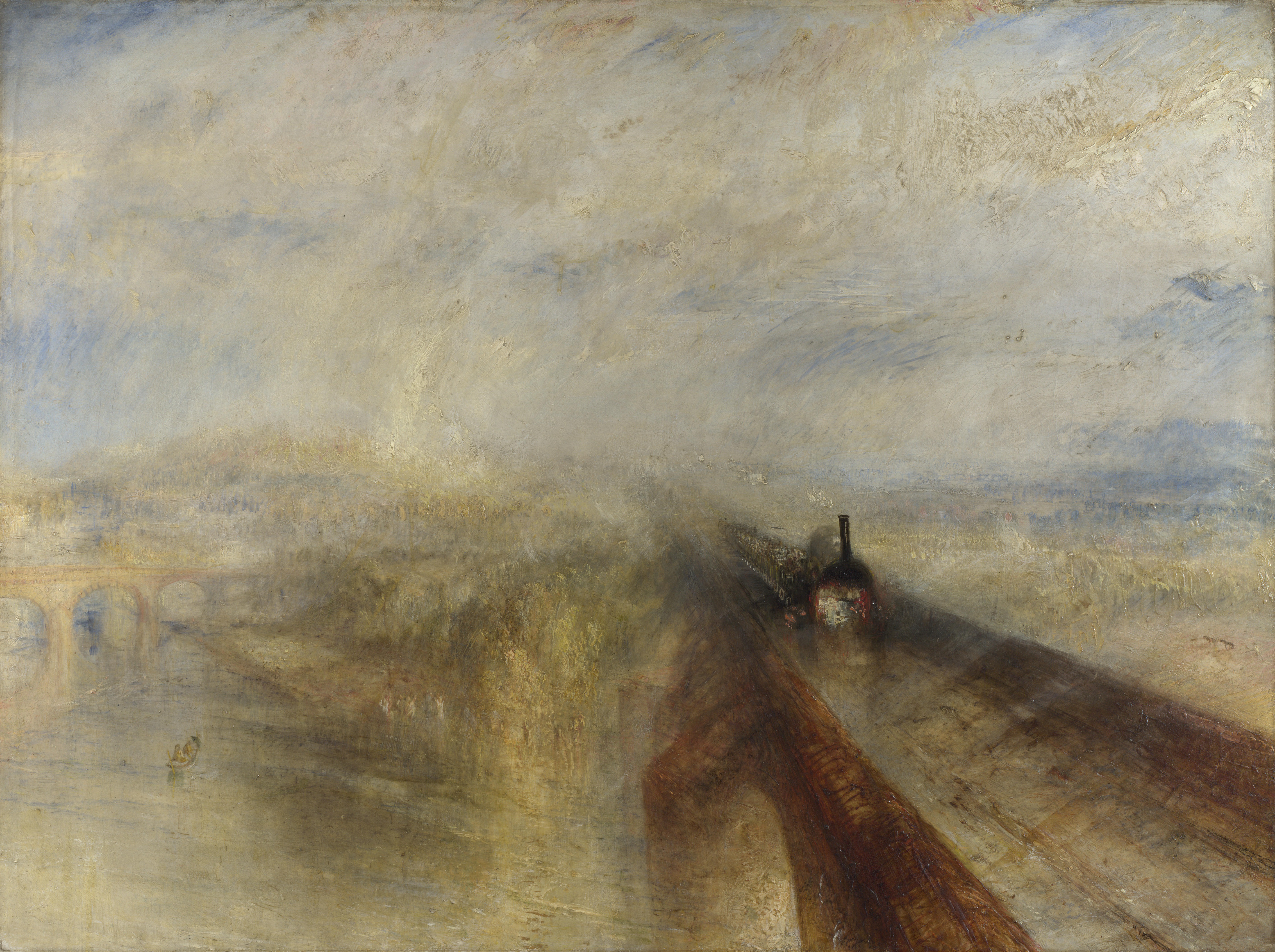 J.M.W. Turner uses two types of perspective in "Rain, Steam, and Speed——The Great Western Railway." What are they? | back 13 atmospheric and one-point |
front 14  The artist Artemisia Gentileschi heightens the drama of "Judith and Maidservant with the Head of Holofernes" by using a technique that comes from an Italian word meaning "murky." This technique is called | back 14 tenebrism. |
front 15 With atmospheric perspective, objects further from the viewer appear | back 15 cooler and less distinct |
front 16 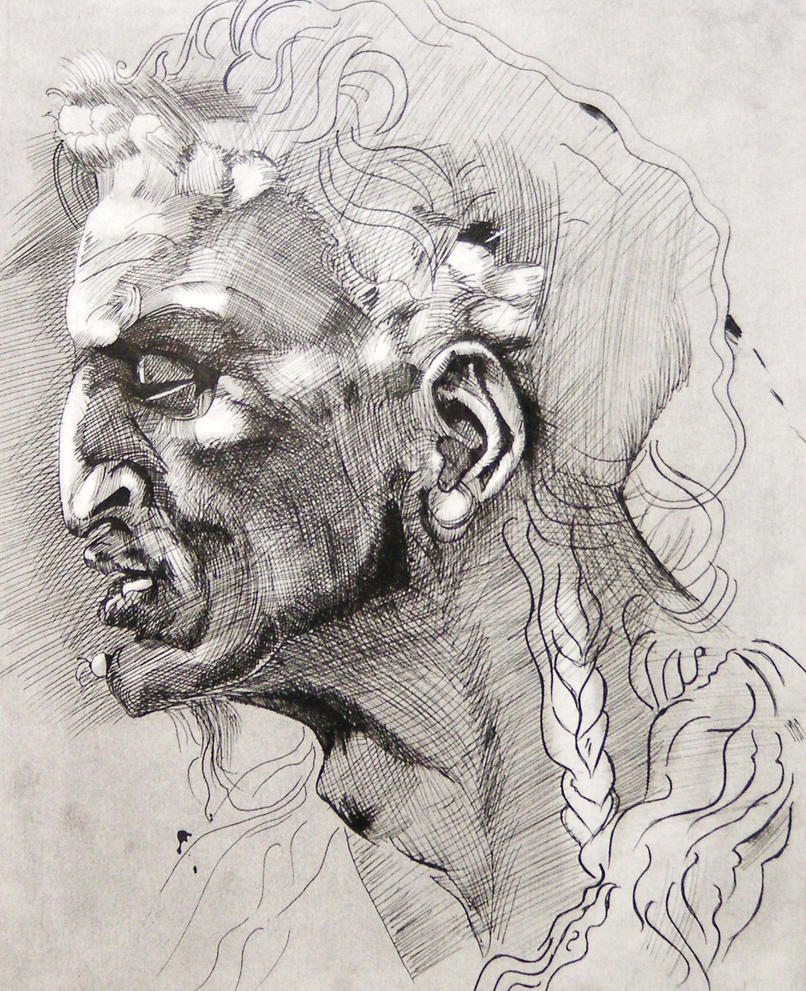 Michelangelo's "Head of a Satyr" shows us the use of | back 16 cross-hatching. |
front 17 A color's brightness or dullness is called its | back 17 intensity or saturation. |
front 18 On the color wheel, blues and greens are usually thought of as | back 18 cool colors. |
front 19 Artists sometimes choose to paint objects using colors that are not "true" to their optical or local colors. This is an example of the expressive use of | back 19 arbitrary color. |
front 20 Which of these elements does not help to create space in art? | back 20 palette |
front 21 What is yellow's complementary color? | back 21 violet |
front 22 In linear perspective systems, where is the vanishing point located? | back 22 On the horizon line where parallel lines appear to converge. |
front 23 Name the three primary colors of light. | back 23 Red, green, and blue. |