Instructions for Side by Side Printing
- Print the notecards
- Fold each page in half along the solid vertical line
- Cut out the notecards by cutting along each horizontal dotted line
- Optional: Glue, tape or staple the ends of each notecard together
Chapter 2 A&P quiz
front 1 CNS glial cells | back 1 astrocyte oligodendrocyte ependymal cell |
front 2 PNS glial cells | back 2 satellite cell Schwann cell |
front 3 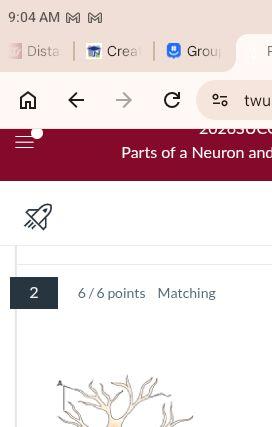 A | back 3 dendrites |
front 4  B | back 4 soma |
front 5  C | back 5 axon hillock |
front 6  D | back 6 node of Ranvier |
front 7  E | back 7 myelin sheath |
front 8  G | back 8 synapse |
front 9  A | back 9 superior sagittal sinus |
front 10  B | back 10 arachnoid granulation villus |
front 11 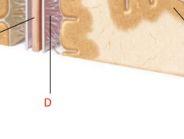 D | back 11 arachnoid trabeculae |
front 12 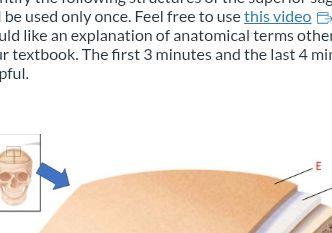 E | back 12 scalp |
front 13  G | back 13 bone |
front 14  I | back 14 dura mater |
front 15  J | back 15 arachnoid mater |
front 16  K | back 16 pia mater |
front 17 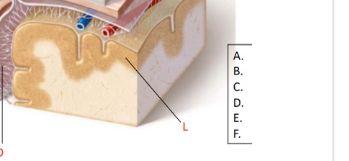 L | back 17 cerebral cortex |
front 18 Astrocyte | back 18 Provides protection of the neurons in the CNS by forming scars and Contributes to the blood-brain barrier |
front 19 Oligodendrocyte | back 19 Provides support for neurons in the PNS and insulates axons in the CNS |
front 20 Microglia | back 20 CNS-resident macrophages that can ingest/digest other cells |
front 21 Ependymal cell | back 21 Filters blood to make cerebrospinal fluid in the CNS |
front 22 Satellite cell | back 22 Surround the cell bodies of neurons in the PNS |
front 23 Schwann cell | back 23 Insulates only one axon segment with myelin in the PNS |
front 24 This system consists of everything EXCEPT the brain and spinal cord: central nervous system autonomic nervous system respiratory system peripheral nervous system | back 24 peripheral nervous system |
front 25 Nervous tissue contains which two types of cells? cranial and spinal cells central and peripheral cells neurons and glial cells cerebral and spinal cells | back 25 neurons and glial cells |
front 26 What type of matter makes up the outer portion of the brain? white gray gray and white none of these | back 26 Gray |
front 27 A localized collection of neuron cell bodies in the CNS is called a nucleus. What is a collection of cell bodies in the PNS called? ganglion myelin nuclei white matter | back 27 ganglion |
front 28 Voluntary responses are the domain of the autonomic nervous system somatic nervous system cerebral cortex thalamus | back 28 somatic nervous system |
front 29 Another word for autonomic is volitional secondary primary automatic | back 29 automatic |
front 30 Another word for somatic is secondary primary secondary volitional | back 30 volitional |
front 31 According to your textbook, SLPs mainly use three senses when treating deficits in speech, language and swallowing functions. Which three are they? | back 31 hearing vision touch (tactile) |
front 32 Which of the following is defined as a noninvasive imaging technique that uses computers to analyze several cross-sectional X-rays in order to reveal minute details about structures in the body. PET CT MRI Ultrasonography Videofluoroscopy Laryngoscopy | back 32 CT |
front 33 Which of the following is primarily used by SLPs to determine whether a patient has a swallowing disorder? PET CT MRI Ultrasonography Videofluoroscopy | back 33 Videofluoroscopy |
front 34 Which of the following is primarily used by SLPs to determine the possible cause of vocal fold dysfunction? PET CT MRI Ultrasonography Videofluoroscopy Laryngoscopy | back 34 Laryngoscopy |
front 35 What is considered the site of transmission of nerve impulses? synapse soma dendrite myelin | back 35 synapse |
front 36 When the immune system erroneously attacks oligodendrocytes, what is the result? meningitis glioma multiple sclerosis Parkinson’s disease | back 36 multiple sclerosis |
front 37 Cerebral spinal fluid is produced within the (be specific) central canal choroid plexus median aperture lateral apertures | back 37 choroid plexus |
front 38 What is the name for a unique anatomical arrangement of blood vessels around the base of the brain that maintains perfusion of blood into the brain even if one component of the structure is blocked or narrowed? carotid artery blood-brain barrier Circle of Willis foramen magnum | back 38 Circle of Willis |
front 39 The brain requires approximately what percentage of the body's blood and oxygen supplies? 20 25 35 50 | back 39 20 |
front 40 Choroid plexuses are found in all four ventricles of the brain. True False | back 40 True |
front 41 A person only uses about 10% of their brain. True False | back 41 False |
front 42 Because neurons continually undergo cell divisions, the number of neurons we have slowly increases over the course of our lives. True False | back 42 False |
front 43 thoracic | back 43 12 |
front 44 lumbar | back 44 5 |
front 45 cervical | back 45 5 |
front 46 sacrum | back 46 1 |
front 47 Afferent | back 47 Afferent means “to bring along auditory information sent from your ears to your brain receptor sending information that the pan you touched is too hot |
front 48 Efferent | back 48 “to carry outward” message sent to muscles controlling your arm and hand to pick up a pan :nerve impulse sent from your brain to move your hand away from a hot pan |