Instructions for Side by Side Printing
- Print the notecards
- Fold each page in half along the solid vertical line
- Cut out the notecards by cutting along each horizontal dotted line
- Optional: Glue, tape or staple the ends of each notecard together
SWM Module 19: Wound Care — Nutritional Considerations
front 1 Anthropometric Measurements for Screening | back 1 Anthropometric measurements are crucial in nutritional screening and assessment (Academy of Nutrition and Dietetics, n.d.). They help evaluate the physical dimensions and composition of the body to identify individuals at risk of malnutrition. |
front 2 Anthropometric Measurements for Screening Best practices to obtain accurate weight and height measurements include: | back 2 Weight - Use a reliable, calibrated scale to record weekly, especially for individuals with wounds. Height - Measure accurately and regularly, without relying on self-reported data, to track changes and identify potential issues. |
front 3 BMI What is BMI? | back 3 A measure used to classify underweight, normal weight, overweight, and obesity. It is calculated as weight in kilograms divided by the square of height in meters, or kg/m². |
front 4 BMI Underweight: | back 4 BMI < 18.5 |
front 5 BMI Normal weight: | back 5 BMI 18.5 to 24.9 |
front 6 BMI Overweight: | back 6 BMI 25 to 29.9 |
front 7 BMI
| back 7 BMI ≥ 30 |
front 8 What does PEM stand for? | back 8 protein-energy malnutrition |
front 9 What happens when there's a Lean Body Mass Loss of 20%? | back 9 The body uses protein stores for both wound healing and restoring lean body mass |
front 10 What happens in the body when there's a Lean Body Mass Loss of 30%? | back 10 The body prioritizes protein stores to restore lean body mass, leaving insufficient protein for wound healing |
front 11 If the loss is less than ___ of lean body mass, healing continues, but greater losses divert protein to restore body mass, slowing the healing process. | back 11 10 % |
front 12 Biochemical Markers | back 12 Offer insights into nutritional and immune status. Key measurements include (Downer et al., 2023): Albumin & Prealbumin ; Total Lymphocyte Count (TLC), Anemia |
front 13 Not the best indicators of visceral protein due to variability. Hydration, inflammation, and liver function can affect their reliability. | back 13 Albumin & Prealbumin |
front 14 This reflects immune system status. Stress and infection can influence TLC. | back 14 Total Lymphocyte Count (TLC) |
front 15 Managing ______ is key to improving healing and recovery. | back 15 Anemia |
front 16 The below are signs of what?
| back 16 Dehydration can complicate wound healing. Key signs and symptoms of dehydration are (Academy of Nutrition and Dietetics, n.d.): |
front 17 Types of Dehydration There are three types of dehydration – ___ ___ and ___. Each one affects cell tonicity differently. What are those 3 types? | back 17 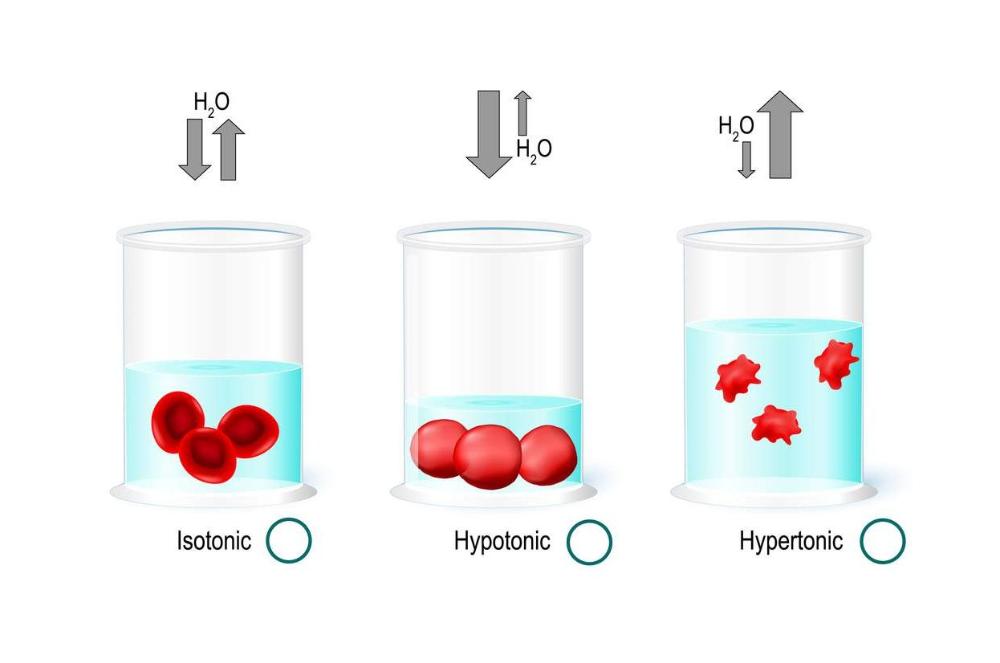 hypertonic, isotonic, and hypotonic |
front 18
| back 18 Hypertonic Last image |
front 19
| back 19 Isotonic |
front 20
| back 20 Hypotonic Middle image above. |
front 21 _________ damages tissues through increased protein degradation, decreased collagen formation, and slow healing. | back 21 Hyperglycemia |
front 22 The American Diabetes Association (2023) recommends the following ranges for blood sugar: Fasting Blood Sugar | back 22 80 to 130 mg/dL |
front 23 The American Diabetes Association (2023) recommends the following ranges for blood sugar: Non-Fasting Blood Sugar for peak postprandial | back 23 < 180 mg/dL |
front 24 Hemoglobin A1c reflects average glucose over the past __ to __ weeks. | back 24 8 , 12 |
front 25 Higher values indicate a higher risk of diabetic complications, including ___ _____. | back 25 slowed healing |
front 26 Normal hemoglobin A1c for adults is ___. | back 26 < 5.7% |
front 27 The target range for people with diabetes is ___. | back 27 6 to 8% |
front 28 What is the primary purpose of nutrition screening in healthcare settings? To provide detailed dietary plans for the person To identify those at risk of malnutrition and decide on the best interventions To measure the exact caloric intake of each person To ensure everyone receives the same nutritional supplements | back 28 To identify those at risk of malnutrition and decide on the best interventions * The primary purpose of nutrition screening is to identify those who may have nutritional problems and determine the appropriate interventions. The primary purpose of nutrition screening is not to provide detailed dietary plans, measure exact caloric intake, or ensure everyone receives the same nutritional supplements. |
front 29 True or False Nutrition is vital for wound healing; nutrient deficiencies can delay or impair normal healing processes. | back 29 True |
front 30 Aim for __ _ ___kilocalories per kilogram of body weight daily, adjusting for age, comorbidities, activity level, healing stage, wound severity, and the number of wounds. Monitoring and adjusting calorie intake will enhance the healing process. | back 30 30 to 35 |
front 31  ____ are essential for collagen production, new cells, and blood vessels. Insufficient dietary ____ will delay healing. Proteins also support surgical wound repair, skin health, fluid and electrolyte balance, and immune function. | back 31 Proteins |
front 32 With a heavily exudating wound, the body can lose up to ___ ___ of protein a day, making it important to adjust protein intake to compensate for protein loss through exudate. | back 32 100 grams |
front 33 The body breaks down protein into ___ ___, which contain _______. | back 33 amino acids, nitrogen |
front 34 These amino acids are the building blocks of proteins and are crucial for ____ ___ and ____ ____. | back 34 tissue repair ; collagen synthesis. |
front 35 Amino acids like ___ and _____ are particularly important for speeding up the healing process | back 35 arginine ; glutamine |
front 36 Neither arginine nor glutamine can be adequately metabolized ___ ___, making supplementation important during the body's healing phases. | back 36 during stress |
front 37 Arginine is a building block of protein, supports immune response, and is essential to collagen formation. Its role in healing is: | back 37
|
front 38 Glutamine is necessary for building proteins in the body. Its role in healing is: | back 38
|
front 39 Achieving a positive nitrogen balance is necessary for new tissue synthesis. This occurs when nitrogen intake exceeds nitrogen excretion, enabling the body to build and repair tissues effectively. Insufficient protein intake leads to a negative nitrogen balance, causing tissue breakdown instead of repair. | back 39 Nitrogen Balance |
front 40 For effective wound healing, aim for ____grams of protein per kilogram of body weight. | back 40 1.5 grams |
front 41 For effective wound healing, aim for ___ ___ of protein per kilogram of body weight for severe wounds or burns. | back 41 2.0 grams |
front 42 Sources of high-quality protein include - | back 42 Lean meats, fish, eggs, and legumes. |
front 43 Patients with ___ _____ must be careful about how much protein they take. Always consult the patient’s nephrologist and dietitian to recommend appropriate diets and supplements! | back 43 renal failure |
front 44 Key Points __ ___ like arginine and glutamine are vital for _______ __ the healing process. | back 44 Amino acids ; speeding up |
front 45 A person’s daily protein requirements might look like this: Typical adults: | back 45 0.8 grams per kilogram of body weight |
front 46 A person’s daily protein requirements might look like this: During wound healing: | back 46 1.2 to 1.5 grams per kilogram |
front 47 A person’s daily protein requirements might look like this: Severe wounds or burns: | back 47 Up to 2.0 grams per kilogram |
front 48 Fats and Fatty Acids Fats and fatty acids normally constitute ___ to ____of total daily calories and should come from healthy sources. Fats and fatty acids play a significant role in wound healing | back 48 20 ; 35% |
front 49 Fats and fatty acids play a significant role in wound healing by: | back 49
|
front 50
| back 50 Healthy fats are |
front 51
| back 51 Omega-3 fatty acids are a type of healthy fat essential for wound healing. Key functions in healing are |
front 52
| back 52
|
front 53 Both omega-3 and omega-6 are essential, but maintaining a proper balance is crucial. The typical Western diet is often too high in ____and too low in ___, which can lead to excessive inflammation. Aim for a balanced intake to support optimal wound healing and overall health. | back 53 omega-6 ; omega-3 |
front 54 T/F By burning carbohydrates for energy, the body preserves protein for its role in healing | back 54 TRUE |
front 55 Glucose, a form of carbohydrate, is used for __production and is needed in phagocytosis and collagen development. | back 55 ATP (Adenosine Triphosphate) * In nutrition and biology, it is widely known as the "energy currency" of the cells |
front 56 What is needed for Phagocytosis and collagen development in wound care? | back 56 Glucose which is used for Adenosine Triphosphate (Caloric Energy). |
front 57 Vitamins and minerals | back 57 _____ and ______ are the unsung heroes of wound healing. They orchestrate the repair of damaged tissue and restoration of skin integrity during these phases. |
front 58 Hemostasis, inflammation, proliferation, and remodeling are what in wound healing? | back 58 The four phases of wound healing |
front 59 Hemostasis | back 59 The body's natural, life-saving process that stops bleeding after a blood vessel is injured. |
front 60 Primary Hemostasis (Stopping the Flow) | back 60 * Vasoconstriction: Immediately after an injury, the damaged blood vessel narrows to reduce blood flow to the area. * Platelet Plug Formation: Tiny cell fragments in the blood called platelets rush to the injury site. They adhere to exposed collagen, activate, and clump together to form a temporary, fragile seal. |
front 61 Inflmmation | back 61 The critical second stage of wound healing (following hemostasis). It serves as the body’s natural defense system, cleaning the wound of debris and preventing infection before tissue repair |
front 62 Inflammation begins within ___ of injury and lasts between 2 to 5 days. | back 62 24hrs * In severe or chronic wounds, this phase can last significantly |
front 63 Because of increased blood flow and chemical activity at the injury site, the inflammatory phase is characterized by four distinct physical symptoms: | back 63
|
front 64 Fat-Soluble Vitamins Fat-soluble vitamins are stored in the ____ and play crucial roles in collagen formation, immune response, and blood coagulation. Ensure adequate intake from dietary sources for wound healing. | back 64 Liver |
front 65 Vitamins A, D, E, K | back 65 Fat-soluble vitamins |
front 66 Function / Source: Vitamin A | back 66 F: Supports collagen formation and protein synthesis S: Carrots, sweet potatoes, leafy green vegetables, liver, fish oils, milk, eggs |
front 67 Function / Source: Vitamin D | back 67 F: Promotes calcium metabolism, bone health, and immune function S: Fatty fish, fortified milk and cereals, egg yolks, sunlight |
front 68 Function / Source: Vitamin E | back 68 F: Acts as an antioxidant aiding in collagen synthesis S: Nuts and seeds, spinach, broccoli, vegetable oils |
front 69 Function / Source: Vitamin K | back 69 F: Essential for blood coagulation S: Leafy greens, brussels sprouts, vegetable oils |
front 70 Two key water-soluble vitamins vital for wound healing are: | back 70 Vitamin C ; B Complex |
front 71 Vitamin _____
| back 71 Vitamin C |
front 72 B Complex
| back 72 Thiamine for energy production and nerve function |
front 73 B Complex
| back 73 Riboflavin for cellular growth and repair |
front 74 B Complex B3: | back 74 Niacin for DNA repair and skin health |
front 75 B Complex B5: | back 75 Pantothenic acid key for energy production and fatty acid metabolism |
front 76 B Complex B6: | back 76 Pyridoxine for protein metabolism and hemoglobin synthesis |
front 77 B Complex B7: | back 77 Biotin promotes skin, hair, and nail health |
front 78 B Complex B9: | back 78 Folate for DNA repair and red blood cell production |
front 79 B Complex B12: | back 79 Cobalamin for red blood cell formation and neurological function |
front 80 Name that vitamin: Folate for DNA repair and red blood cell production | back 80 B9 |
front 81 Name that vitamin: Pantothenic acid key for energy production and fatty acid metabolism | back 81 B5 |
front 82 Name that vitamin: Niacin for DNA repair and skin health | back 82 B3 |
front 83 Conditions like pernicious anemia, gastric or ileal resections, Crohn's disease, and low stomach acid can___ vitamin B12 absorption, sometimes necessitating B vitamin injections. | back 83 impair |
front 84 _____ are vital for DNA synthesis, oxygen transport, and inflammation reduction. Adequate intake from sources like meat, beans, shellfish, and fortified cereals is crucial for wound healing. | back 84 Minerals |
front 85 Name the mineral:
| back 85 Zinc |
front 86 Name that mineral:
| back 86 Iron |
front 87 Name that mineral:
| back 87 Copper |
front 88
| back 88 Vital functions of water are (Baranoski & Ayello, 2020): |
front 89 Patients with excessive wound drainage are at a higher risk of dehydration. Additional risk factors for dehydration and conditions requiring extra fluids include: | back 89
|
front 90 Prioritize ___ over other beverages, as some can negatively affect nutritional balance. | back 90 water |
front 91
| back 91 Factors that may decrease fluid needs include |
front 92 Amino acids play a significant role in tissue repair, what are amino acids considered the building block of? Proteins Vitamins Fats Carbohydrates | back 92 Proteins |
front 93 Protein breaks down into ___ ___ , considered the building blocks of protein, which are needed for tissue repair and collagen synthesis. Amino acids are not considered the building blocks of vitamins, fats, and carbohydrates. | back 93 amino acids |
front 94 Amino acids are needed for the following: | back 94 tissue repair and collagen synthesis |
front 95 Proteins are crucial for collagen production and tissue repair; 1.2 to 2 grams per kilogram of body weight is the recommended amount of protein for wound healing. | back 95
|
front 96 Which strategy effectively enhances nutrition in a person with a reduced appetite? | back 96 Offer easy to chew food and smaller portions |