Instructions for Side by Side Printing
- Print the notecards
- Fold each page in half along the solid vertical line
- Cut out the notecards by cutting along each horizontal dotted line
- Optional: Glue, tape or staple the ends of each notecard together
Case-Based
front 1 A patient has a lesion involving the brachium pontis. Which deficit is most likely? A. Impaired cortical motor planning input to cerebellum | back 1 A. Impaired cortical motor planning input to cerebellum The brachium pontis is the middle cerebellar peduncle. It carries major afferent input from the contralateral pontine nuclei, which relay information from the cerebral cortex about intended movement. |
front 2 ______ is given before anticholinesterase to prevent bradycardia and cholinergic crisis | back 2 Atropine |
front 3 A lesion of the restiform body would most directly disrupt which type of information entering the cerebellum? A. Cerebellar output to thalamus | back 3 C. Proprioceptive and vestibular input The restiform body is the inferior cerebellar peduncle, which carries important afferent input to the cerebellum, including proprioceptive and vestibular-related signals. |
front 4 A tumor compresses the major efferent pathway leaving the cerebellum. Which structure is most likely involved? A. Restiform body | back 4 D. Brachium conjunctivum The brachium conjunctivum is the superior cerebellar peduncle, which is the major output pathway of the cerebellum. |
front 5 A patient has fluctuating ptosis and diplopia that worsen late in the day. On examination, deep tendon reflexes are normal. Which structure is most directly spared, explaining the preserved reflexes? A. Postsynaptic acetylcholine receptors | back 5 B. Muscle spindle afferent limb |
front 6 A patellar tendon tap suddenly stretches the quadriceps. The first receptor that detects this change is the: A. Golgi tendon organ | back 6 C. Muscle spindle |
front 7 The primary sensory fiber mediating the monosynaptic stretch reflex is the: A. Ib afferent fiber | back 7 B. Ia afferent fiber |
front 8 A reflex hammer strike to the patellar tendon causes quadriceps contraction and hamstring relaxation. Which spinal cord circuit best explains the hamstring response? A. Direct inhibition by Ia afferents on hamstring alpha motor
neurons | back 8 B. Activation of an inhibitory interneuron by Ia afferents |
front 9 Which disorder would most likely abolish the afferent limb of a deep tendon reflex? A. Myasthenia gravis | back 9 B. Dorsal root ganglion lesion |
front 10 A patient with proximal weakness has preserved sensation and normal reflexes. The clinician suspects a disorder of the postsynaptic neuromuscular junction rather than peripheral neuropathy. Which finding best supports that conclusion? A. Absent muscle spindle discharge | back 10 C. Impaired transmission from motor nerve terminal to muscle |
front 11 A patient has weakness that improves transiently after repeated activation, along with reduced reflexes that may increase after exercise. Which diagnosis is more likely than myasthenia gravis? A. Lambert-Eaton syndrome | back 11 A. Lambert-Eaton syndrome |
front 12 A patient is given a medication that causes dry skin, flushed appearance, confusion, and intense thirst. Which mechanism best explains these findings? A. Nonselective blockade of muscarinic receptors | back 12 A. Nonselective blockade of muscarinic receptors Atropine is a nonselective muscarinic antagonist, blocking M1–M5 receptors. This produces classic anticholinergic toxicity: ↓ sweating (dry skin), flushing, confusion, and thirst. |
front 13 Pyridostigmine lasts ___-___ hours | back 13 4-6 |
front 14 A patient presents with acute respiratory distress and generalized weakness. Administration of an acetylcholinesterase inhibitor leads to clinical improvement. Which diagnosis is most likely? A. Cholinergic crisis | back 14 B. Myasthenic crisis due to disease exacerbation |
front 15 A patient being treated for myasthenia gravis develops worsening weakness, bradycardia, diaphoresis, and miosis. Which mechanism best explains the patient’s condition? A. Decreased acetylcholine at the neuromuscular junction | back 15 C. Excess acetylcholine from acetylcholinesterase inhibition This presentation is consistent with a cholinergic crisis, caused by anticholinesterase toxicity, leading to excessive ACh at synapses. |
front 16 In myesthenia crisis, symptoms ______ with anticholinesterase drugs In cholinergic crisis, symptoms ______ with anticholinesterase drugs | back 16 improve worsen |
front 17 Deep branch of the ulnar is what? | back 17 C8-T1 |
front 18 Deep branch of the ulnar (C8-T1) innervates ______ eminence muscles | back 18 hypothenar |
front 19 A patient has fluctuating ptosis, diplopia, and fatigable proximal weakness. Initial serology for acetylcholine receptor antibodies is negative, but clinical suspicion for myasthenia gravis remains high. Which antibody should be checked next? A. Anti-MuSK | back 19 A. Anti-MuSK |
front 20 A patient with clinically suspected myasthenia gravis is negative for AChR antibodies and MuSK antibodies. Which antibody is most appropriate to check next? A. Anti-agrin | back 20 B. Anti-LRP4 |
front 21 Which sequence best reflects the normal neuromuscular junction signaling pathway that these MG-related antibodies disrupt? A. MuSK → agrin → ACh receptor → LRP4 | back 21 B. Agrin → LRP4 → MuSK → ACh receptor clustering |
front 22 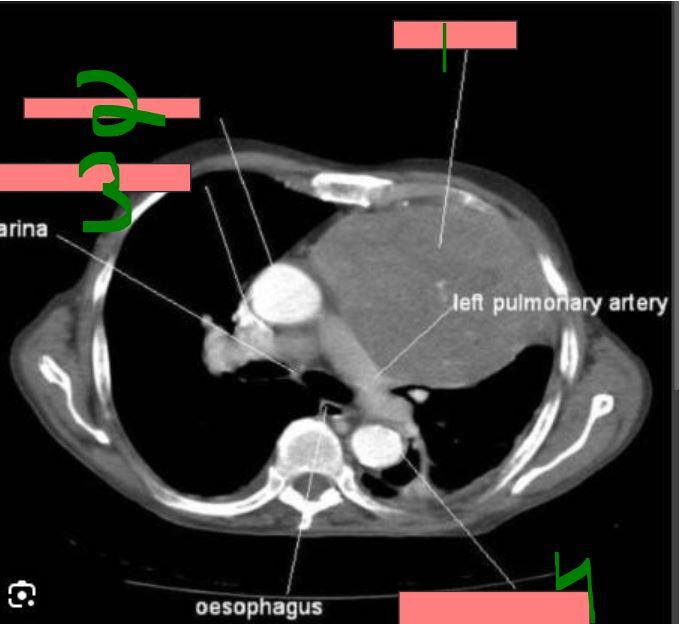 What is 1? | back 22 thymoma |
front 23 2? | back 23 ascending aorta |
front 24 3? | back 24 superior vena cava |
front 25 4? | back 25 descending aorta |
front 26 A patient with suspected myasthenia gravis also has arthralgias, photosensitive rash, and proteinuria. Which additional laboratory test is most appropriate to help evaluate an alternative systemic autoimmune diagnosis? A. ANA | back 26 A. ANA |
front 27 ANA tests for autoantibodies directed toward ____ material. It is highly sensitive for ____ (SLE) | back 27 nucear lupus |
front 28 A patient develops descending paralysis after eating improperly canned food. The toxin cleaves SNARE proteins in cholinergic nerve terminals. Which immediate effect causes the weakness? A. Less ACh vesicle fusion | back 28 B. Fewer muscle ACh receptors SNARE proteins are required for docking and fusion of synaptic vesicles. If they are disrupted, the presynaptic terminal cannot effectively release acetylcholine, so neuromuscular transmission falls. |
front 29 Which disorder is most directly caused by impaired presynaptic acetylcholine release rather than loss of postsynaptic receptor function? A. Botulism | back 29 A. Botulism Botulinum toxin acts presynaptically by blocking SNARE-mediated vesicle fusion, so ACh cannot be released. |
front 30 _______ play a role in docking and fusion of synaptic vesicles | back 30 SNAREs |
front 31 The age onset for myasthenia gravis is bimodal, with it occurring at 20-30 in _______ and 60-70 in _______ | back 31 women men |
front 32 A patient with myasthenia gravis is started on mycophenolate mofetil for long-term disease control. Which mechanism best explains its therapeutic effect? A. Blocks muscarinic receptors | back 32 B. Inhibits purine synthesis |
front 33 Mycophenolate mofetil improves myasthenia gravis primarily by reducing activity of which cells? A. Neutrophils and eosinophils | back 33 B. B cells and T cells |
front 34 A patient taking mycophenolate mofetil develops fatigue and recurrent infections. Which adverse effect best explains both findings? A. Hemolysis | back 34 B. Leukopenia |
front 35 Which adverse-effect set is most consistent with mycophenolate mofetil therapy? A. Constipation, mydriasis, urinary retention | back 35 C. GI upset, hepatotoxicity, cytopenias |
front 36 A defect in thymic function leads to survival of T cells that react against self-antigens. Which thymic region is most directly impaired? A. Cortex | back 36 B. Medulla |
front 37 Which statement best describes the normal organization of T cells within the thymus? A. Mature T cells dominate cortex | back 37 B. Immature T cells reside in cortex |
front 38 The thymus is primarily composed of which two cell types? A. Neurons and glial cells | back 38 B. Epithelioreticular cells and lymphocytes |
front 39 The thymus is derived embryologically from which germ layer? A. Ectoderm | back 39 C. Endoderm |
front 40 The thymus is located in which anatomical region? A. Posterior mediastinum | back 40 B. Upper anterior mediastinum The thymus lies behind the sternum in the upper anterior mediastinum. |
front 41 What is the primary function of the thymus? A. B-cell antibody production | back 41 B. T-cell maturation via antigen presentation |
front 42 The _____ muscle protrudes the tongue. Innervated by CN___ | back 42 genioglossus CN12 |
front 43 In repetitive nerve stimulation testing for suspected myasthenia gravis, stimulation at Erb’s point is used primarily to: A. Assess thymic output | back 43 B. Activate upper trunk fibers |
front 44 A patient with myasthenia gravis undergoes repetitive stimulation of the brachial plexus at Erb’s point. Which finding is most consistent with the disease? A. Increasing CMAP amplitude | back 44 B. Decremental CMAP response |
front 45 For CMAP testing, Erb’s point is located in which site? A. Axilla, anterior to pectoralis minor | back 45 B. Supraclavicular fossa, posterior to SCM |
front 46 Stimulation at Erb’s point during CMAP testing most directly activates which structure? A. Lower trunk, C8–T1 | back 46 B. Upper trunk, C5–C6 |
front 47 Which property of neostigmine best explains why it lacks major central nervous system effects? A. Rapid renal excretion | back 47 C. Does not cross the BBB |
front 48 Neostigmine is a ____ amine that inhibits ____ | back 48 quaternary cholinesterase |
front 49 Muller's (smooth muscle) - innvervated by sympathetic nerves via ____ ____ | back 49 long ciliary |
front 50 A patient taking neostigmine presents with excessive salivation, muscle weakness, and respiratory distress. Which condition best explains these findings? A. Cholinergic crisis | back 50 A. Cholinergic crisis |
front 51 The germinal centers seen in thymic hyperplasia primarily contain which cell type? A. T cells | back 51 C. B cells |
front 52 In thymic hyperplasia associated with myasthenia gravis, which histologic feature is most characteristic? A. Follicles with germinal centers | back 52 A. Follicles with germinal centers |
front 53 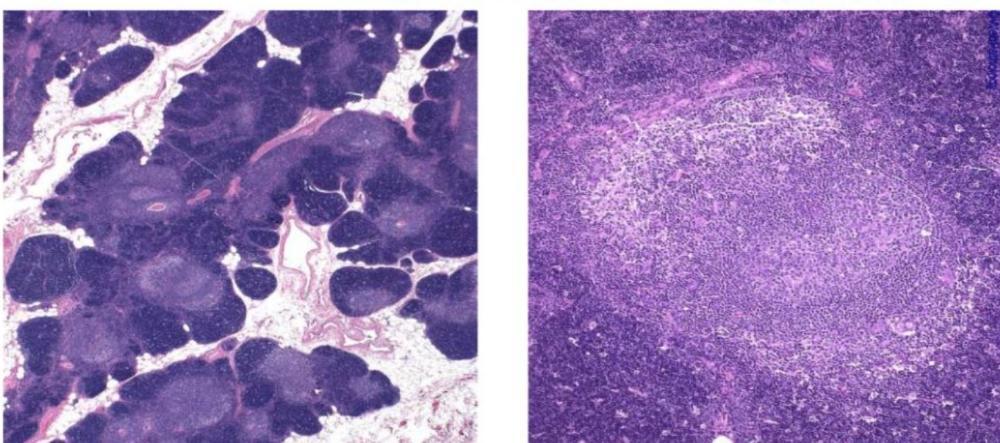 | back 53 thymic hyperplasia in MG |
front 54 A patient presents with fluctuating diplopia and ptosis that worsen throughout the day. Why are extraocular muscles affected early in myasthenia gravis? A. Large motor units and low activity | back 54 B. High use and small motor units |
front 55 anti-dsDNA test is used to diagnose / rule out [...] | back 55 lupus/SLE |
front 56 Which statement best describes the normal structure of the thymus in adulthood? A. Mostly adipose tissue after involution | back 56 A. Mostly adipose tissue after involution |
front 57 Which cell type is primarily responsible for forming the blood-thymus barrier? A. Endothelial cells | back 57 B. Epithelioreticular cells |
front 58 Prednisone improves myasthenia gravis primarily through which mechanism? A. Suppresses immune system | back 58 A. Suppresses immune system |
front 59 Which adverse effect is most associated with long-term prednisone use? A. Hypoglycemia | back 59 B. Osteoporosis |
front 60 A patient on chronic prednisone develops weight gain, moon facies, and central obesity. Which condition best explains these findings? A. Addison disease | back 60 C. Cushing syndrome |
front 61 A patient with weight loss, heat intolerance, and proximal muscle weakness is found to have elevated thyroid hormones. What is the mechanism of the muscle weakness? A. Increased protein catabolism | back 61 A. Increased protein catabolism |
front 62 A patient with fatigue, cold intolerance, and muscle cramps has hypothyroidism. What is the primary mechanism of their muscle weakness? A. Increased muscle breakdown | back 62 B. Decreased metabolism |
front 63 MG → mainly type _____ hypersensitivity Low C3/C4 → think type _____ immune-complex consumption | back 63 type II type III |
front 64 Which protein acts as the calcium sensor that triggers synaptic vesicle fusion during neurotransmitter release? A. Synaptotagmin | back 64 A. Synaptotagmin |
front 65 Hassall corpuscles in the thymus are best described as which structure? A. Concentric epithelioreticular layers | back 65 A. Concentric epithelioreticular layers |
front 66 Which mechanism best explains how thymoma or thymic hyperplasia contributes to myasthenia gravis? A. Reduced calcium entry in motor nerves | back 66 B. Autoimmunity against ACh receptors |
front 67 A patient is unable to coordinate horizontal eye movements, with impaired conjugate gaze. Which structure is most likely affected? A. Optic chiasm | back 67 B. Medial longitudinal fasciculus |
front 68 A patient with a brainstem lesion develops vomiting after exposure to circulating toxins. Which structure is most likely responsible for detecting these blood-borne substances? A. Area postrema | back 68 A. Area postrema |
front 69 A patient has difficulty initiating horizontal gaze toward the right. Which structure is most directly responsible for sending signals to the ipsilateral abducens nucleus? A. Paramedian pontine reticular formation | back 69 A. Paramedian pontine reticular formation |
front 70 The paramedian pontine reticular formation (PPRF) integrates input from which combination of sources to coordinate horizontal eye movements? A. Retina, optic tract, lateral geniculate | back 70 B. Cortex, cerebellum, vestibular nuclei |
front 71 A patient is unable to adduct the left eye during rightward gaze, but convergence is intact. The right eye shows nystagmus. Which diagnosis best explains these findings? A. Internuclear ophthalmoplegia | back 71 A. Internuclear ophthalmoplegia |
front 72 Which eye movement is preserved in a patient with a lesion of the MLF and ipsilateral abducens nucleus? A. Ipsilateral adduction | back 72 D. Contralateral abduction |
front 73 A patient with a pontine lesion cannot move either eye to the left. On rightward gaze, the left eye fails to adduct while the right eye abducts with nystagmus. Which diagnosis best explains these findings? A. Internuclear ophthalmoplegia | back 73 B. One-and-a-half syndrome |
front 74 A patient has an absent gag reflex after touching the posterior pharyngeal wall. Which pathway correctly describes the afferent limb of the reflex? A. CN IX to spinal trigeminal and solitarius nuclei | back 74 A. CN IX to spinal trigeminal and solitarius nuclei |
front 75 A medullary lesion disrupts the efferent limb of the gag reflex. Which structure is most directly affected? A. CN IX fibers to nucleus solitarius | back 75 B. CN X fibers from nucleus ambiguus |
front 76 Medulloblastomas can cause what type of hydrocephalus? they block what? | back 76 non-communicating fourth ventricle |
front 77 A patient with a brain tumor develops persistent vomiting and increased intracranial pressure. Which medication is most appropriate to reduce both inflammation and vomiting? A. Dexamethasone | back 77 A. Dexamethasone |
front 78 A patient with a posterior fossa tumor is started on dexamethasone for symptomatic relief. Which description best matches this drug? A. Glucocorticoid that reduces inflammation | back 78 A. Glucocorticoid that reduces inflammation |
front 79 Dexamethasone helps reduce vomiting in a patient with a brain tumor primarily by reducing which process? A. Vestibular signaling | back 79 B. Cerebral edema |
front 80 Which additional effect of dexamethasone makes it useful in patients with intracranial tumors? A. Reduces nausea | back 80 A. Reduces nausea |
front 81
A. Large pleomorphic cells with necrosis | back 81 B. Small blue cells with rosettes |
front 82 A pediatric posterior fossa tumor shows densely packed small cells with hyperchromatic nuclei and minimal cytoplasm. Which additional histologic feature supports medulloblastoma? A. Homer Wright rosettes | back 82 A. Homer Wright rosettes |
front 83 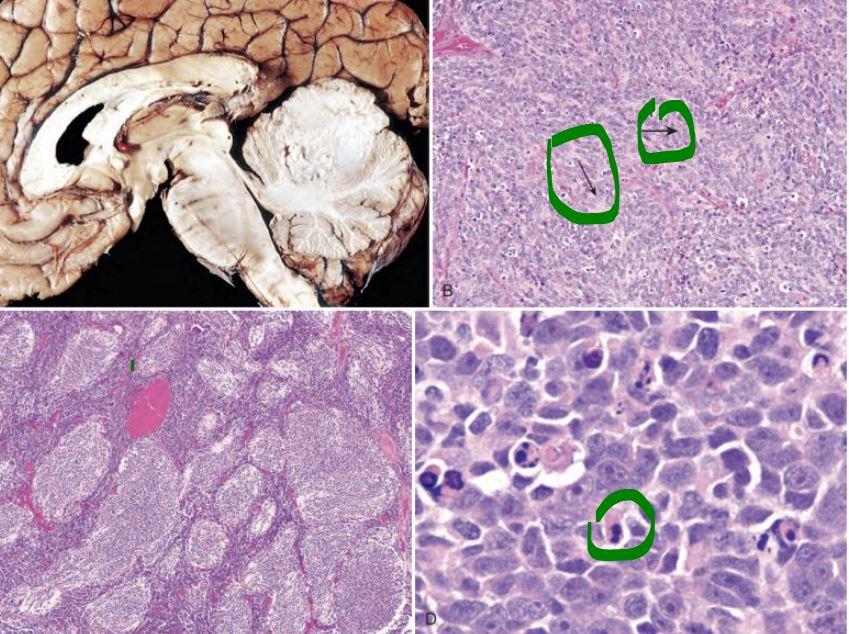 | back 83 medulloblastoma |
front 84 Medulloblastoma most commonly spreads through which pathway? A. Hematogenous spread | back 84 C. Cerebrospinal fluid |
front 85 “Drop metastases” from medulloblastoma most commonly involve which structure? A. Cervical spinal cord | back 85 B. Cauda equina |
front 86 Cisplatin exerts its anticancer effect primarily through which mechanism? A. DNA cross-link formation | back 86 A. DNA cross-link formation |
front 87 Which adverse effect is most associated with acute cisplatin toxicity? A. Nephrotoxicity | back 87 D. Nausea and vomiting |
front 88 Which adverse effect is most associated with delayed cisplatin toxicity? A. Alopecia | back 88 C. Nephrotoxicity |
front 89 A patient receiving cisplatin later develops numbness in the extremities and cytopenias. Which explanation best accounts for these findings? A. Acute cholinergic toxicity | back 89 B. Delayed toxicity from cisplatin |
front 90 Vincristine exerts its anticancer effect primarily through which mechanism? A. DNA cross-linking | back 90 B. Inhibits mitosis |
front 91 Which statement best describes the acute toxicity profile of vincristine? A. Severe nausea and vomiting | back 91 C. No major acute toxicity |
front 92 Which adverse effect is most associated with delayed toxicity of vincristine? A. Hypertension | back 92 B. Neurotoxicity |
front 93 A patient receiving vincristine develops abdominal distension and decreased bowel sounds. Which delayed toxicity best explains this? A. Paralytic ileus | back 93 A. Paralytic ileus |
front 94 Which additional delayed toxicity is associated with vincristine? A. SIADH | back 94 A. SIADH |
front 95 Lomustine treats brain tumors primarily through which mechanism? A. DNA cross-link formation | back 95 A. DNA cross-link formation |
front 96 Which adverse effect is most associated with acute lomustine toxicity? A. Myelosuppression | back 96 C. Nausea and vomiting |
front 97 Which adverse effect is most associated with delayed lomustine toxicity? A. Alopecia | back 97 B. Myelosuppression |
front 98 Chemotherapy can cause a reduction in ____ production leading to ____ marrow depression | back 98 RBC bone |
front 99 In hydrocephalus, increased ventricular pressure can lead to movement of CSF into surrounding brain tissue. What is this process called? A. Transependymal absorption | back 99 A. Transependymal absorption |
front 100 Transependymal absorption of CSF in hydrocephalus most directly leads to which complication? A. Cerebral edema | back 100 A. Cerebral edema |
front 101 Sympathetic innervation of foregut is from ____-____ via ____ ____ nerve and ____ ganglion | back 101 T6-T9 greater splanchnic celiac |
front 102 Sympathetic innervation of midgut is from ____-____ via ____ and ____ splanchnic nerve and ____ ____ ganglion | back 102 T8-T11 greater, lesser superior mesenteric |
front 103 Sympathetic innervation of hindgut is from ____-____ via ____ and ____ splanchnic nerve and ____ ____ ganglion | back 103 T12-L2 least, lumbar inferior mesenteric |
front 104 The pelvic pain line is classically described as passing through which structure? A. Splenic flexure | back 104 B. Middle of sigmoid colon |
front 105 Visceral pain from a structure above the pelvic pain line most commonly travels with which fibers? A. Parasympathetics to S2–S4 | back 105 C. Sympathetics to the respective level |
front 106 Visceral pain from a pelvic organ below the pelvic pain line most commonly travels by which route? A. Sympathetics to T5–T9 | back 106 B. Parasympathetics to S2–S4 |
front 107 Stretch and distension from much of the gastrointestinal tract are primarily carried by which nerve? A. Pudendal nerve | back 107 C. Vagus nerve |
front 108 A patient with inflammatory bowel disease develops fatigue and pallor. Laboratory studies show microcytic, hypochromic anemia. Which combination best explains this finding? A. Iron malabsorption and rectal bleeding | back 108 A. Iron malabsorption and rectal bleeding |
front 109 Sulfasalazine is used in inflammatory bowel disease primarily because it inhibits which process? A. Eicosanoid inflammatory mediators | back 109 A. Eicosanoid inflammatory mediators |
front 110 A patient with IBD starts sulfasalazine. Which adverse-effect combination best fits this drug? A. GI upset, myalgia, arthralgia | back 110 A. GI upset, myalgia, arthralgia |
front 111 Which serious toxicity of sulfasalazine would be most concerning on routine blood work? A. Myelosuppression | back 111 A. Myelosuppression |
front 112 Hydrocortisone enema is a _____ to reduce inflammation rectally | back 112 corticosteroid |
front 113 Anisocytosis= various [...] of RBC | back 113 sizes shapes |
front 114 RDW = size variability of ____. | back 114 RBCs |
front 115 Thalassemia can cause ______, ______ anemia | back 115 microcytic, hypochromic |
front 116 [IBD] is associated with primary sclerosing cholangitis | back 116 UC |
front 117 _____ = storage form of iron | back 117 Ferritin TIBC |
front 118 Which gross finding is most characteristic of Crohn disease? A. Cobblestone mucosa | back 118 A. Cobblestone mucosa |
front 119 A patient with Crohn disease develops obstructive symptoms due to chronic inflammation. Which gross feature best explains this? A. Strictures | back 119 A. Strictures |
front 120 A patient with Crohn disease develops an abnormal connection between the intestine and bladder. Which gross feature does this represent? A. Stricture | back 120 B. Fistula |
front 121 Which gross finding describes mesenteric fat wrapping around inflamed bowel in Crohn disease? A. Creeping fat | back 121 A. Creeping fat |
front 122 Which structural change in Crohn disease most directly contributes to luminal narrowing? A. Mucosal atrophy | back 122 B. Wall thickening |
front 123 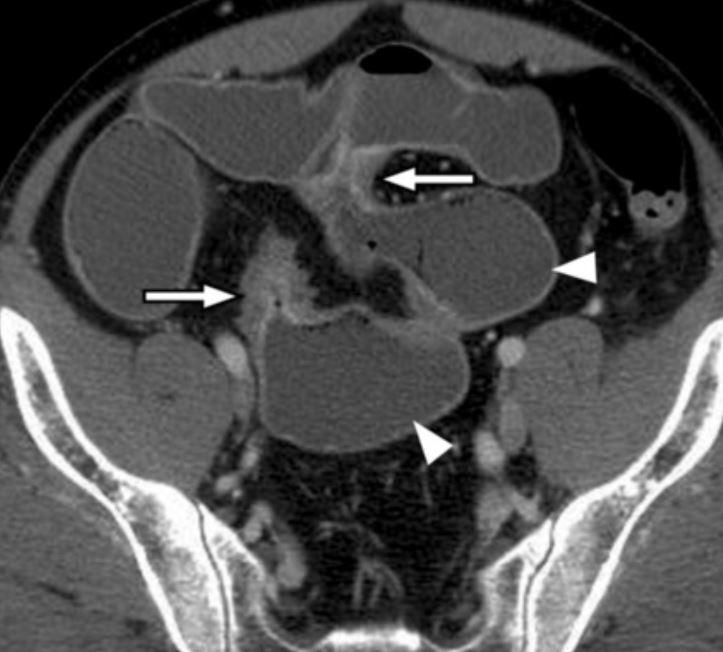 what is this showing in Crohns? | back 123 skip lesions |
front 124 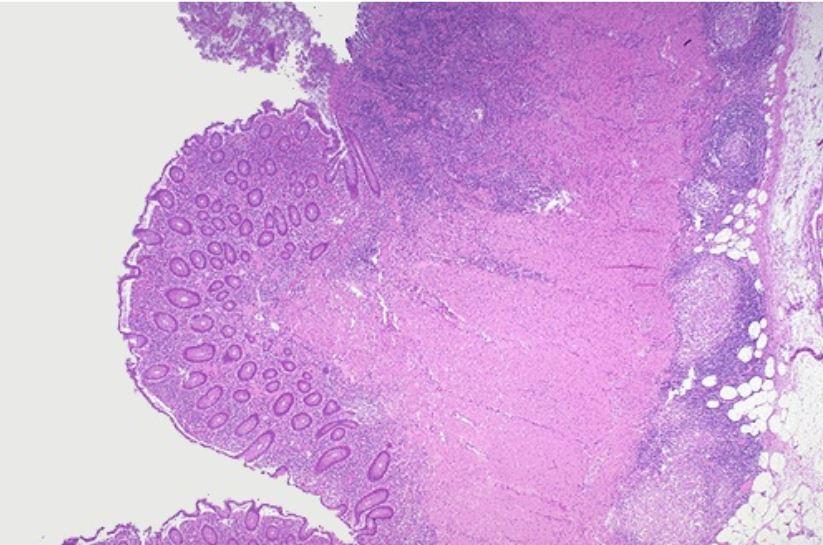 | back 124 Crohns |
front 125 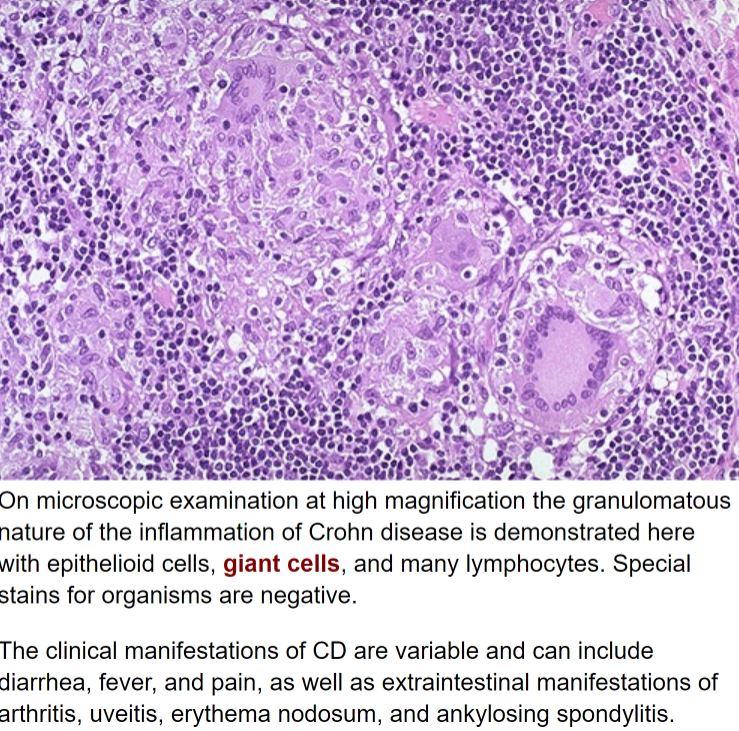 | back 125 crohns histo |
front 126 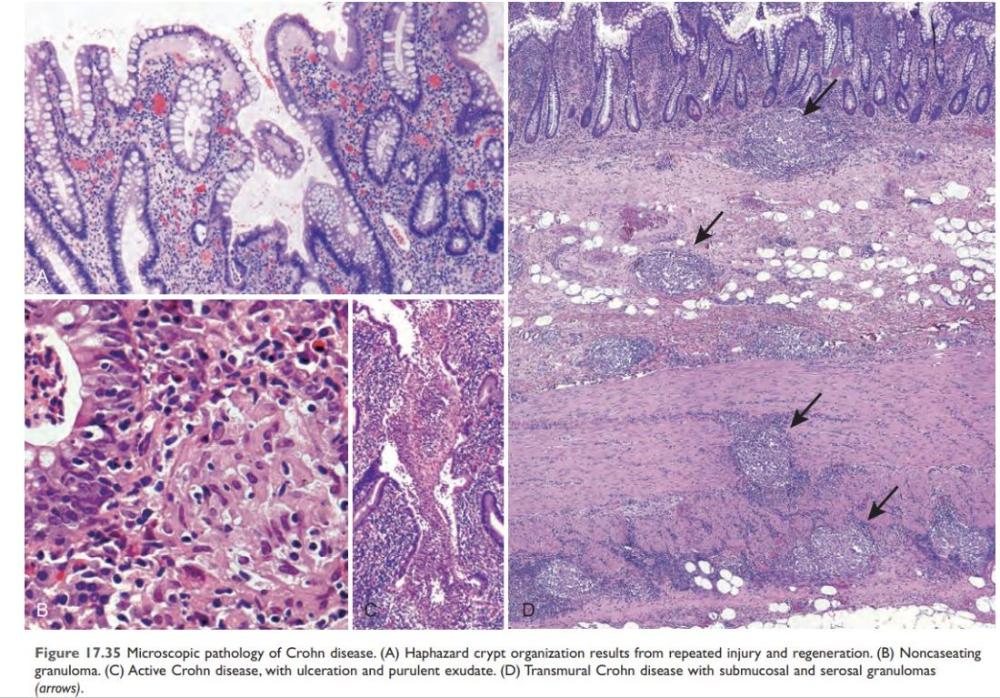 | back 126 crohns histo |
front 127 Which histologic feature is most characteristic of Crohn disease? A. Caseating granulomas | back 127 B. Non-caseating granulomas |
front 128 Which additional microscopic finding is commonly seen in Crohn disease? A. Crypt abscesses | back 128 A. Crypt abscesses |
front 129 Mesalamine treats inflammatory bowel disease primarily through which mechanism? A. TNF-alpha inhibition | back 129 C. Eicosanoid inhibition |
front 130 Which toxicity profile best fits mesalamine? A. GI upset, myalgia, arthralgia, myelosuppression | back 130 A. GI upset, myalgia, arthralgia, myelosuppression |
front 131 Infliximab is used in Crohn disease primarily because it targets which molecule? A. Interleukin-2 | back 131 B. TNF-alpha |
front 132 A patient on infliximab develops a chronic cough and weight loss. Which complication should be most suspected? A. Tuberculosis reactivation | back 132 A. Tuberculosis reactivation |
front 133 Which additional risk is increased with infliximab therapy? A. Viral clearance | back 133 B. Fungal and bacterial infections |
front 134 Anal wink and bulbocavernosus reflex test ____-____ levels via ____ nerve | back 134 S2-S4 pudendal |
front 135 Which histologic pattern is most characteristic of meningioma? A. Whorled pattern of cell growth | back 135 A. Whorled pattern of cell growth |
front 136 Which additional histologic finding is commonly seen in meningioma? A. Homer Wright rosettes | back 136 B. Psammoma bodies |
front 137 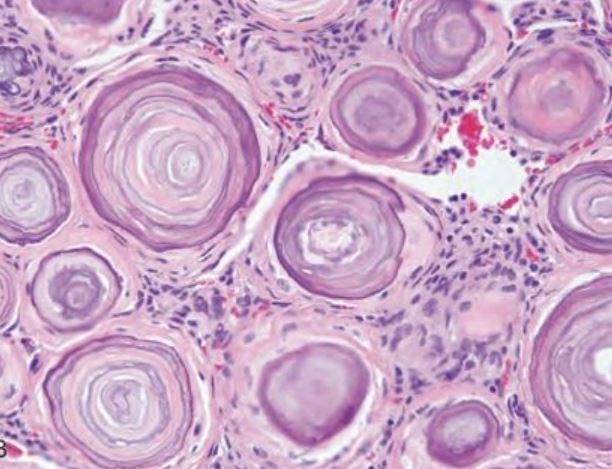 | back 137 Meningioma |
front 138 A spinal MRI shows bright cerebrospinal fluid surrounding the cord. Which sequence is most likely being viewed? A. T1 | back 138 B. T2 |
front 139 A radiologist wants to look for edema around a spinal cord lesion. Which sequence is generally most useful? A. T1 | back 139 B. T2 |
front 140 A lesion becomes more conspicuous after gadolinium administration. This is typically assessed on: A. T1 post-contrast | back 140 A. T1 post-contrast |
front 141 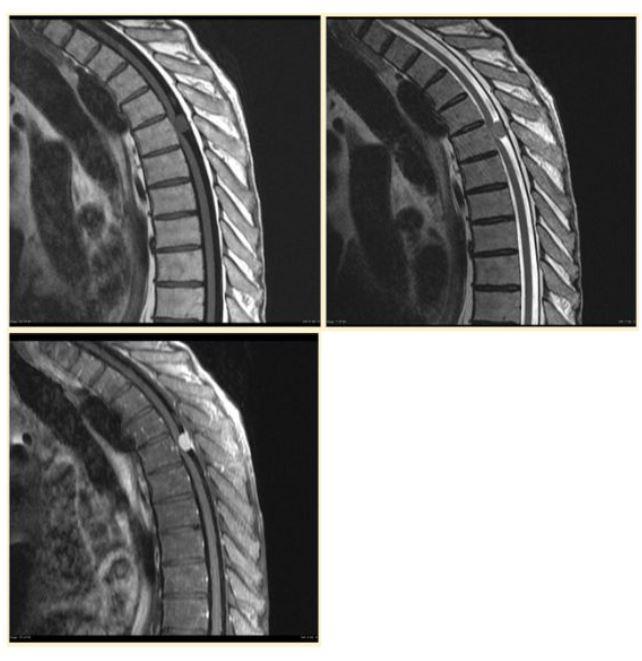 | back 141 T1 T2 T1 with contrast |
front 142 MRI contrast depends on how hydrogen nuclei relax after being excited by the magnetic field pulse.
| back 142 longitudinal transverse |
front 143 ______ is an NSAID that ______ inhibits COX-1 and COX-2 | back 143 Ibuprofen nonselectively |
front 144 A patient with severe chronic kidney disease undergoes MRI with contrast and later develops progressive skin thickening and joint stiffness. Which diagnosis is most likely? A. Scleroderma | back 144 B. Nephrogenic systemic fibrosis |
front 145
A. Young healthy adult | back 145 C. Patient with chronic kidney disease |
front 146
Gadolinium molecules shorten the spin-lattice
relaxation time to make mostly _____ weighted MRI images brighter
| back 146 T1 |
front 147 A patient has a spinal cord lesion at the T4 level. They report decreased pain and temperature sensation beginning around the 7th intercostal space on the contralateral side. What best explains this finding? A. Spinothalamic fibers ascend before crossing | back 147 C. Second-order neurons cross after ascending 2–3 levels |
front 148 Back pain may be caused by compression of _______ meningeal nerve | back 148 recurrent |
front 149 Prednisone side effects? A. Addisonian symptoms | back 149 B. Cushing symptoms |
front 150 Prednisone is best classified as which type of drug? A. Short-acting glucocorticoid | back 150 A. Short-acting glucocorticoid |
front 151 Portal hypertension most directly causes splenomegaly through which mechanism? A. Arterial vasospasm | back 151 B. Venous congestion |
front 152 A patient with chronic liver disease develops portal hypertension. Which additional finding can contribute to thrombocytopenia in this setting? A. Splenomegaly | back 152 A. Splenomegaly |
front 153 Which finding most directly explains thrombocytopenia in a patient with liver dysfunction? A. Reduced thrombopoietin production | back 153 A. Reduced thrombopoietin production |
front 154 A patient with upper gastrointestinal bleeding has vomitus that resembles coffee grounds. What best explains this appearance? A. Fresh arterial blood | back 154 B. Old coagulated blood |
front 155 Azathioprine suppresses proliferation of which cells? A. Neutrophils and eosinophils | back 155 C. B cells and T cells |
front 156 The mechanism of azathioprine is best described as: A. Blocks acetylcholinesterase | back 156 D. Inhibits inosinic acid synthesis |
front 157 A patient on azathioprine develops worsening thrombocytopenia. Which toxicity best explains why the drug exacerbated this patient’s low platelet count? A. Bone marrow suppression | back 157 A. Bone marrow suppression |
front 158 Which adverse-effect set is most characteristic of azathioprine? A. Nephrotoxicity, ototoxicity, alopecia | back 158 B. Hepatotoxicity, marrow suppression, GI disturbance |
front 159 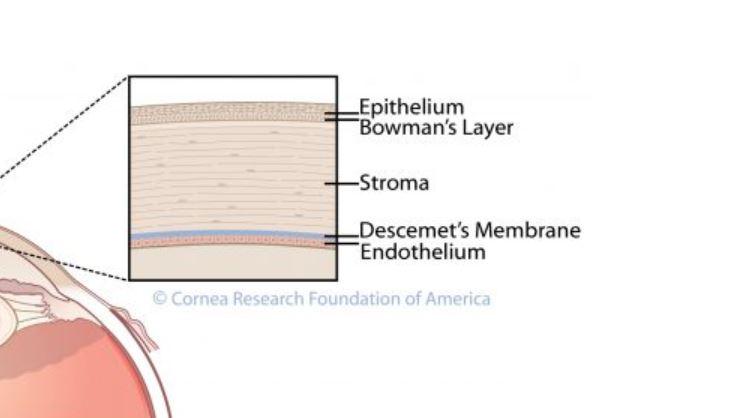 | back 159 layers of the cornea |
front 160 Kayser-Fleischer rings are due to copper build up in _____ membrane | back 160 descemets |
front 161 A patient with cirrhosis and ascites is started on a diuretic that antagonizes aldosterone signaling in the renal collecting tubule. Which drug best matches this mechanism? A. Furosemide | back 161 C. Spironolactone |
front 162 A patient with hypertension is prescribed a diuretic that inhibits the Na/Cl cotransporter in the distal convoluted tubule. Which drug was most likely given? A. Hydrochlorothiazide | back 162 A. Hydrochlorothiazide |
front 163 A patient with systolic heart failure is started on a medication that reduces aldosterone-mediated sodium retention. Which additional condition is this same drug also commonly used to treat? A. Hypercalcemia | back 163 D. Edema |
front 164 A patient on hydrochlorothiazide develops weakness and laboratory evidence of low serum potassium and elevated bicarbonate. Which acid-base disturbance is most likely present? A. Metabolic acidosis | back 164 C. Metabolic alkalosis |
front 165 A patient taking spironolactone returns with breast enlargement and tenderness. Which adverse effect best explains this complaint? A. Ototoxicity | back 165 B. Gynecomastia |
front 166 A patient with Wilson disease develops tremor, rigidity, and other extrapyramidal findings. Copper deposition in which brain region best explains these symptoms? A. Caudate and claustrum | back 166 B. Putamen and globus pallidus |
front 167 Which structures together form the lentiform nucleus? A. Putamen and globus pallidus | back 167 A. Putamen and globus pallidus |
front 168 Asterixis is aka a _____ tremor, common in hepatic encephalopathies | back 168 flapping |
front 169 Liver disease can lead to ______ (low RBC, WBC, and platelets) on CBC | back 169 pancytopenia |
front 170 AST/ALT ratio _____ than 1 may indicate acute hepatitis | back 170 less |
front 171 A patient with chronic liver disease is being taught about plasma protein synthesis. Most globulin proteins are produced in which organ? A. Spleen | back 171 C. Liver |
front 172 A patient with multiple myeloma has markedly increased immunoglobulin production. These proteins are produced directly by which cell type? A. Kupffer cells | back 172 B. Plasma cells |
front 173 A patient is being screened for possible hepatobiliary disease, and the physician wants the most sensitive enzyme marker from the list provided. Which test best fits? A. ALT | back 173 B. GGT |
front 174 A clinician is looking for the liver enzyme most specific for hepatocellular injury rather than the one that is merely most sensitive. Which laboratory marker best fits? A. GGT | back 174 D. ALT |
front 175 What can cause macrocytic anemia if not B12 or folate deficiency? | back 175 bone marrow depression |
front 176 What causes the dark urine? | back 176 conjucated bilirubin |
front 177 Grade ___: varices are dilated veins less than 5mm that do not protrude into the lumen. | back 177 1 |
front 178 Grade ___: varices are greater than 5mm in diameter, relatively straight, and protrude into the lumen without causing an obstruction. | back 178 2 |
front 179 Grade ___: varices are larger winding veins causing significant luminal obstruction. | back 179 3 |
front 180 Grade ___: varices cause almost complete obstruction are characterized by cherry red spots that are at great risk of rupture. | back 180 4 |
front 181 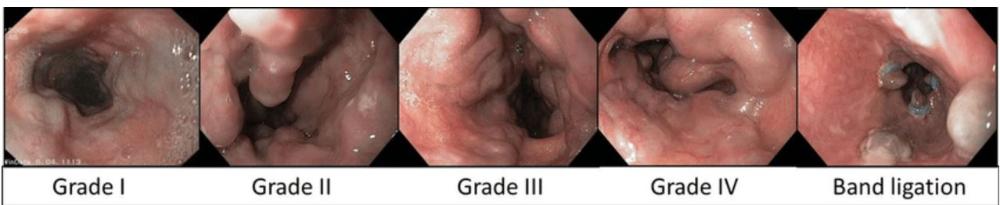 | back 181 Esophageal Varices Grading Scale |
front 182 A patient’s hepatitis B panel shows positive HBsAg. What is the best interpretation? A. Active HBV infection | back 182 A. Active HBV infection |
front 183 A patient has positive HBsAb (anti-HBs) and no other positive markers. What does this most strongly suggest? A. Active infection | back 183 B. Immunity |
front 184 A hepatitis B marker appears before anti-HBs and indicates exposure to the actual virus rather than vaccination. Which marker is it? A. HBeAg | back 184 C. HBcAb |
front 185 Which statement is most accurate? A. HBsAg means immunity after vaccination | back 185 C. HBcAb appears before HBsAb |
front 186 HBcAb is the only detectable marker of a _____ HBV infection | back 186 recent
known as core window: appears after HBsAg and before HBsAb |
front 187 A patient with cholestatic liver disease is found to have a positive antimitochondrial antibody. Which diagnosis is most strongly associated with this finding? A. Lupus | back 187 B. Primary biliary cirrhosis |
front 188 A patient with suspected autoimmune liver disease has a positive anti-smooth muscle antibody. Which condition does this most strongly suggest? A. Primary biliary cirrhosis | back 188 C. Autoimmune chronic active hepatitis |
front 189 A patient undergoing an autoimmune workup is found to have a positive ANA. Which condition is classically associated with this marker? A. Lupus | back 189 A. Lupus |
front 190 Wilson disease → copper buildup → More _____-type reactions → hydroxyl free radicals → tissue damage | back 190 Fenton |
front 191 Wilson disease is due to a _____ of function mutation in _____ gene on chromosome _____ | back 191 loss ATP7B 13 |
front 192 A patient with Wilson disease is started on a drug that binds copper and increases its removal from the body. Which medication best fits this mechanism? A. Penicillamine | back 192 A. Penicillamine |
front 193 A patient with Wilson disease begins chelation therapy and soon develops worsening tremor and other neurologic symptoms. Which drug is most classically associated with this problem? A. Trientine hydrochloride | back 193 B. Penicillamine |
front 194 A clinician wants to treat Wilson disease with a copper-chelating agent that has fewer side effects than penicillamine. Which drug is the best choice? A. Trientine hydrochloride | back 194 A. Trientine hydrochloride |
front 195 Foods very high in ____ include liver, shell fish, dark chocolate | back 195 copper |
front 196 A patient with Wilson disease is started on penicillamine. Which supplement should be given with this drug to help prevent neurologic worsening? A. Riboflavin | back 196 C. Pyridoxine |
front 197 Penicillamine therapy can produce deficiency of which vitamin? A. Vitamin B6 | back 197 A. Vitamin B6 |
front 198 Tretinoin used in acne therapy is best described as which form of vitamin A? A. Alcohol form | back 198 D. Acid form |
front 199 A topical acne medication works by decreasing cohesion of follicular epithelial cells and increasing epidermal cell turnover. Which drug best fits this mechanism? A. Clindamycin | back 199 B. Tretinoin |
front 200 A teenager using tretinoin for acne develops peeling skin with redness and irritation. Which adverse effect is most characteristic of this drug? A. Hyperkalemia | back 200 C. Erythema and dryness |
front 201 A patient is prescribed topical tretinoin for acne. Which counseling point is most appropriate? A. Minimize sun exposure | back 201 A. Minimize sun exposure |
front 202 A patient with Wallenberg syndrome has persistent hiccups. Dysfunction of which structure best explains the generation of hiccup-related circuitry? A. Midbrain tegmentum | back 202 C. Medullary reticular formation |
front 203 Which combination best describes the basic mechanical events of a hiccup? A. Vocal fold abduction and tongue retraction | back 203 D. Diaphragm spasm and epiglottic closure |
front 204 During hiccup-related laryngeal closure, most intrinsic laryngeal muscles are supplied by which nerve? A. Recurrent laryngeal nerve | back 204 A. Recurrent laryngeal nerve |
front 205 Which intrinsic laryngeal muscle is the main exception to recurrent laryngeal innervation, and is innervated by superior laryngeal? A. Posterior cricoarytenoid | back 205 B. Cricothyroid |
front 206 Fibers contributing to hiccup-related laryngeal motor output arise from which brainstem nucleus? A. Caudal nucleus ambiguus | back 206 A. Caudal nucleus ambiguus |
front 207 Quinapril is an ACE inhibitor to treat _______ | back 207 hypertension |
front 208 A patient with difficult-to-control hypertension is started on a drug that acts as an α2 adrenergic agonist in the central nervous system to reduce sympathetic outflow. Which drug was most likely prescribed? A. Clonidine | back 208 A. Clonidine |
front 209 A patient treated with clonidine for hypertension reports excessive drowsiness during the day. Which adverse effect best explains this complaint? A. Reflex tachycardia | back 209 B. Sedation |
front 210 A groin hernia protrudes through Hesselbach’s triangle. Which type of hernia is this? A. Femoral hernia | back 210 C. Direct inguinal hernia |
front 211 Which structure forms the lateral border of Hesselbach’s triangle? A. Rectus abdominis | back 211 D. Inferior epigastric vessels |
front 212 Which structure forms the medial border of Hesselbach’s triangle? A. Rectus abdominis | back 212 A. Rectus abdominis |
front 213 The base of Hesselbach’s triangle is formed by which structure? A. Lacunar ligament | back 213 D. Inguinal ligament |
front 214 A patient with type 2 diabetes is started on repaglinide. Which mechanism best explains how this drug increases insulin release? A. Activates PPAR-γ in adipocytes | back 214 C. Closes ATP-sensitive K+ channels |
front 215 A patient taking repaglinide for diabetes develops shakiness and gradual weight increase. Which adverse effect pair is most characteristic of this drug? A. Pancreatitis and diarrhea | back 215 B. Hypoglycemia and weight gain |
front 216 A patient with chronic constipation is started on a laxative made of soluble fiber that increases stool bulk. Which drug best fits this description? A. Psyllium | back 216 A. Psyllium |
front 217 A student drinks large amounts of caffeine before an exam. Caffeine primarily acts by antagonizing which receptor type, and one relevant physiologic effect is decreased what? A. Dopamine receptors; renal blood flow | back 217 D. Adenosine receptors; cerebral blood flow |
front 218 Penicillin exerts its antibacterial effect through which mechanism? A. Inhibition of bacterial cell wall synthesis | back 218 A. Inhibition of bacterial cell wall synthesis |
front 219 Vagus innervates all the pharyngeal muscles except _______, which is innervated by _______ nerve. | back 219 stylopharyngeus glossopharyngeal |
front 220 Spinal accessory nerve innervates _____ and _____ muscles Arises from _______ spinal cord (C1-C5/6) | back 220 SCM trap cervical |
front 221 A patient with lateral medullary (Wallenberg) syndrome has loss of pain, temperature, and crude touch from the contralateral body, with the face spared. Which structure is most likely affected? A. Spinal trigeminal nucleus | back 221 C. Spinothalamic tract |
front 222 A patient with Wallenberg syndrome has ipsilateral loss of pain, temperature, and crude touch from the face with a diminished blink reflex. Which structure is most likely affected? A. Spinal trigeminal nucleus | back 222 A. Spinal trigeminal nucleus |
front 223 A patient with a lateral medullary infarct develops ipsilateral ptosis, miosis, and anhidrosis. Which structure is most likely damaged? A. Nucleus ambiguus | back 223 D. Hypothalamospinal tract |
front 224 A patient with Wallenberg syndrome has hoarseness, dysphagia, and paralysis of pharyngeal and laryngeal muscles. Which structure is most likely affected? A. Vestibular nucleus | back 224 B. Nucleus ambiguus |
front 225 A patient with a lateral medullary lesion has prominent dizziness due to disruption of pathways that normally provide input toward the MLF. Which structure is most likely involved? A. Hypothalamospinal tract | back 225 C. Vestibular nucleus |
front 226 A patient with Wallenberg syndrome has ipsilateral appendicular ataxia on finger-to-nose testing. Which structure is most likely affected? A. Inferior cerebellar peduncle | back 226 A. Inferior cerebellar peduncle |
front 227 A patient with a lateral medullary infarct is noted to have decreased taste sensation. Which structure is most likely affected? A. Vestibular nucleus | back 227 D. Nucleus solitarius |
front 228 First order neuron of _____ tract synapses in rexed laminae II (substantia gelatinosa) | back 228 spinothalamic |
front 229 The AST/ALT ratio is usually _____ than 1 in patients with alcoholic cirrhosis | back 229 greater |
front 230 A patient is suspected of having a recently formed thrombus. Laboratory testing shows elevation of a fibrin degradation product formed after cross-linked fibrin is broken down. Which marker best fits this description? A. D-dimer | back 230 A. D-dimer |
front 231 A serum laboratory assay is reported as difficult to interpret because the sample is markedly lipemic. Which factor is most directly interfering with the test? A. High serum bilirubin | back 231 B. High blood lipids |
front 232 A patient presents with severe epigastric pain radiating to the back. Which elevated laboratory value would most strongly support acute pancreatitis? A. Serum ALT | back 232 C. Serum amylase |
front 233 In the early development of atherosclerosis, which arterial layer is primarily affected? A. Tunica adventitia | back 233 D. Tunica intima |
front 234 A patient has elevated homocysteine levels that are contributing to endothelial injury and vascular risk. Homocysteine is best described as which of the following? A. Cholesterol precursor from acetate | back 234 B. Amino acid intermediate from methionine |
front 235 A patient with hyperhomocysteinemia is counseled on vitamin supplementation to improve homocysteine metabolism. Which combination is required for its breakdown? A. Vitamins A, D, E | back 235 C. Vitamins B6, B12, folate |
front 236 A clinician orders an erythrocyte sedimentation rate to assess for possible underlying disease. What does the ESR directly measure? A. How quickly RBCs settle | back 236 A. How quickly RBCs settle |
front 237 A patient has an elevated ESR, but no specific diagnosis can be made from that finding alone. Why is this test limited? A. It measures renal clearance only | back 237 C. It is a nonspecific marker |
front 238 A patient with untreated hypothyroidism is found to have elevated LDL cholesterol. Which mechanism best explains this association? A. Increased bile acid synthesis | back 238 D. Decreased LDL receptor expression |
front 239 Urinalysis reveals hyaline casts in a patient with suspected renal disease. This finding most directly suggests which associated abnormality? A. Glycosuria | back 239 B. Proteinuria |
front 240 A patient’s urine microscopy shows oxalate crystals. This finding can point toward abnormalities involving which endocrine structure? A. Parathyroid glands | back 240 A. Parathyroid glands |
front 241 A patient with severe hypertension is started on a drug that blocks both α1 receptors and nonselective β receptors. Which drug best fits this mechanism? A. Metoprolol | back 241 C. Labetalol |
front 242 A patient taking labetalol for hypertension develops a medication-related adverse effect. Which finding is most consistent with this drug based on the information given? A. Mild tachycardia | back 242 A. Mild tachycardia |
front 243 A patient with an acute thrombotic occlusion is given a drug to dissolve the clot. Which medication works as a tissue plasminogen activator? A. Ezetimibe | back 243 D. Alteplase |
front 244 A patient with hypertension is started on a vasodilator that blocks L-type calcium channels and also promotes nitric oxide release. Which drug was most likely prescribed? A. Labetalol | back 244 B. Amlodipine |
front 245 A patient taking amlodipine develops worsening chest pain episodes and a rapid heart rate. Which adverse effect pair is most associated with this drug? A. Angina and tachycardia | back 245 A. Angina and tachycardia |
front 246 A patient with hypertension is treated with a drug that selectively blocks β1 receptors. Which medication best matches this description? A. Amlodipine | back 246 D. Metoprolol |
front 247 A patient on metoprolol returns for follow-up. Which adverse effect profile is most characteristic of this medication? A. Angina and tachycardia | back 247 B. Bradycardia and dyslipidemia |
front 248 A patient with elevated LDL cholesterol is prescribed a drug that lowers cholesterol by preventing its uptake from the gut. Which drug best fits this mechanism? A. Alteplase | back 248 C. Ezetimibe |
front 249 Which pairing is incorrect? A. Labetalol — hypertension treatment | back 249 D. Amlodipine — tissue plasminogen activator |
front 250 A patient with elevated LDL cholesterol is started on a medication that lowers cholesterol by inhibiting HMG-CoA reductase. Which drug was most likely prescribed? A. Simvastatin | back 250 A. Simvastatin |
front 251 A patient taking simvastatin develops proximal muscle pain and elevated liver enzymes on follow-up testing. Which adverse effect profile best matches this drug? A. Sedation and weakness | back 251 C. Myopathy and hepatic dysfunction |
front 252 A patient takes low-dose aspirin daily after a vascular event. Its antiplatelet effect is best explained by irreversible inhibition of which pathway? A. ADP receptor signaling | back 252 B. Thromboxane synthesis via COX-1 |
front 253 A patient with aspirin toxicity develops an acid-base disturbance. Which finding is most characteristic? A. Respiratory alkalosis only | back 253 D. Metabolic acidosis |
front 254 A patient with type 2 diabetes is started on a medication that lowers glucose mainly by inhibiting hepatic gluconeogenesis. Which drug best matches this mechanism? A. Glipizide | back 254 B. Metformin |
front 255 A patient with chronic kidney disease is being evaluated for diabetes therapy. Which medication should be avoided because of increased risk of lactic acidosis in impaired renal function? A. Metformin | back 255 A. Metformin |
front 256 A patient with severe muscle spasticity after spinal cord injury is treated with a GABA_B agonist. Which drug best fits this description? A. Diazepam | back 256 D. Baclofen |
front 257 baclofen adverse effects? A. Tachycardia and angina | back 257 B. Sedation and weakness |
front 258 A patient with a dorsal midbrain lesion has impaired ability to move both eyes vertically. Damage to which structure most directly explains this deficit? A. Abducens nucleus | back 258 C. Rostral interstitial nucleus of the MLF |
front 259 A patient complains of vertical diplopia that worsens when walking down stairs. Dysfunction of which cranial nerve most likely explains this finding? A. Trochlear nerve | back 259 A. Trochlear nerve |
front 260 A patient receiving chemotherapy develops severe nausea and is treated with a drug that blocks 5-HT3 serotonin receptors. Which medication was most likely given? A. Metoclopramide | back 260 D. Ondansetron |
front 261 A patient started on ondansetron for chemotherapy-induced nausea later develops decreased bowel motility. Which adverse effect best matches this drug? A. Slowed colonic transit | back 261 A. Slowed colonic transit |
front 262 A patient with stable angina takes a medication that is converted to nitric oxide in vascular smooth muscle. The resulting increase in cGMP produces what immediate effect? A. Increased platelet aggregation | back 262 C. Vascular smooth muscle relaxation |
front 263 A patient uses sublingual nitroglycerin. Which adverse-effect set best matches this drug? A. Bradycardia, constipation, flushing | back 263 B. Orthostatic hypotension, headache, tachycardia |
front 264 A hospitalized patient becomes tremulous, agitated, and confused 3 days after stopping heavy alcohol use. Which drug class is first-line because it enhances GABA-A receptor activity? A. Benzodiazepines | back 264 A. Benzodiazepines |
front 265 A patient with early liver failure has a prolonged PT but a normal PTT. Which explanation best accounts for this pattern? A. Factor VIII is depleted first | back 265 D. Factor VII falls first because of its short half-life |
front 266 A patient in delirium tremens is treated with lorazepam. The therapeutic effect is most directly due to which receptor action? A. Blockade of NMDA receptors | back 266 C. Enhancement of GABA-A receptor activity |
front 267 What marker's level rises in 4-6 hours, peaks in 10-24 hours, and returns to normal in 4 days after infarction | back 267 Troponin I |
front 268 What marker's level rises in 3 to 6 hours, peaks at 12 to 24 hours and returns to normal 12 to 48 hours after infarction | back 268 CK-MB |
front 269 Troponin I is present ____ than CK-MB | back 269 longer |
front 270 [CPK-MB or Troponins] are more specific to cardiac muscle injury | back 270 Troponins |
front 271 Afferent axons from cardiac ischemia refer to ___-___spinal levels | back 271 T1-T5 |
front 272 wernickes encephalopathy is ______, but korsakoff syndrome is not | back 272 reversible |
front 273 A patient with chronic alcoholism develops macrocytosis and a low platelet count. Deficiency of which vitamins best explains this megaloblastic picture? A. Folate and vitamin B12 | back 273 A. Folate and vitamin B12 |
front 274 A patient with acute pancreatitis has an elevated serum amylase level. Which pancreatic cell type produces the pancreatic form of this enzyme? A. Islet beta cells | back 274 D. Acinar cells |
front 275 A patient with suspected heavy alcohol use has an elevated liver enzyme that is also commonly used as a marker of hepatobiliary disease. Which test is most likely elevated? A. Troponin I | back 275 B. Gamma-glutamyl transpeptidase |
front 276 Ethanol depresses central nervous system activity primarily by enhancing signaling through which receptor system? A. NMDA glutamate receptors | back 276 C. GABA-A receptors |
front 277 A radiotracer is selected because it can be used in myocardial perfusion imaging and is also useful in breast and parathyroid imaging. Which tracer best fits this description? A. Iodine-131 | back 277 B. Technetium-99m sestamibi |
front 278 A patient undergoes a nuclear stress test. What is the main comparison made in this study? A. Valve motion before and after meals | back 278 D. Myocardial blood flow at rest and stress |
front 279 Funduscopic exam in a patient with longstanding uncontrolled blood pressure shows widening of the retinal arteriolar light reflex. What is the best interpretation? A. Chronic hypertensive retinopathy | back 279 A. Chronic hypertensive retinopathy |
front 280 During a glaucoma screening exam, a clinician notes an optic disc gray crescent. In which population is this finding especially common? A. East Asians with cataracts | back 280 C. African-ancestry glaucoma patients |
front 281 A patient with chronic alcohol use presents with hepatobiliary abnormalities and macrocytosis. Which combination is most classically associated with this presentation? A. Low GGT and microcytosis | back 281 B. High GGT and megaloblastosis |
front 282 ______ ______ is a withdrawal symptom of alcoholism that causes convulsions and hallucinations | back 282 Delirium tremens |
front 283  | back 283 Delirium tremens |
front 284 A patient with dyspepsia is prescribed magnesium hydroxide. In addition to neutralizing gastric acid, this drug is most likely to cause which effect? A. Strong laxative effect | back 284 A. Strong laxative effect |
front 285 A patient taking aluminum hydroxide for reflux develops a change in bowel habits. Which adverse effect is most characteristic of this drug? A. Diarrhea | back 285 B. Constipation |
front 286 A clinician combines magnesium hydroxide with aluminum hydroxide in one antacid preparation. What is the main rationale for this combination? A. Increase proton pump inhibition | back 286 C. Balance opposing GI side effects |
front 287 A patient has chronic facial redness that reliably worsens after drinking alcohol. Which diagnosis best fits this presentation? A. Acne vulgaris | back 287 B. Rosacea |
front 288 A patient with peptic symptoms is started on omeprazole. Which mechanism best explains its action? A. Reversible H2 receptor blockade | back 288 B. Irreversible proton pump inhibition |
front 289 Omeprazole acts directly on which target in gastric parietal cells? A. Na/K ATPase | back 289 B. H+/K+ ATPase |
front 290 A patient with irritable bowel syndrome has crampy abdominal pain from excess gut smooth-muscle activity. Which drug would reduce this by competitively blocking muscarinic M3 receptors? A. Bethanechol | back 290 B. Dicyclomine |
front 291 Dicyclomine adverse-effect profile best matches this medication? A. Bradycardia, diarrhea, salivation | back 291 C. Tachycardia, confusion, urinary retention |
front 292 A screening study reports decreased bone mass that is below normal but not low enough to meet the threshold for osteoporosis. Which diagnosis best fits? A. Osteomalacia | back 292 B. Osteopenia |
front 293 A postmenopausal patient undergoes DEXA scanning. Which T-score is diagnostic of osteoporosis? A. Greater than -1.0 | back 293 C. -2.5 or lower |
front 294 A plain radiograph is reviewed for suspected osteoporosis. Why is X-ray an insensitive test early in disease? A. It requires about 30% bone loss | back 294 A. It requires about 30% bone loss |
front 295 A patient with chronic vitamin D deficiency develops soft, weak bones from impaired mineral deposition. Which diagnosis is most likely? A. Osteopenia | back 295 C. Osteomalacia |
front 296 Which structural abnormality best distinguishes osteoporosis from osteomalacia? A. Osteoporosis has decreased mineralization | back 296 C. Osteoporosis has decreased bone matrix Osteoporosis is fundamentally a decrease in bone mass or matrix, whereas osteomalacia is a mineralization defect. |
front 297 A child with recurrent fractures is found to have very dense bones on imaging, yet the bones are brittle and weak. Which diagnosis best explains this paradox? A. Osteomalacia | back 297 D. Osteopetrosis |
front 298 A patient with acute diarrhea is given an antidiarrheal that activates μ-opioid receptors in the enteric nervous system but does not produce typical central opioid effects at usual doses. Which drug best fits this description? A. Loperamide | back 298 A. Loperamide |
front 299 A patient scores 30 on the Beck Depression Inventory-II. How should this result be classified? A. Minimal depression | back 299 D. Severe depression |
front 300 A patient with suspected high bone remodeling is found to have an elevated alkaline phosphatase level. This lab value is most useful as a marker of which process? A. Renal filtration | back 300 B. Bone turnover |
front 301 A severely malnourished patient has endocrine adaptation to low caloric intake. Which thyroid hormone change is most expected? A. Increased T3 | back 301 D. Decreased thyroid hormone levels |
front 302 Active vitamin D is delivered to the intestine to enhance calcium absorption. It does this in part by increasing production of which calcium-binding protein? A. Ferritin | back 302 D. Calbindin |
front 303 Which pairing is correctly matched? A. Loperamide — crosses BBB readily | back 303 D. Calcitriol — increases intestinal calbindin |
front 304 A patient with low vitamin D is being discussed in relation to serotonin synthesis and mood. Which enzyme is most closely linked to the brain serotonin pathway affected by vitamin D? A. TPH1 | back 304 B. TPH2 |
front 305 A patient with suspected lactose malabsorption has a positive hydrogen breath test after lactose ingestion. What best explains the positive result? A. Renal excretion of lactose | back 305 C. Bacterial metabolism of unabsorbed lactose |
front 306 A test report states that a patient’s coefficient of fat absorption is reduced. What does this value represent? A. Percent of dietary protein absorbed | back 306 B. Percent of fat absorbed from a given dose |
front 307 A patient excretes a larger percentage of a test fat load in the stool than expected. How would this affect the coefficient of fat absorption? A. It would increase | back 307 C. It would decrease |
front 308 A patient has steatorrhea after pancreatic insufficiency. Which measurement would best summarize how much of an administered fat load was successfully taken up by the intestine? A. Lactose breath hydrogen rise | back 308 B. Coefficient of fat absorption |
front 309 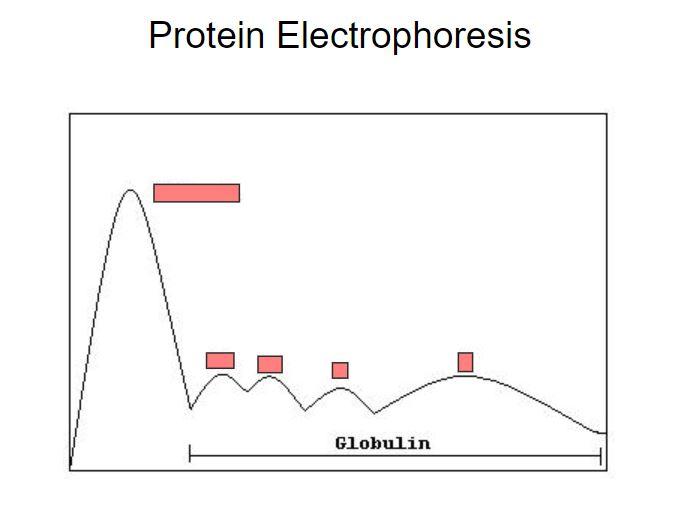 | back 309 albumin , a1, a2, b, y |
front 310 Normal _____ transit time is 30 min - 6 hours | back 310 bowel |
front 311 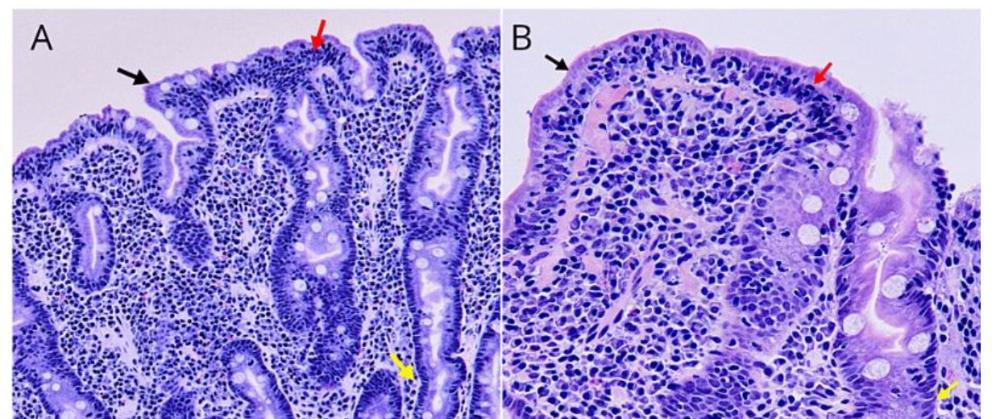 | back 311 celiac disease |
front 312 The bone densities of spine, hip and wrist are commonly evaluated on _____ scan | back 312 DEXA |
front 313 Celiac is a type _____ (T-cell mediated) hypersensitivity reaction | back 313 IV |
front 314 A patient with chronic diarrhea and weight loss is being evaluated for small-bowel mucosal malabsorption. Which substance is administered in a classic absorption test because it is a monosaccharide that does not require pancreatic enzymes and is excreted in the urine if absorbed normally? A. Lactose | back 314 B. D-xylose |
front 315 A patient undergoes a D-xylose test. In a normal patient, which result is most expected? A. High stool concentration | back 315 B. High urine level |
front 316 Which combination best describes the classic histology of celiac disease? A. Villous atrophy, lymphocyte infiltration, crypt hyperplasia | back 316 A. Villous atrophy, lymphocyte infiltration, crypt hyperplasia |
front 317 A patient has steatorrhea, but a normal D-xylose test. This pattern argues against small-bowel mucosal disease and instead points more toward which process? A. Pancreatic exocrine insufficiency | back 317 A. Pancreatic exocrine insufficiency |
front 318 A patient with suspected celiac disease is being screened with the preferred initial serologic test. Which antibody is most appropriate? A. Anti-endomysial IgA | back 318 B. Tissue transglutaminase IgA |
front 319 A patient has a positive serology panel for celiac disease. Which antibody is classically associated with celiac disease and is known for high specificity? A. Endomysial IgA | back 319 A. Endomysial IgA |
front 320 A patient with suspected celiac disease has testing ordered for deamidated gliadin antibodies. These antibodies are most commonly checked in which immunoglobulin class from the list you provided? A. IgE and IgG | back 320 C. IgA and IgG |
front 321 Celiac disease is associated with antibodies | back 321 IgA IgA IgA and IgG IgA |
front 322 A patient develops chronic malabsorption after living in the tropics and is diagnosed with tropical sprue. Which treatment is most appropriate? A. Gluten-free diet | back 322 B. Tetracycline and folic acid |
front 323 A patient is diagnosed with nontropical sprue, also known as celiac disease. Which treatment is most appropriate? A. Tetracycline and folate | back 323 C. Gluten-free diet |