Instructions for Side by Side Printing
- Print the notecards
- Fold each page in half along the solid vertical line
- Cut out the notecards by cutting along each horizontal dotted line
- Optional: Glue, tape or staple the ends of each notecard together
Laboratory Experiments in Microbiology-Exercise 1
front 1 Who was the first person known to observe living microbes in suspension? | back 1 Antoni van Leeuwenhoek |
front 2 When looking through a microscope and making observations what should you be playing close attention to? | back 2 1. Size relationship: how big are bacteria relative to protozoa?
|
front 3 Who invented the microscope? | back 3 Zacharias Janssen |
front 4 Early microscopes were called? | back 4 Simple microscopes
|
front 5 What is used most often to view dark objects in a bright field? | back 5 brightfield compound microscope
|
front 6 Name the basic frame of a microscope | back 6 base, a stage to hold the slide, an arm for carrying the microscope and a body tube for transmitting the magnified image. |
front 7 The light source is the ___________? | back 7 base |
front 8 Above the light source is the ______________? | back 8 condenser- which consists of several lenses that concentrate light on the slide by focusing it into a cone |
front 9 The condenser has an iris diaphragm which controls the ________ and ____________. | back 9 angle
|
front 10 What does the ability to be able to control the light ensure? | back 10 that optimal light will reach the slide |
front 11 Above the stage, on one end of the body tube is a revolving nosepiece that holds three or four____________________? | back 11 objective lenses |
front 12 At the end of the tube is an ___________ or eyepiece lens (10x12.5) | back 12 ocular |
front 13 What is an monocular microscope? | back 13 one ocular lens |
front 14 A binocular microscope has? | back 14 2 ocular lenses |
front 15 Coarse adjustment knob is used for _____________________? | back 15 focusing with the low-power objective (4x and 10x) |
front 16 The smaller knob is used for focusing with the ___________ and ____________. | back 16 high power and oil immersion lenses |
front 17 Coarse adjustment knob moves the lenses or stage_________________. | back 17 longer distances |
front 18 The area seen through a microscope is called _______________. | back 18 Field of vision |
front 19 The ________ of a microscope depends on the type of objective lenses used with the ocular. | back 19 magnification |
front 20 Compound microscopes have 3 or 4 objective lenses mounted on a nosepiece scanning ______, _________, ___________ and _____________________. | back 20 scanning 4x,
|
front 21 The total magnification of the object is calculated by _________________ | back 21 multiplying the the magnification of the ocular (usually 10x) by the magnification of the objective lens. |
front 22 Which lens is the most important lens in microbiology? | back 22 the oil immersion lens |
front 23 The intensity of light of a compound microscope can be adjusted with a wheel that regulates the amount __________ to the bulb. | back 23 current |
front 24 True or false. Higher magnification requires more light? | back 24 true |
front 25 Resolution or resolving power refers to the ability of lenses to reveal __________or _________________. | back 25 fine detail or two points distinctly separated |
front 26 Numerical Aperture in microscopy is defined by? | back 26 NA=n sin O
|
front 27 Resolving power= | back 27 Wavelength of light used
|
front 28 Small wavelengths of light improve/or lessen resolving power? | back 28 improve |
front 29 What does using immersion oil do? | back 29 It minimizes light loss and the lens focuses very close to the slide. |
front 30 What is the focal point? | back 30 where an image is formed |
front 31 What is spherical aberration? How can you correct this? | back 31 Multiple focal points
|
front 32 What is chromatic aberration? | back 32 multitude of colors seen in the field
|
front 33 When using low powered lens keep the ____________ barely open to achieve good contrast. | back 33 Iris diaphragm |
front 34 Parfocal means? | back 34 That when in focus with 1 lens should be in focus with the rest (exception 4x) |
front 35 More light is needed how can you do this? | back 35 with the condenser |
front 36 What are the magnifications on the microscope? | back 36 (Ocular Lens: 10x) + The Objective Lens is 4x (scanning) = 40X 10x (low power) = 100X, 40x to 45x (high dry) = 400X, 97x to 100x (immersion oil lens) = 1000X |
front 37 What parts make up the microscope? | back 37 Ocular Eyepiece, Body tube, Arm, Objective Lenses Stage, Condenser, Coarse adjustment Knob, Fine Adjustment Knob, Base, Iris Diaphrag, Mechanical Stage knobs, Light |
front 38 What are the four important behaviors in your drawings? | back 38 1. Size Relationship
|
front 39 Is the numerical aperture dependent on the maximum angle of the light entering the object lens and on the refractive index? | back 39 Yes, the amount of light bending of the refractive index and of the material between the objective lens and the slide. |
front 40 What is Immersion oil? | back 40 makes the light rays pass straight through the slide and you are able to see the specimen clearly, used to keep light from bending. |
front 41 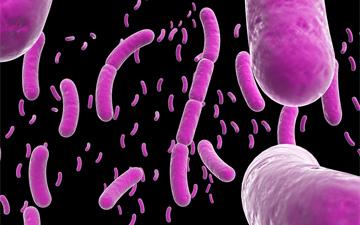 What shape does the Bacillus Bacteria carry? | back 41 rod shaped |
front 42 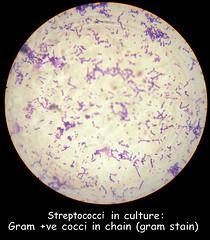 What shape does the Coccus bacteria carry? | back 42 Any spherical or nearly spherical bacteria or berry-shaped bacterium |
front 43 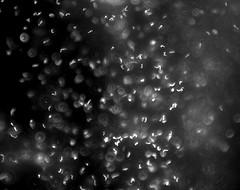 What shape does the Spirillum bacteria carry? | back 43 any flagellated aerobic bacteria having a spirally twisted rodlike form |
front 44 Which objectives focuses closest to the slide? | back 44 The 97x to 100x with immersion oil. |
front 45 Assume the diameter of the field of vision in your microscope is 2mm under low power. If one Bacillus cell is 2u.m. how many Bacillus cells could fit end to end across the field? How many 10u.m yeast cells could fit across the field? | back 45 2u.m./ 1,000u.m. * 1mm = 0.002---> 1000 Bacillus Cells.-
|
front 46 Name two ways in which you can enhance the resolving power? | back 46 1.) Decrease the distance by moving the stage by the course adjustment. 2.) Dim the light source to enhance |
front 47 Largest organism observed? And the smallest? | back 47 algae- spyro-gyro
|
front 48 What were the three bacterial shapes observed? | back 48 sphere (coccus)
|
front 49 How does increased magnification affect the field of vision? | back 49 decreases |
front 50 Which controls on the microscope affect the amount of light reaching the ocular lens? | back 50 Iris diaphragm: less light (higher the contrast)and softer |
front 51 Name 2 ways in which you can enhance the resolving power: | back 51 1. Light shortwave
|
front 52 What are the advantages of the low-power objective over the oil immersion objective for viewing fungi or algae? | back 52 Fungi is large and its easier to see the whole thing this way rather than a portion of it. |
front 53 What would occur if water were accidentally used in place of immersion oil? | back 53 H20 would disperse, less resolution with would make it less dense. "Refractory Index" |
front 54 Clinical Application: Assume you are looking for microorganisms in a tissue sample from a lung biopsy. The microbes become apparent when you switch to 100x. What microbes is most likely? | back 54 bacteria |
front 55 What are the 4 objectives of lenses? | back 55 Scanning- red band 4x
|
front 56 Higher magnification- field of vision ____________? | back 56 decreases |
front 57 What is agar? | back 57 it is extracted from algae for petri dishes- solidifying agent |
front 58 Why agar and not gelatin? | back 58 most bacteria can't metabolize it and use it for food
|
front 59 In which states is agar used? | back 59 liquid-broth 0% agar
|
front 60 True or false. Growth patterns are only in broth. | back 60 true |
front 61 Bacterial growth patterns in liquid are? | back 61 1. turbidity-cloudy
|