Instructions for Side by Side Printing
- Print the notecards
- Fold each page in half along the solid vertical line
- Cut out the notecards by cutting along each horizontal dotted line
- Optional: Glue, tape or staple the ends of each notecard together
Chapter 18 HW Cardiovascular System anatomy
front 1 Match the following.Drag the terms on the left to the appropriate blanks on the right. | back 1 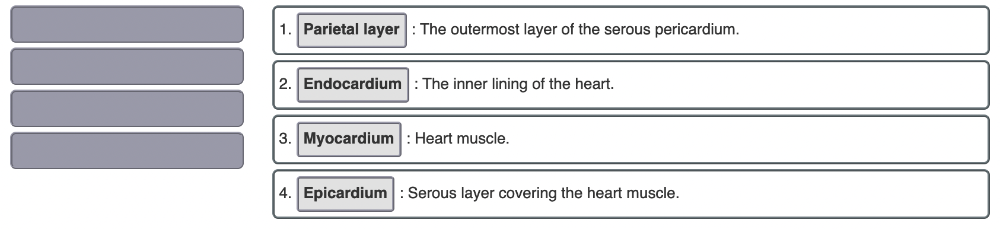 |
front 2 Which of the following does NOT deliver deoxygenated blood to the heart?
| back 2 pulmonary veins Explanation: The pulmonary veins deliver oxygenated blood to the left atrium. |
front 3 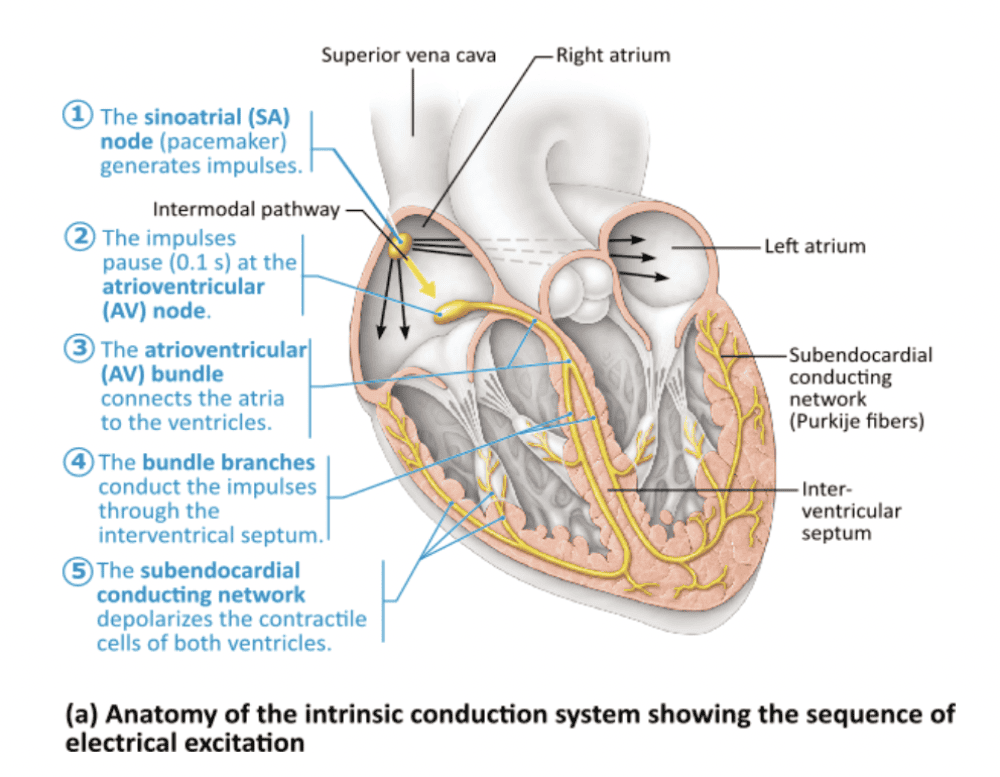 Specifically, what part of the intrinsic conduction system stimulates the atrioventricular (AV) node to conduct impulses to the atrioventricular bundle?
| back 3 sinoatrial (SA) node Ex. The sinoatrial node, by spontaneously depolarizing faster than the atrioventricular node, initiates heart contraction. |
front 4 The term for pain associated with deficient blood delivery to the heart that may be caused by the transient spasm of coronary arteries is ________.
| back 4 angina pectoris |
front 5 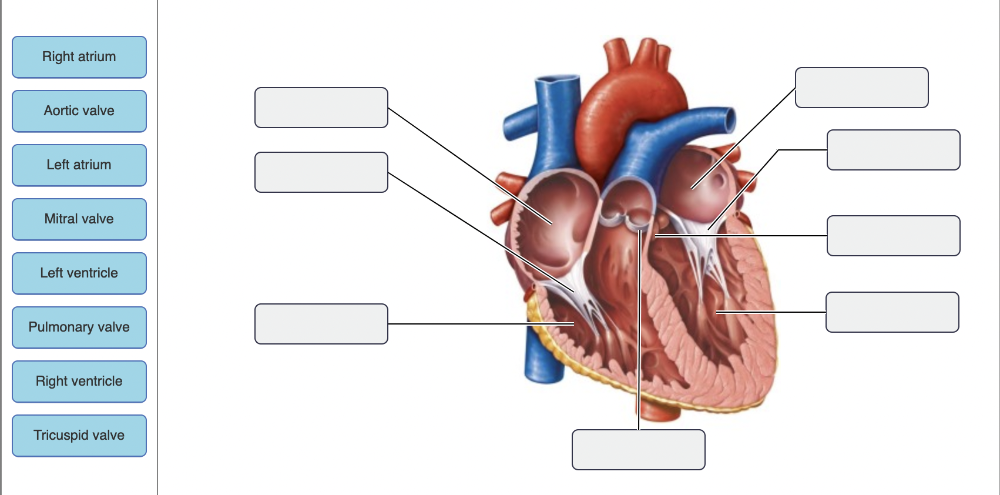 Drag the appropriate labels to their respective targets. | back 5 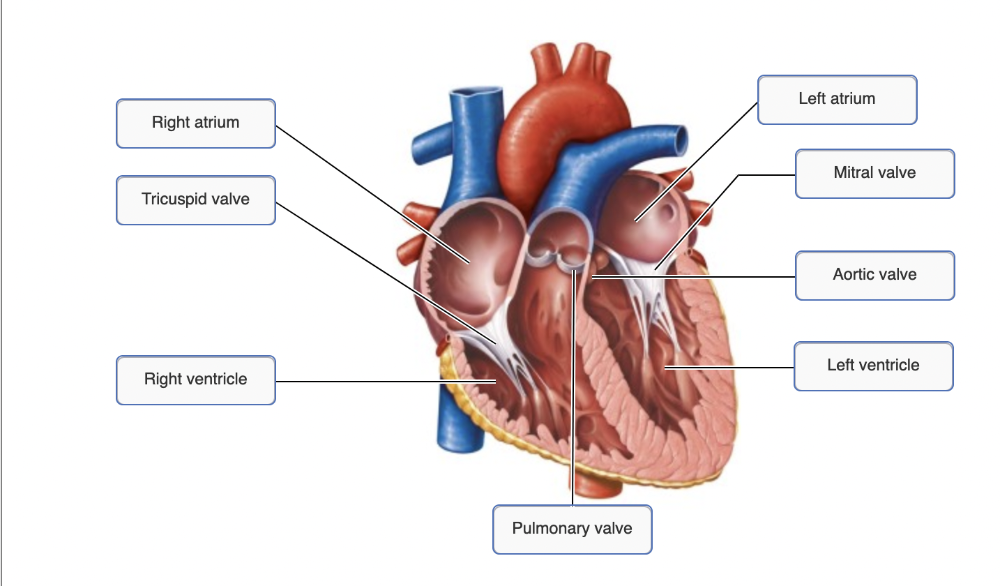 |
front 6 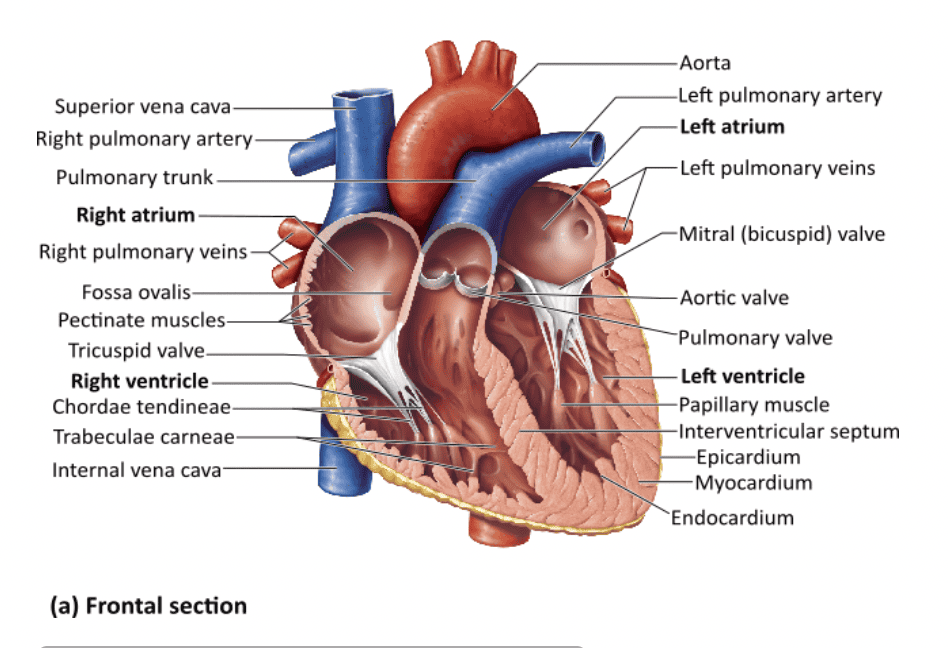 The right tricuspid valve prevents backflow of blood from the right ventricle into the __________.
| back 6 right atrium Ex. Flow from the right ventricle to the right atrium is prevented by the right tricuspid valve. |
front 7 The greater the mass of tissue in an organ, the greater its need for an adequate blood supply. Which chamber of the heart has the highest probability of being the site of a myocardial infarction?
| back 7 left ventricle Ex. The left ventricle actively pumps blood to almost all of the body's tissues via the aorta. It has to generate much greater force during contraction than any other heart chamber. |
front 8 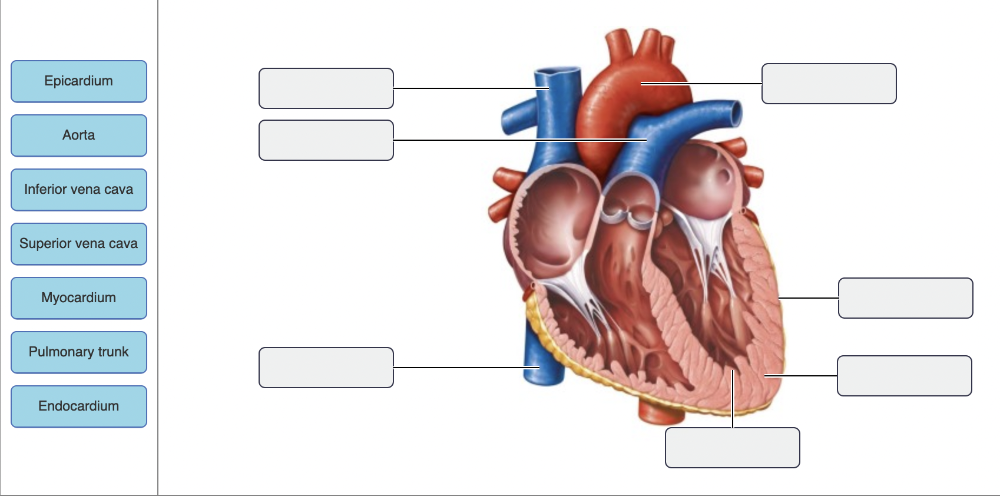 Drag the appropriate labels to their respective targets. | back 8 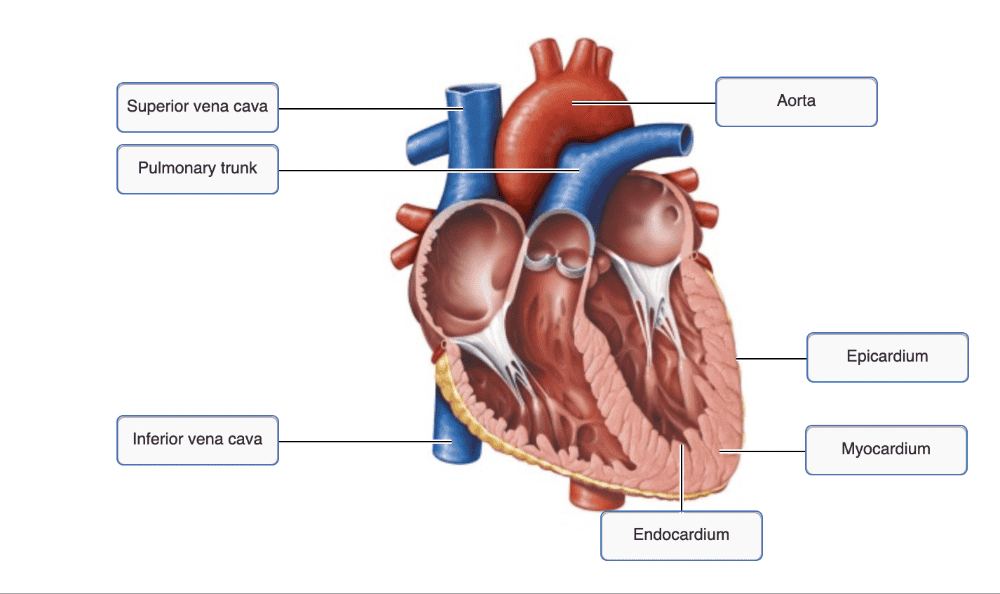 |
front 9 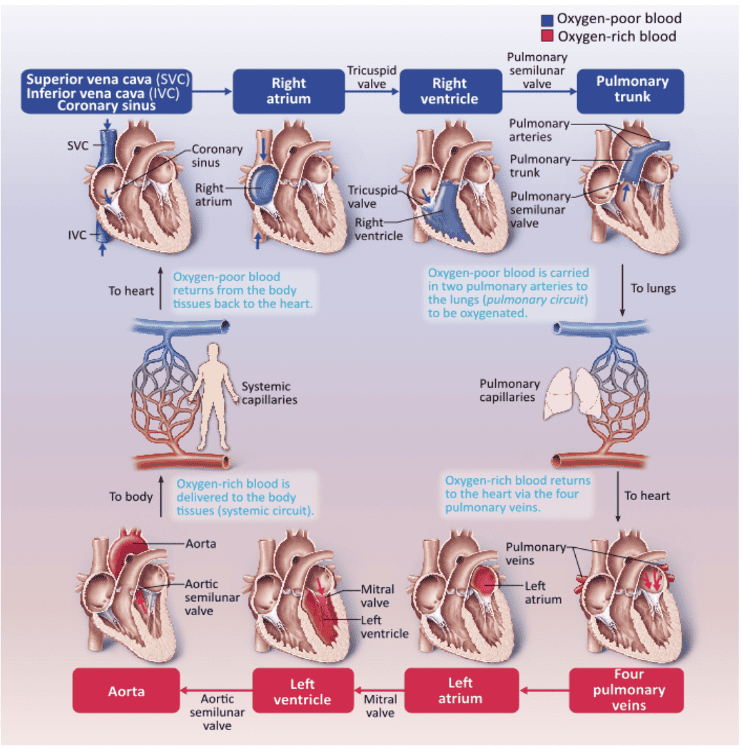 Which chamber of the heart sends oxygenated blood directly to the systemic circuit via the aorta?
| back 9 left ventricle Ex. The left ventricle sends blood to the systemic circuit via the aorta and its branches. |
front 10 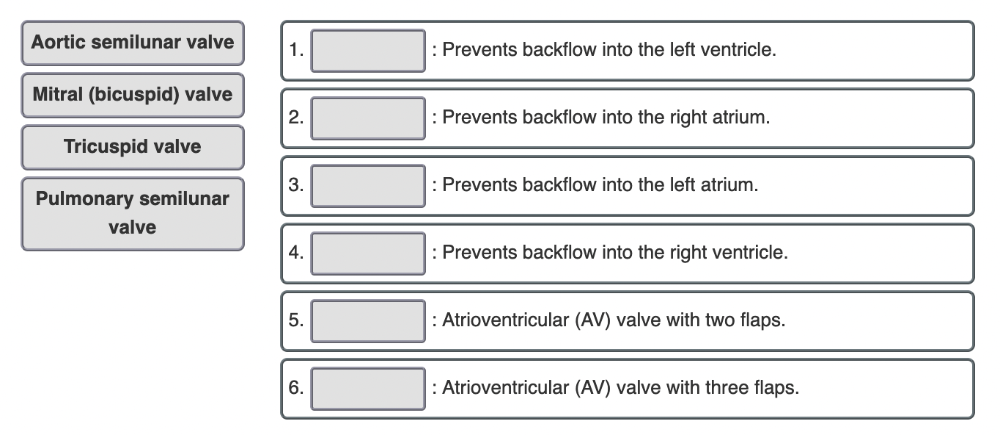 Match the following terms to their definitions.Match the words in the left column to the appropriate blanks in the sentences on the right. Make certain each sentence is complete before submitting your answer. Words can be used more than once. | back 10 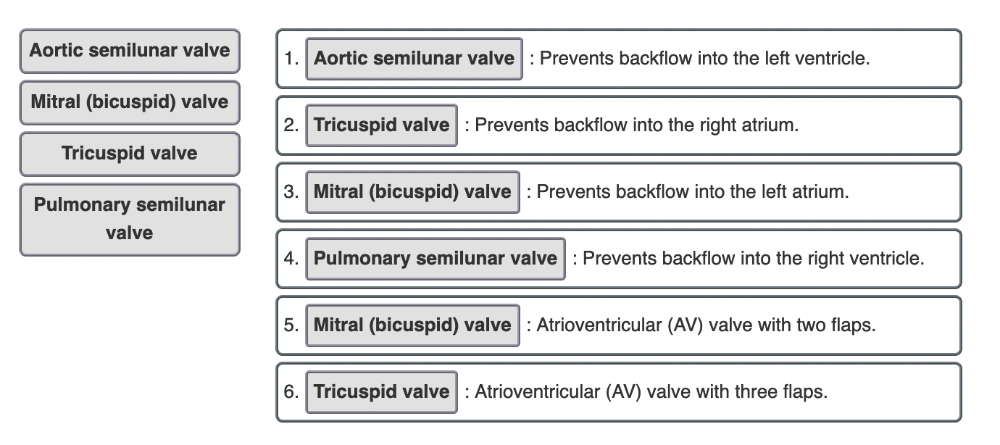 |
front 11 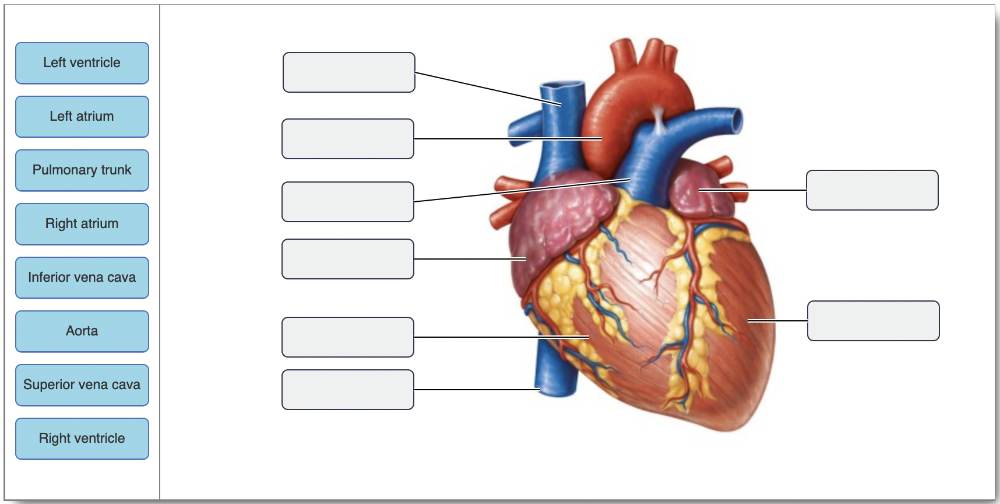 Drag the appropriate labels to their respective targets. | back 11 no data |
front 12 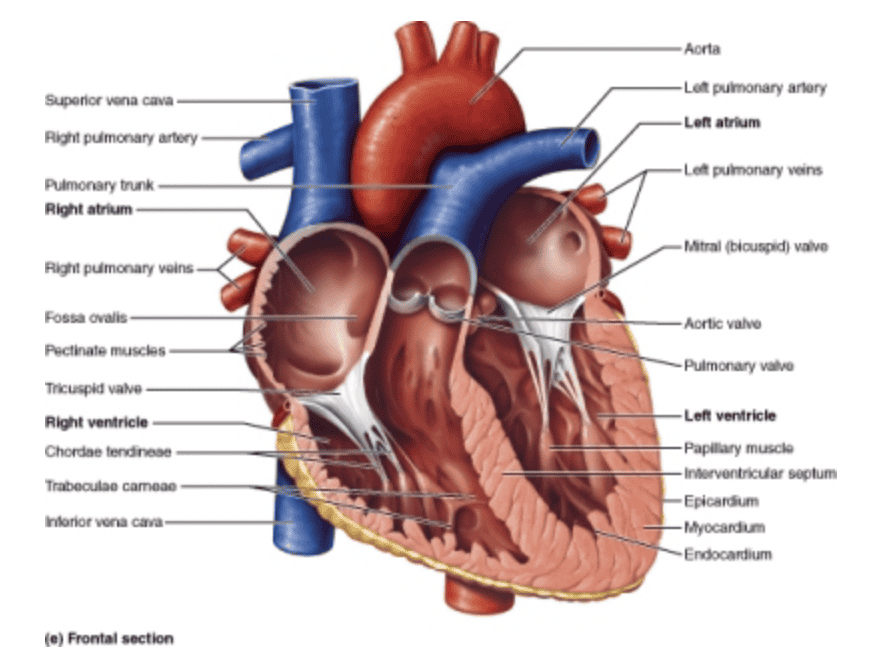 Which of these muscles is particularly associated with anchoring the right and left atrioventricular valves? myocardium trabeculae carneae papillary muscles pectinate muscles | back 12 Papillary muscles Ex. Papillary muscles contract to tense the right and left atrioventricular valves via the chordae tendineae just before ventricular systole. |
front 13 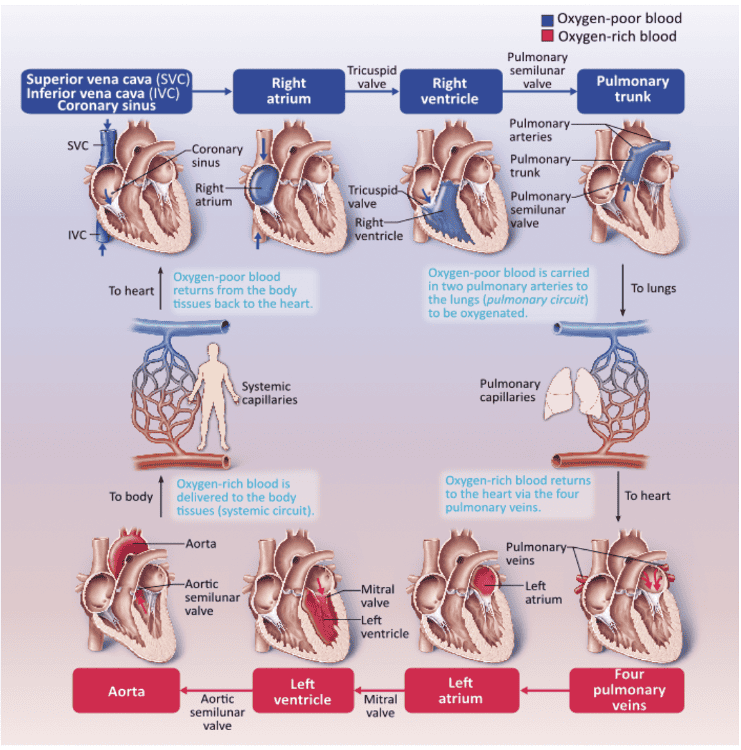 Into which chamber of the heart do the superior vena cava, inferior vena cava, and coronary sinus return deoxygenated blood? left ventricle left atrium right atrium right ventricle | back 13 right atrium Ex. All of these vessels deliver blood to the right atrium. |
front 14 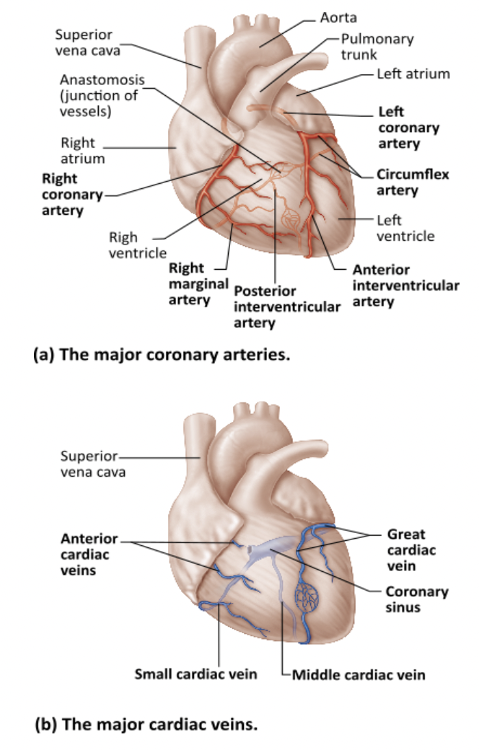 Which of the following is a branch of the right coronary artery? posterior interventricular artery circumflex artery anterior interventricular artery coronary sinus | back 14 posterior interventricular artery Ex. The posterior interventricular artery is a branch of the right coronary artery, although an anastomosis with the circumflex artery meets with it near its origin. |
front 15 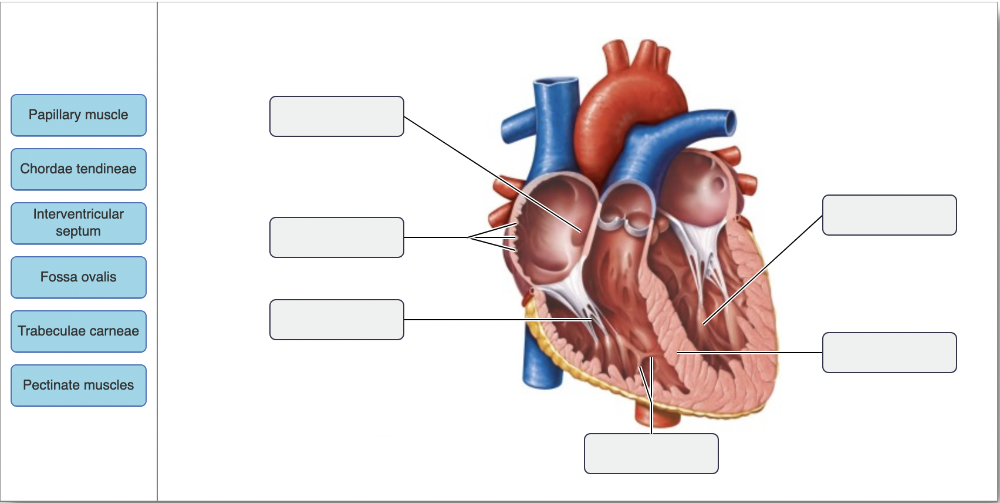 Drag the appropriate labels to their respective targets. | back 15 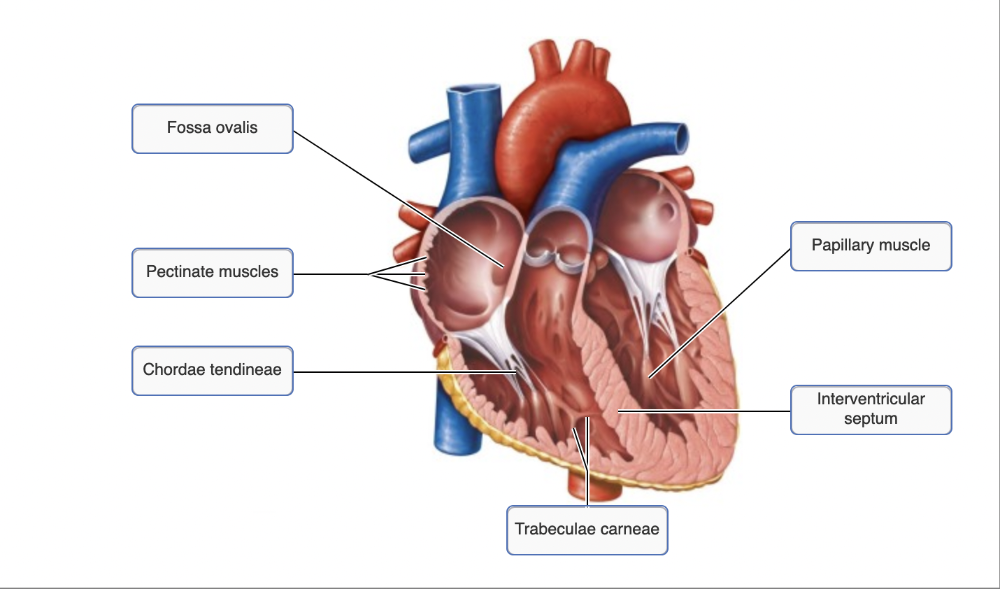 |